Clear Sky Science · en
A novel planctomycetotal isolate from subsurface percolates belongs to the novel species Anatilimnocola aquadivae sp. nov. in the family Pirellulaceae
Life Hidden Beneath Our Feet
Far below the forest floor, water trickles through tiny cracks in rock, carrying with it an unseen world of microbes. This study explores that hidden realm and reveals a previously unknown bacterial species living in shallow bedrock in central Germany. By tracing how this underground inhabitant was found, grown, and compared to its closest relatives, the researchers show that even well‑studied groups of microbes still harbor surprises—and that the Earth’s “critical zone,” where rock, water, air, and life meet, is more diverse than we thought.
A New Neighbor in Underground Water
The team collected slowly percolating water from a drainage collector installed in fractured limestone about two thirds of a meter below a forest in the Hainich Critical Zone Exploratory. This water represents the early stages of groundwater recharge and is usually out of reach for routine sampling. From this modest volume of cool, slightly acidic water, they patiently cultivated microbes on a specialized freshwater medium designed to favor a group of unusual bacteria called planctomycetes. After several weeks, among mostly pale colonies, they isolated one whitish, round colony that proved to belong to an unfamiliar strain, named NA78T. 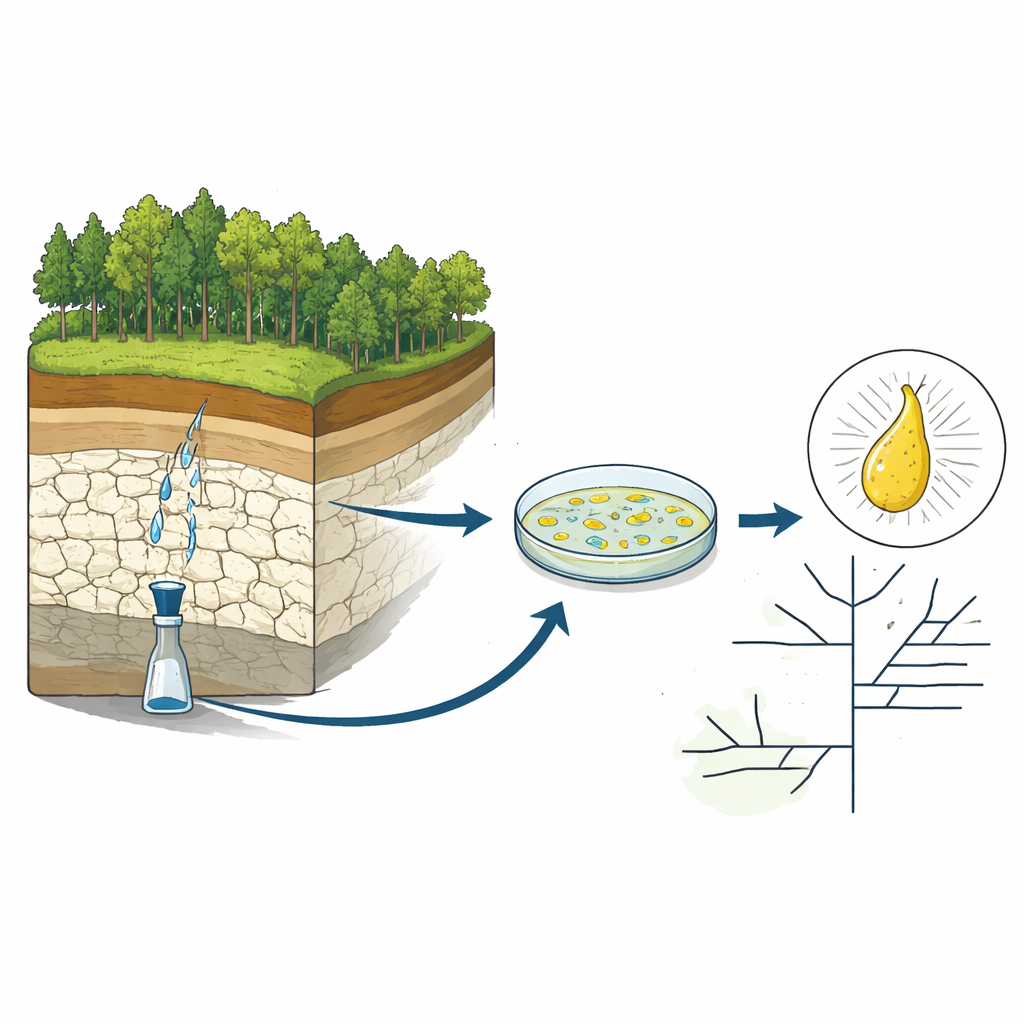
Placing the Newcomer on the Tree of Life
To understand what they had found, the researchers sequenced key genetic markers and then the entire genome of strain NA78T. Comparisons of its genetic blueprint with those of known bacteria showed that it belongs to the family Pirellulaceae within the phylum Planctomycetota, a group famous for odd cell shapes and complex cell interiors. Within that family, the strain clearly clustered with the genus Anatilimnocola, previously known from surface freshwater habitats such as ponds and lakes. However, multiple independent genetic yardsticks—ranging from similarity of a standard ribosomal gene to whole‑genome relatedness—were all below accepted cutoffs for membership in an existing species. Together, these metrics firmly placed NA78T as a distinct species within the same genus.
What the Cells Look Like and How They Live
Under the microscope, the new bacterium forms tiny, rice‑grain‑shaped cells about two micrometers long and a bit more than one micrometer wide. Instead of splitting in the middle like many bacteria, it reproduces by “polar budding,” where a smaller daughter cell pinches off from one end of the mother cell. Fluorescent dyes revealed that the cells carry a compact clump of DNA and only sparse folds of inner membrane, features that echo what has been seen in other planctomycetes but with their own twist. On agar plates, the colonies are rigid, shiny, and white to beige—consistent with a lifestyle away from light, where there is little need for colorful, sun‑blocking pigments. In liquid culture, the cells sometimes form small aggregates rather than large rosettes, setting them apart from close relatives.
Genes, Metabolism, and Environmental Fit
The complete genome of strain NA78T is about 8 million DNA letters long, slightly smaller than those of its two known Anatilimnocola cousins but otherwise similar in gene content and composition. The bacterium grows slowly at cool, moderate temperatures between 18 and 24 °C, with a preference for 18 °C, and tolerates a pH range from 6.0 to 9.0, doing best near neutral to slightly basic conditions. These traits closely mirror the chemistry of the bedrock percolate from which it was recovered, suggesting that it is at least well adapted to, if not specialized for, this niche. It depends on oxygen and could not grow in the absence of it, even when alternative electron acceptors were offered. When the researchers searched existing DNA surveys of the same site, they did not find an exact match, implying that this species is rare, easily missed, or perhaps occasionally washed down from overlying soils or surface waters. 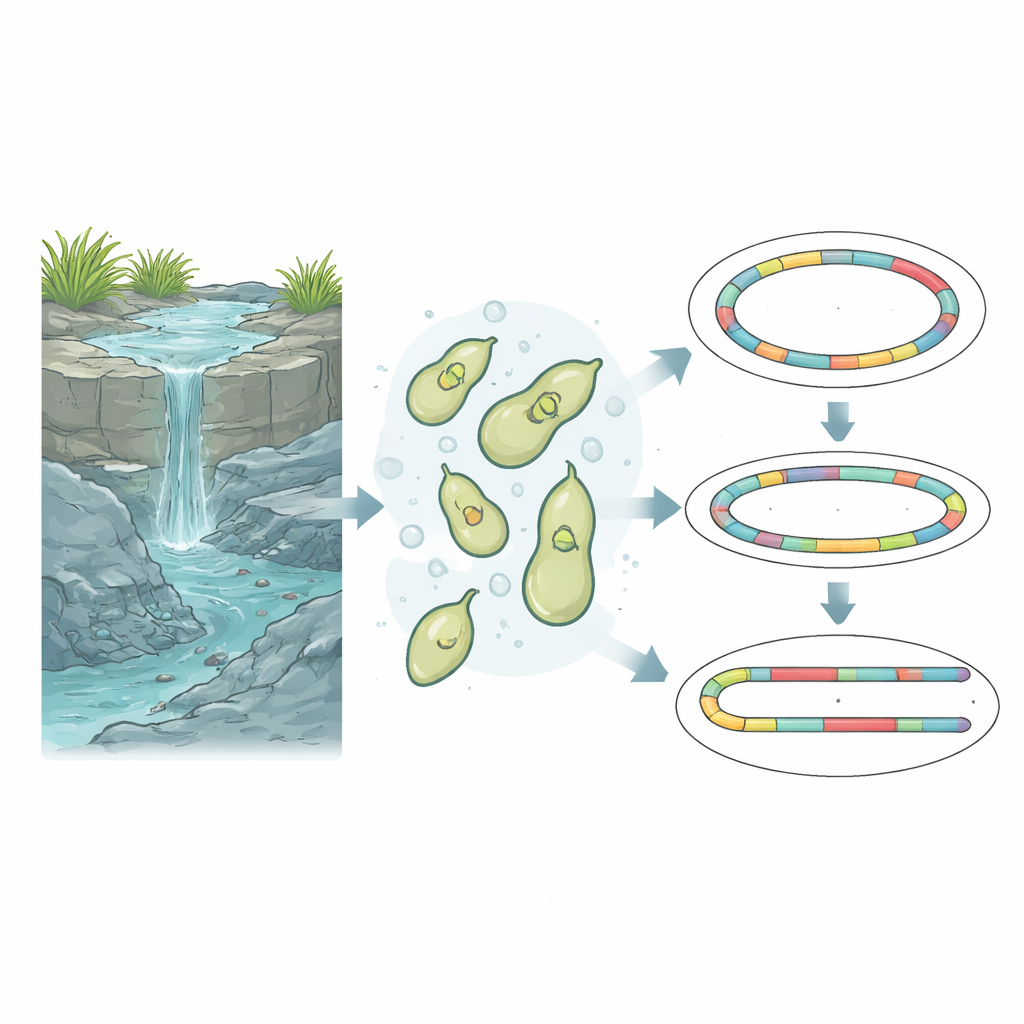
Why This Underground Discovery Matters
By combining field sampling, careful cultivation, microscopy, and multiple layers of genetic analysis, the authors show that strain NA78T represents a new species, which they name Anatilimnocola aquadivae sp. nov. Its discovery extends the known habitat range of the Pirellulaceae family from oceans, lakes, and soils into the shallow terrestrial subsurface. In practical terms, this work reminds us that even in relatively accessible environments, much of microbial life remains undescribed. Each newly characterized species adds a piece to the puzzle of how microbes shape the chemistry of water moving from soil to aquifers—and hints that the underground biosphere still holds many more secrets awaiting discovery.
Citation: Kündgen, M., Haufschild, T., Kallscheuer, N. et al. A novel planctomycetotal isolate from subsurface percolates belongs to the novel species Anatilimnocola aquadivae sp. nov. in the family Pirellulaceae. Sci Rep 16, 9078 (2026). https://doi.org/10.1038/s41598-026-44018-1
Keywords: subsurface microbiology, planctomycetes, groundwater recharge, bacterial diversity, critical zone