Clear Sky Science · en
Predictive value of the Naples Prognostic Score for rapid kidney function decline in stage 3–4 CKD: a multicenter study
Why this research matters to everyday health
Chronic kidney disease often creeps forward silently until people suddenly find themselves facing dialysis or a transplant. Doctors know that some patients’ kidneys deteriorate much faster than others, but current tools do not always flag who is at greatest short-term risk. This study asks whether a simple score, built from routine blood tests that reflect both body nutrition and low-grade inflammation, can reliably identify patients whose kidney function is likely to drop quickly over just one year.
A growing burden on kidneys worldwide
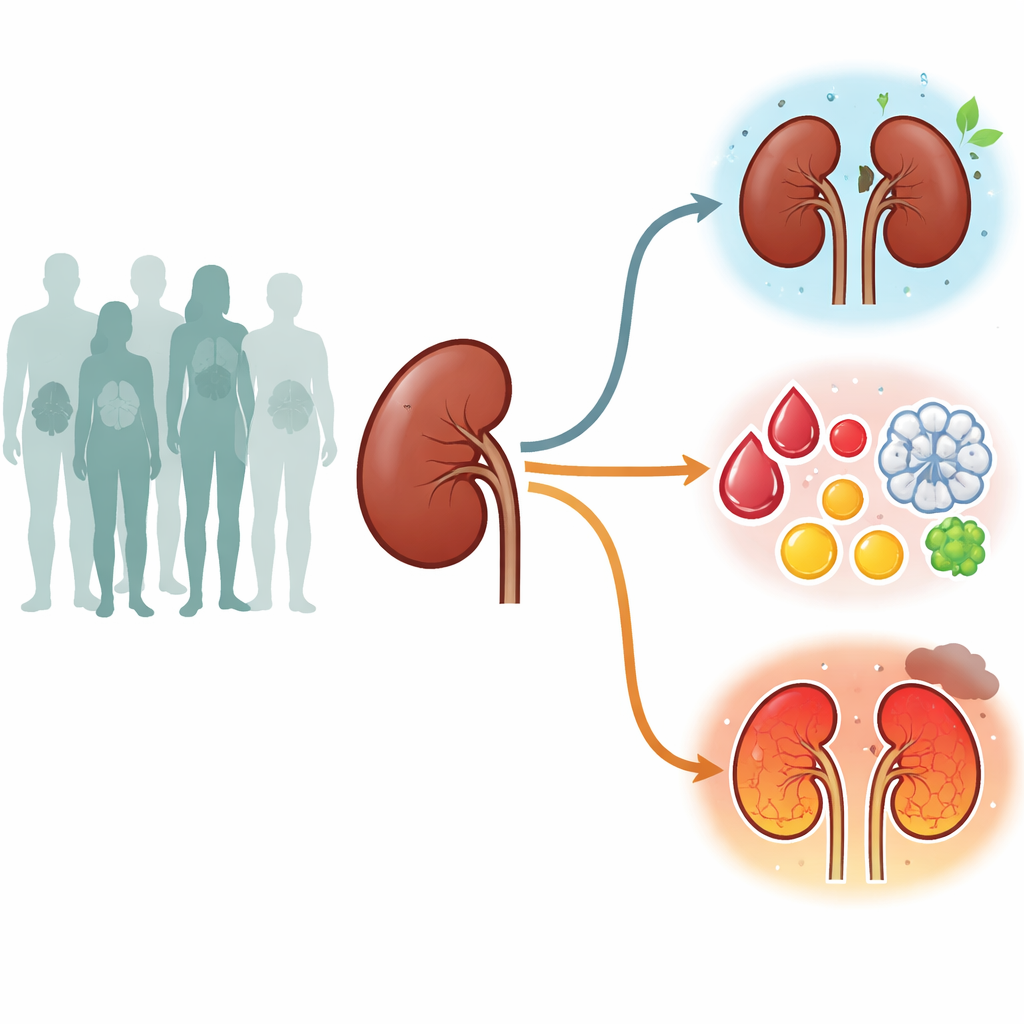
Chronic kidney disease now affects roughly one in ten people around the globe and is quickly climbing the ranks as a cause of death and disability. When kidney function declines, waste products build up in the body and the risk of heart disease and death rises sharply. Yet the speed of decline varies widely from person to person. Classic risk factors such as diabetes, high blood pressure, and protein leaking into the urine are important, but they do not fully explain why some patients experience a rapid drop in kidney function even under specialist care. Researchers have increasingly turned their attention to two broader influences: poor nutrition and smoldering inflammation.
A combined score from routine blood tests
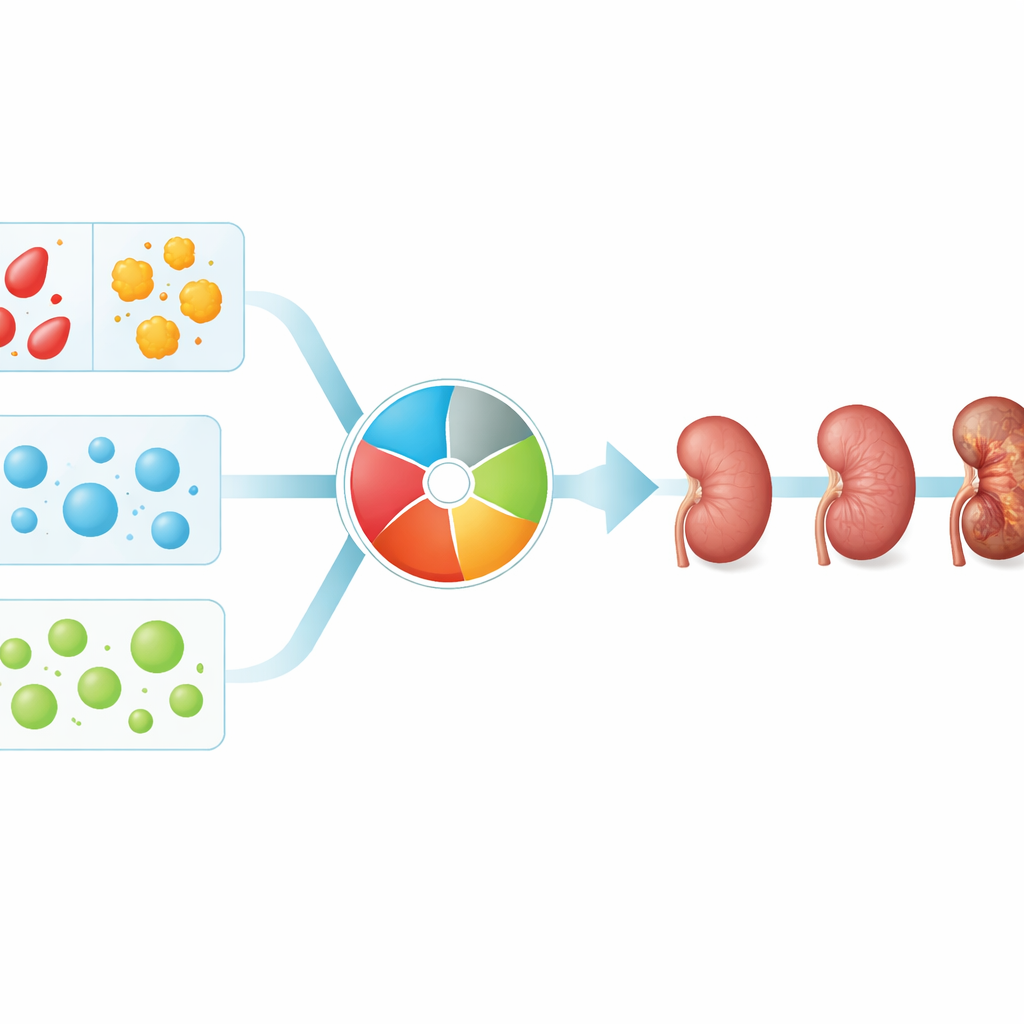
The Naples Prognostic Score (NPS) was originally developed for people undergoing surgery for colorectal cancer. It blends four common blood measures: two that mirror inflammation in the white blood cells, and two that reflect the body’s nutritional state and broader metabolism. Rather than looking at inflammation or nutrition alone, NPS captures both together, offering a snapshot of how stressed or “run down” the body is. Earlier work linked higher NPS values to complications after surgery, heart and vessel problems, and even episodes of sudden kidney injury. Until now, however, it was unclear whether this score could also predict which people with moderate but not yet end-stage kidney disease were heading toward a rapid decline.
Following patients with moderate kidney disease
The team examined health records from 404 adults treated at two kidney clinics in Turkey. All had stage 3 or 4 chronic kidney disease, meaning their kidneys were moderately to severely weakened but they were not yet on dialysis. None had active infections, recent cancer, or other conditions that might distort the lab results. At the first clinic visit, doctors recorded each person’s NPS and other clinical details, then tracked how their estimated filtering capacity, a measure called eGFR, changed over the next 12 months. A patient was classified as having rapid kidney function decline if their eGFR fell by more than 5 units and that drop was confirmed on repeat testing, ruling out temporary dips caused by short-lived illness.
Who experienced rapid decline
Over one year, about one in four patients showed rapid loss of kidney function. Compared with those whose kidneys remained relatively stable, these patients tended to have blood results signaling both worse inflammation and poorer nutritional status: fewer protective lymphocytes, more neutrophils, lower albumin, and lower total cholesterol. When the researchers used statistical models that accounted for age, baseline kidney function, diabetes control, protein loss in the urine, and use of protective drugs such as blood pressure medicines and newer diabetes pills, NPS still stood out. Each one-point increase in the score was linked to nearly an eightfold higher chance of rapid decline. In tests of predictive accuracy, NPS separated fast decliners from others far better than albumin alone, and the model’s performance remained stable under internal validation checks.
What the findings suggest for patients and doctors
The study supports the idea that the health of the kidneys is tightly tied to whole-body nutrition and low-level inflammation, not just to classic diagnoses like diabetes or high blood pressure. A simple composite score derived from everyday blood tests captured this broader picture and proved highly informative for short-term risk. People with chronic kidney disease who have a higher NPS may benefit from closer follow-up, more aggressive control of contributing conditions, and early attention to diet and inflammation.
Looking ahead to better prevention
In plain terms, the authors conclude that the Naples Prognostic Score may help doctors spot, within a year, which patients with moderate chronic kidney disease are on a faster track toward serious kidney failure. Because the research relied on past records from only two centers, it cannot yet prove cause and effect or guarantee that the same results will hold everywhere. Larger, forward-looking studies in diverse populations are needed. Still, the work points to a practical, low-cost way to sharpen risk assessment using information that many clinics already collect, potentially giving patients and clinicians more time to act before kidney damage becomes irreversible.
Citation: Avcı, A.K., Güzel, E.R., Sargın, F. et al. Predictive value of the Naples Prognostic Score for rapid kidney function decline in stage 3–4 CKD: a multicenter study. Sci Rep 16, 8640 (2026). https://doi.org/10.1038/s41598-026-43811-2
Keywords: chronic kidney disease, kidney function decline, inflammation, nutrition, risk prediction