Clear Sky Science · en
Exerting effort for non-instrumental information under risk
Why we work just to know
Imagine squeezing a hand gripper as hard as you can, not to win more money, but just to find out a result a little sooner. This study asks why people go to such lengths for information that cannot change what happens to them. By measuring how much physical effort people are willing to invest simply to learn the outcome of a lottery, the researchers reveal how our desire for good news and our dislike of uncertainty shape everyday curiosity.
Wanting to know, even when it doesn’t help
In daily life we constantly look up weather forecasts, exam scores, or package tracking updates, even when knowing the answer cannot alter the outcome. Psychologists call this “non-instrumental” information because it does not help us make better choices. Earlier work showed that people will pay money or even endure discomfort to satisfy such curiosity, but it was less clear how much actual work they will do and what drives that effort. Two leading ideas are that people seek information because they expect good news (desirability) and because they want to reduce uncertainty. This paper tests both ideas at once and asks whether different kinds of uncertainty matter.
How the grip-and-lottery game worked
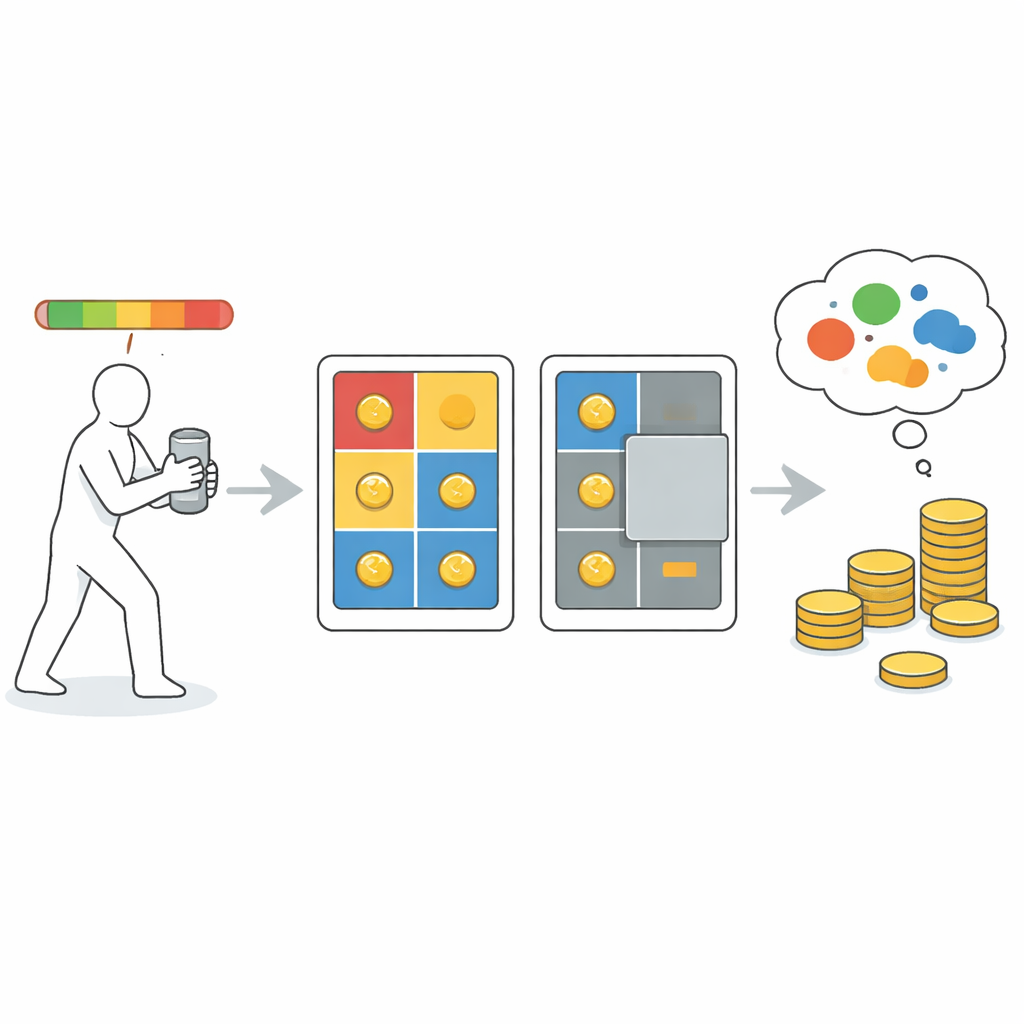
The team asked young adults to play a series of simple money lotteries in the lab. On every trial, participants were automatically entered into a lottery that could pay either nothing or a cash prize; they could not refuse the gamble. What they could choose was how hard they were willing to squeeze a hand dynamometer to see the outcome right away. A computer then drew a random “effort price.” If a participant’s bid was high enough, they had to hold that level of grip for three seconds and then saw whether they had won or lost. If not, they saw a neutral screen and learned nothing until one randomly chosen lottery was paid out at the very end. Crucially, seeing the outcome early never changed how much money they would eventually receive, making the information truly non-instrumental.
Risky chances versus cloudy chances
The lotteries came in two flavors. In “risky” trials, the chances of winning were known and displayed clearly as colored portions of a bar, like a pie chart where you can see exactly how likely you are to win. In “ambiguous” trials, part of that bar was hidden behind gray, so the true chances of winning could fall anywhere within a broad range. This allowed the researchers to separate uncertainty with known odds (risk) from uncertainty with unknown odds (ambiguity). Across two large experiments, they varied not only the probability of winning but also the size of the possible prize, and then used statistical models to see how these factors shaped people’s willingness to work for information.
When effort rises with stakes and uncertainty
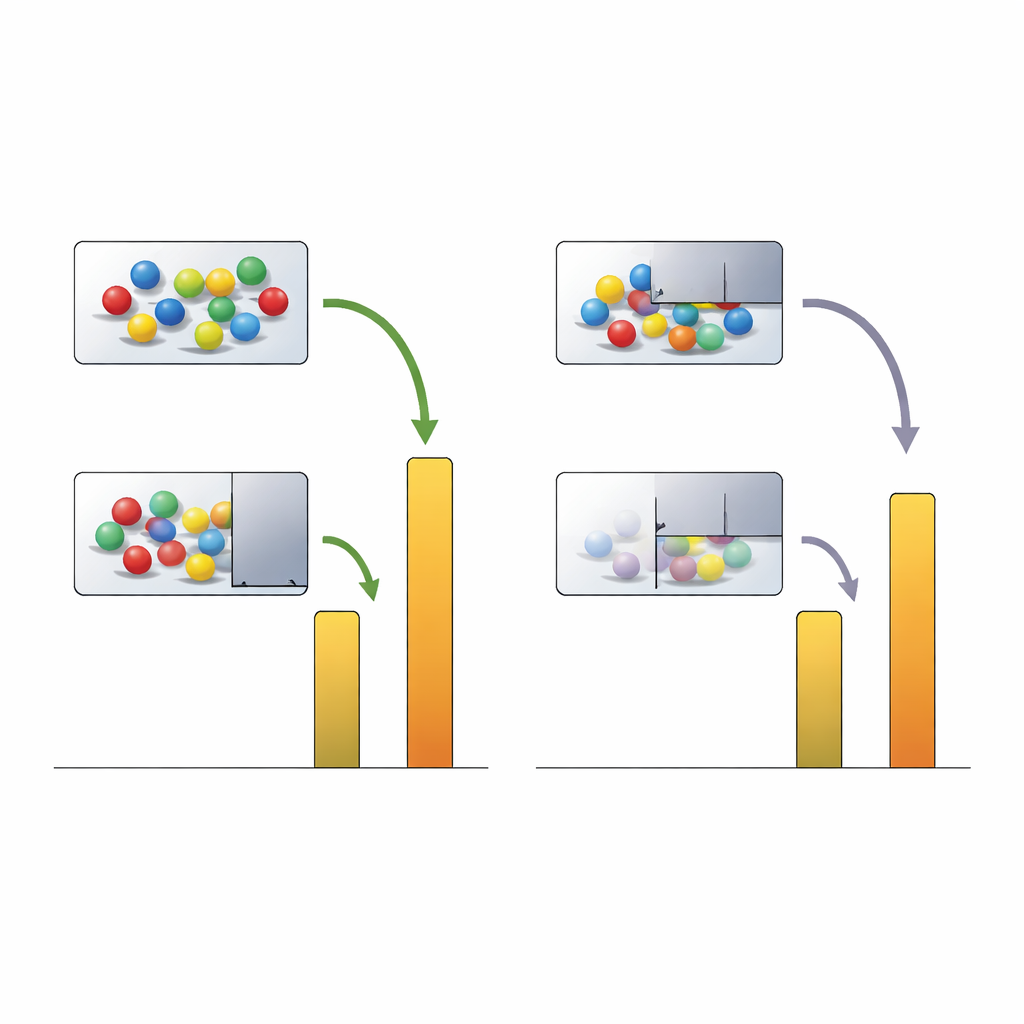
Across both experiments, participants on average were willing to use more than half of their maximum grip strength just to learn lottery outcomes early. They worked harder when the expected payoff of a lottery was higher, whether that came from a larger chance of winning or a bigger prize. This held for both risky and ambiguous lotteries, showing that the “pull” of potentially good news strongly boosts curiosity-driven effort. Under risk, people also worked more when the outcomes were more variable—that is, when the lottery was less predictable, even though its average value stayed the same. In contrast, for most moderate levels of ambiguity, effort barely changed as the unknown portion grew or shrank; only at very extreme ambiguity did people start to work more to clear things up.
What this means for everyday curiosity
The findings reveal a striking split in how we treat different kinds of not-knowing. People readily expend real physical effort for information that cannot help them make better choices, especially when the possible outcomes are attractive and the known odds are uncertain. But when the odds themselves are murky, most levels of ambiguity do not spur the same drive to work for answers. This suggests that our craving to be “in the know” is fueled both by the hope of good news and by a desire to tidy up clear-cut risks, while fuzzy, ill-defined uncertainty often leaves us oddly less motivated to find out more.
Citation: Fan, H., Dong, B.J.W., Benkelman, D.G. et al. Exerting effort for non-instrumental information under risk. Sci Rep 16, 10726 (2026). https://doi.org/10.1038/s41598-026-43803-2
Keywords: curiosity, decision making, risk and ambiguity, physical effort, information seeking