Clear Sky Science · en
The effects of climate and land cover on hazel dormouse (Muscardinus avellanarius) body mass over space and time
Why tiny woodland sleepers matter
The hazel dormouse is a small, golden-furred mammal that spends much of the year asleep, yet it has become a quiet warning signal for how changing weather and countryside management are reshaping wildlife. This study uses three decades of volunteer-collected data from across England and Wales to ask a deceptively simple question: are dormice getting heavier or lighter, and what does that say about our climate, our landscapes, and the future of this already declining species?
Watching weight change through the seasons
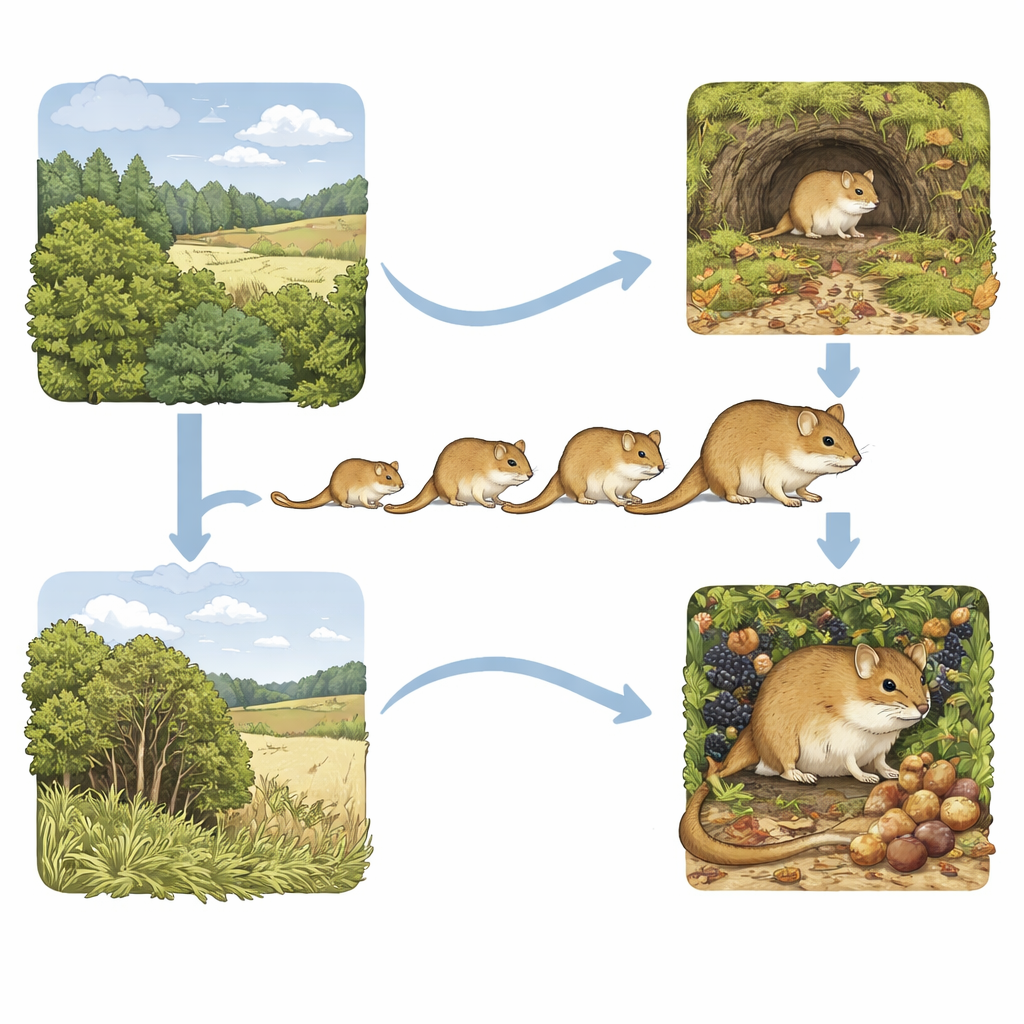
Because hazel dormice hibernate for the winter and fatten up beforehand, their body mass naturally rises and falls over the year. The researchers separated the data into two key moments: late spring, just after animals emerge from winter sleep (May–June), and late autumn, just before they bed down again (October–November). Using records from over 700 woodland sites, they tracked adult males and females over 31 years, applying statistical models that could tease out long-term trends while accounting for repeated measurements at the same locations.
Climate’s uneven push and pull
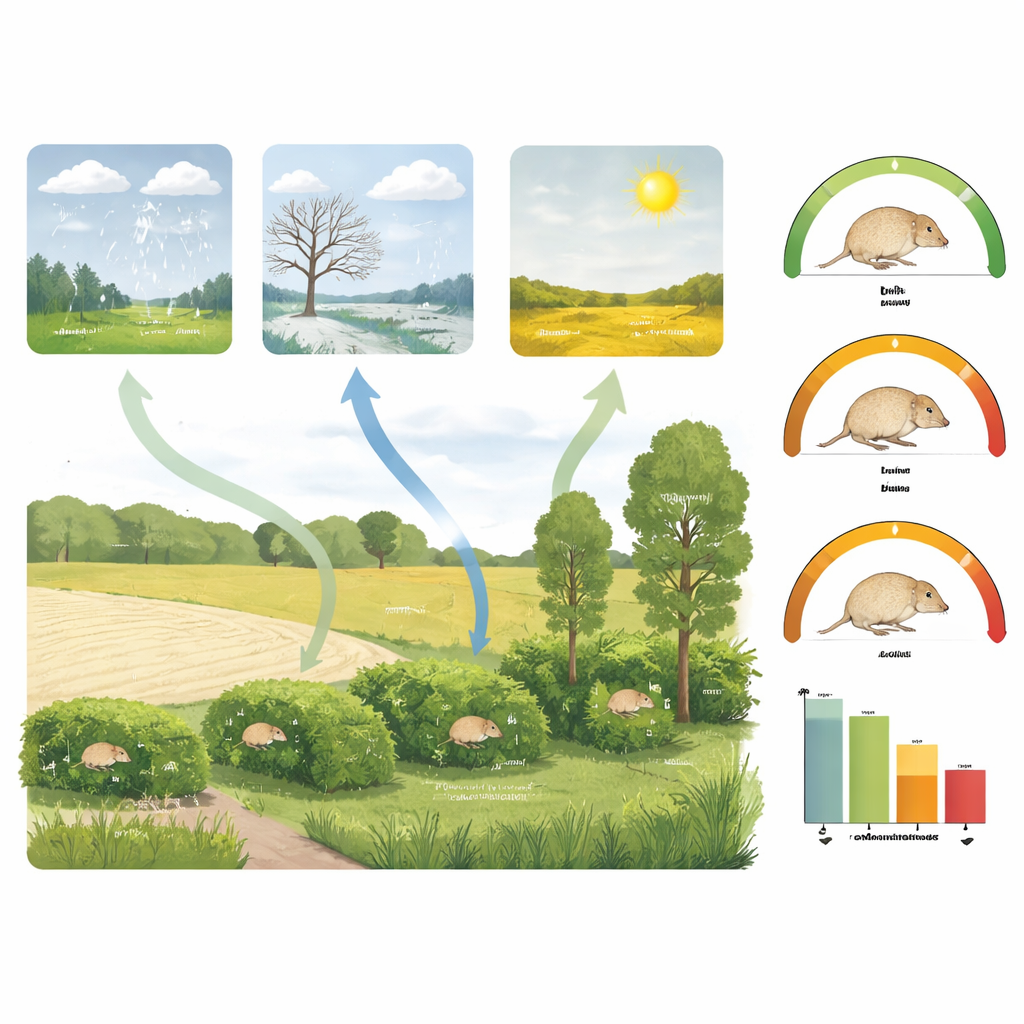
The team found a striking seasonal contrast. Since the early 1990s, dormice have become lighter in late spring but heavier in late autumn, with changes of about a gram in each direction. Spring body mass declined steadily over time, but these year-to-year differences could not be clearly linked to average winter temperatures, rainfall or snow cover. In contrast, autumn body mass was tightly connected to summer weather: hotter summers were associated with lighter pre-hibernation dormice, whereas wetter summers were linked to heavier animals, suggesting that rainfall boosts food supplies such as nuts and berries. This pattern appeared both over time and across the British landscape, and was slightly stronger for males than for females.
Hedges, fields, and the quality of home
Climate was only half the story. The researchers also examined how the structure of the surrounding countryside shaped dormouse condition. They found that body mass tended to be higher where the landscape included many medium-height hedgerows, roughly between 1.5 and 6 metres tall. These well-managed, shrubby boundaries appear to offer sheltered travel routes and a rich sequence of flowers, fruits and insects. By contrast, very tall, overgrown hedgerows and expanses of arable farmland were linked with lighter dormice. Surprisingly, areas dominated by continuous broadleaf woodland near a site were also associated with lower body mass, likely because mature woods often lack the dense, species-rich undergrowth that provides diverse food through the seasons. At broader scales, a mix of different habitat types—rather than any one habitat alone—favoured heavier animals.
What shifting body mass means for survival
These seasonal shifts in weight are more than a curiosity: they hint at how climate change may be tugging dormice in opposite directions across the year. Lighter bodies in spring could leave animals in poorer condition just as they face breeding and raising young, potentially reducing survival and reproductive success. Heavier bodies in autumn may partly compensate, but only where summer rainfall and good habitat combine to provide abundant food. The study also shows that large-scale changes in simple land-cover categories, such as total forest or urban area, do not tell the whole story; fine details like hedgerow height and woodland structure can be crucial for a small hibernator’s wellbeing.
Guiding action for a shrinking woodland neighbour
For non-specialists, the key message is that a changing climate does not act alone: it works together with how we manage fields, woods and hedges to shape the fortunes of wildlife. Hazel dormice, already reduced to fragments of their former range in Britain, now face warmer, less predictable seasons that alter when and how they gain or lose weight. By maintaining diverse, well-managed hedgerows and varied woodland habitats, and by continuing long-term citizen science monitoring, conservationists can give this sensitive species a better chance to cope with the pressures of a warming world.
Citation: Gillie, E.R., Smith, D., Worledge, L. et al. The effects of climate and land cover on hazel dormouse (Muscardinus avellanarius) body mass over space and time. Sci Rep 16, 9800 (2026). https://doi.org/10.1038/s41598-026-43706-2
Keywords: hazel dormouse, climate change, hibernation, hedgerow management, wildlife monitoring