Clear Sky Science · en
Prevalence, multidrug resistance patterns, virulence and antimicrobial resistance genes of emerging MDR Aeromonas hydrophila strains retrieved from subclinical bovine mastitis
Hidden Germs in Everyday Milk
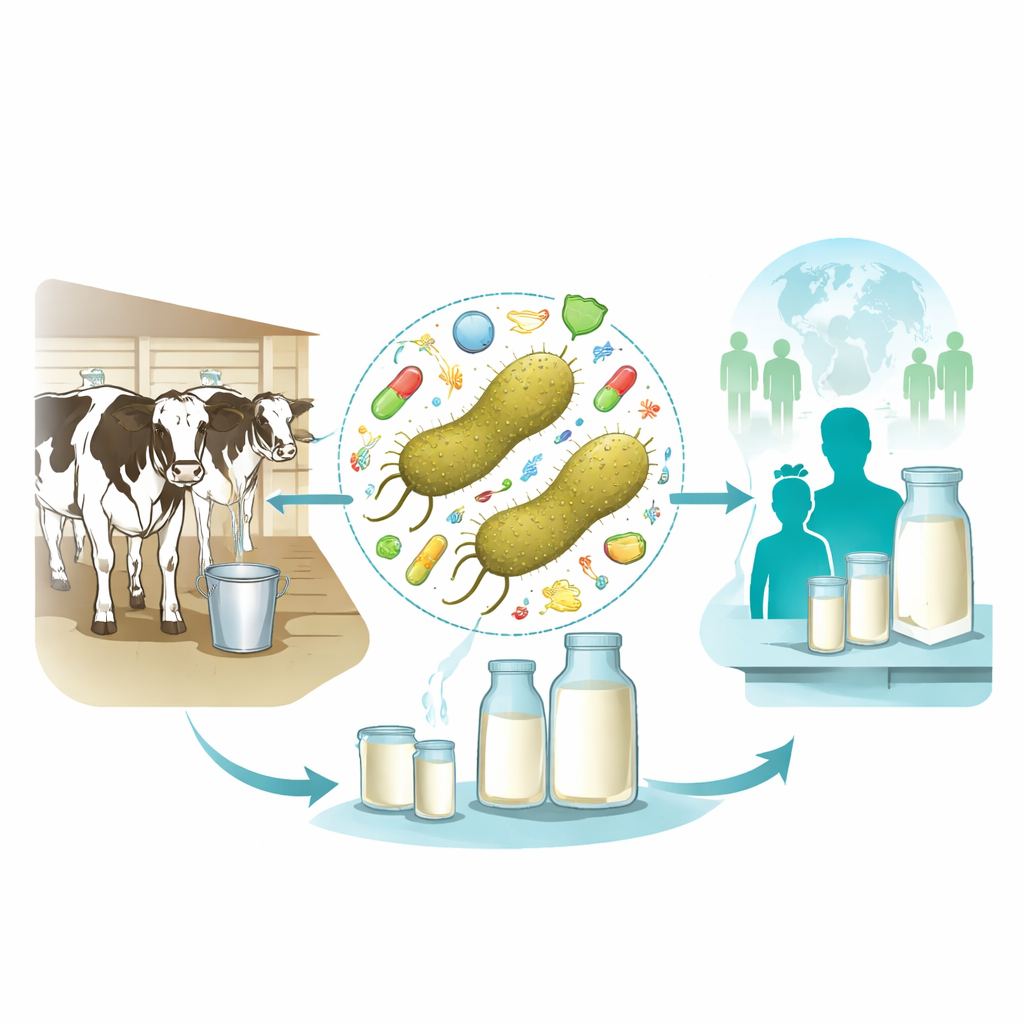
Milk from healthy-looking dairy cows might seem perfectly safe, but it can quietly harbor germs that threaten both farm income and public health. This study looks at one such germ, Aeromonas hydrophila, which is gaining the ability to withstand many common antibiotics. By examining cows in Egyptian dairy farms, the researchers show how this hard-to-treat bacterium can live in cows’ udders without obvious signs of disease, slip into milk, and potentially reach people through the food chain.
Silent Infection in the Dairy Herd
The work focuses on subclinical mastitis, a mild and often invisible inflammation of the udder that never shows dramatic swelling or clots in the milk. Using a simple screening test on 800 quarter-milk samples from 200 apparently healthy cows, the team found that about four in ten udder quarters actually had this hidden problem. From those positive samples, they identified Aeromonas hydrophila in roughly one out of five cases, revealing that this once-overlooked microbe is becoming a regular, if quiet, player in udder infections.
How the Germ Was Tracked and Tested
To be sure they had the right culprit, the scientists first grew the bacteria in the lab and checked its appearance and behavior, confirming that it matched Aeromonas hydrophila. They then used DNA-based tests to pinpoint special genetic markers that uniquely identify this species. Once confirmed, the isolates were exposed to a panel of widely used veterinary antibiotics on agar plates to see which drugs still worked. At the same time, the researchers searched each strain’s DNA for genes linked to disease-causing power and to resistance against different antibiotic families.
Superbugs Surviving a Pharmacy of Drugs
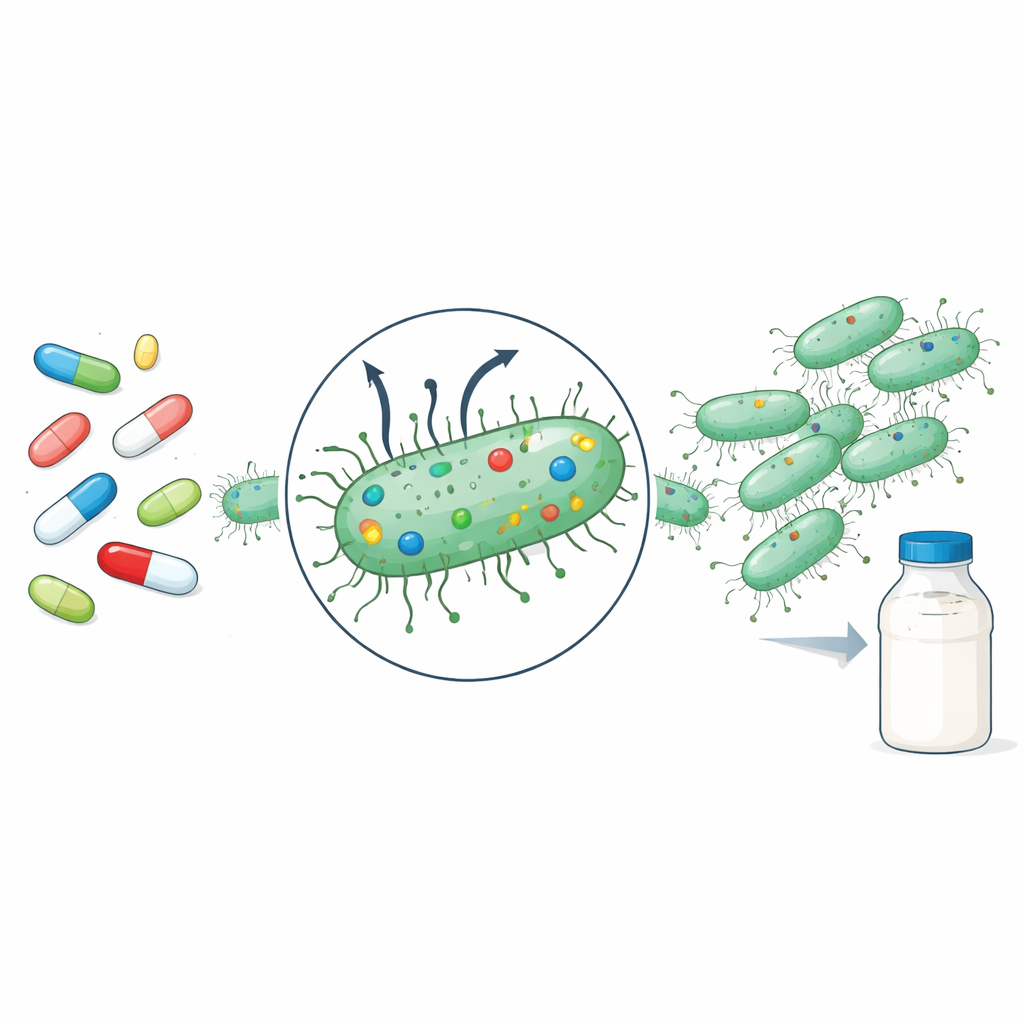
The findings paint a troubling picture. All of the Aeromonas strains were completely resistant to amoxicillin, and most could shrug off other common drugs such as tetracycline, combinations of penicillins with protective additives, certain cephalosporins, and sulfonamides. More than half also resisted gentamicin and erythromycin, meaning treatment options are rapidly narrowing. Only norfloxacin, a fluoroquinolone, remained fully effective against every strain tested. When the team grouped the bacteria by how many drug classes they could resist, they discovered that nearly 30% qualified as “extensively drug resistant,” and many others were “multidrug resistant,” clearly signaling the rise of true superbugs in the milk supply.
Genes That Arm the Bacteria
DNA analysis showed why these germs were so tough. Every strain carried a key toxin gene called aerA, which helps the bacteria damage host cells, and many also carried other toxin genes that likely work together to harm tissues and evade defenses. On the resistance side, the strains frequently housed gene sets that allow them to break down penicillin-like drugs, fend off tetracyclines, and resist sulfonamides and aminoglycosides. Statistical tests linked the presence of these genes very closely with the observed drug-resistance patterns, suggesting that these milk-borne bacteria act as genetic reservoirs that could pass their dangerous traits to other microbes in animals, the farm environment, or even the human gut.
What This Means for Farmers and Consumers
For lay readers, the key message is that seemingly normal milk from apparently healthy cows can carry both hidden infections and highly drug-resistant bacteria. While proper pasteurization kills Aeromonas hydrophila, any contamination after heat treatment, or the consumption of raw milk and unpasteurized dairy products, could expose people to these superbugs. The study, the first of its kind in Egypt, calls for routine testing of milk for resistant bacteria, smarter and more restrained antibiotic use on farms, and better hygiene during milking and processing. By combining traditional lab methods with modern genetic tools, the authors show that early detection and careful drug choice are essential steps to stop these resilient germs from spreading through the food chain and undermining treatments for animals and humans alike.
Citation: Algammal, A.M., Mabrok, M., Almessiry, B.K. et al. Prevalence, multidrug resistance patterns, virulence and antimicrobial resistance genes of emerging MDR Aeromonas hydrophila strains retrieved from subclinical bovine mastitis. Sci Rep 16, 9081 (2026). https://doi.org/10.1038/s41598-026-43395-x
Keywords: bovine mastitis, Aeromonas hydrophila, antimicrobial resistance, raw milk safety, multidrug resistant bacteria