Clear Sky Science · en
Trust in medical art is the most effective coping mechanism for predicting treatment satisfaction in elective neurosurgery
Why this matters for patients and families
Facing brain or spine surgery is one of the most stressful experiences a person can have. Beyond the technical success of the operation, what often matters most to patients is whether life afterward feels better than they feared or hoped. This study looks closely at what shapes that feeling: how well patients are informed beforehand, how they cope with fear and uncertainty, and especially how much they place their trust in medical care. Understanding these hidden influences can help patients, families, and doctors work together for a smoother recovery and a more satisfying outcome.
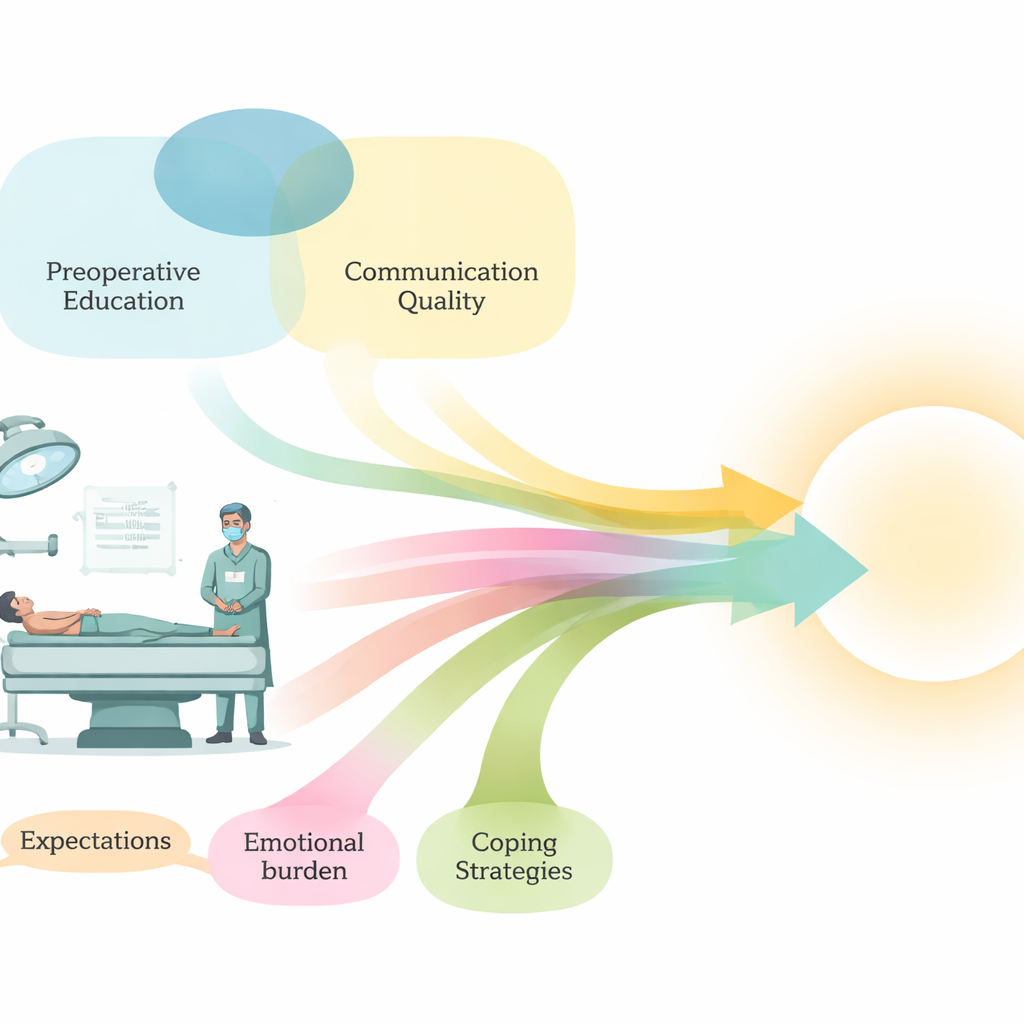
Looking beyond scans and surgical skill
Traditionally, success in neurosurgery has been measured with hard numbers such as survival, complication rates, or how well someone can move after an operation. Yet many people leave the hospital still wondering whether the ordeal was “worth it.” Growing research shows that expectations, emotions, and daily life after surgery all contribute to how satisfied patients feel. In this study, 277 people who underwent planned brain or spine operations at a German university hospital filled out questionnaires before and after surgery. The researchers asked about their symptoms, what they expected from the operation, how well they felt informed, how they usually cope with illness, and how satisfied they were with the result.
Different operations, similar hopes
The team divided procedures into “less complex” (shorter operations, often on the spine) and “more complex” (longer brain and tumor surgeries). Interestingly, patients booked for less complex procedures actually felt more burdened beforehand, likely because of pain or disability that disrupted daily life. After surgery, however, this gap in burden disappeared: both groups felt similarly affected. Expectations for how long problems would last after surgery were also quite similar, and the quality of preoperative explanations from doctors did not differ between simpler and more complex operations. This suggests that people’s hopes and fears before neurosurgery are shaped by more than just how technically demanding the operation is.

How people cope and what they are told
To understand mental coping, the researchers used a standard questionnaire that measures different ways people deal with illness—such as focusing on practical solutions, seeking information, downplaying problems, or feeling depressed. Two particular strategies stood out. The first was “trust in medical art,” meaning a strong basic confidence in the skills and decisions of the medical team. The second was “willingness to accept help,” reflecting how open patients are to support from others and to leaning on healthcare professionals. Compared with a large reference group of chronically ill patients, neurosurgical patients in this study showed especially high trust in medical care. This trust was also moderately linked to how good they felt the preoperative talk with the neurosurgeon had been, suggesting a reinforcing loop between clear communication and confidence in the team.
What really predicts feeling satisfied
When the authors examined which factors best predicted satisfaction with the operation, the complexity of surgery itself mattered very little. What made the strongest difference was how people coped and how much strain they still felt afterward. Patients who reported greater trust in medical care and more willingness to accept help tended to be more satisfied with their treatment. In contrast, those who remained heavily burdened by symptoms after surgery were less satisfied. The quality of the preoperative conversation—how well the doctor explained the procedure, risks, and recovery—also played a meaningful role: better-rated talks went hand-in-hand with higher satisfaction, independent of how serious the surgery was.
What this means for patients and doctors
For someone preparing for elective neurosurgery, this study offers a hopeful message: satisfaction is not determined only by the difficulty of the operation or the complexity of the disease. Feeling well informed, being able to lean on others, and cultivating trust in the medical team are powerful ingredients in a better experience. For doctors and nurses, the findings argue for taking time to tailor explanations, listen to worries, and support healthy coping styles instead of focusing solely on technical details. In simple terms, when patients understand what lies ahead, feel supported, and believe in the care they receive, they are more likely to come out of brain or spine surgery feeling that it was the right decision.
Citation: Schock, L., Laflör, L.P., Meška, D. et al. Trust in medical art is the most effective coping mechanism for predicting treatment satisfaction in elective neurosurgery. Sci Rep 16, 8733 (2026). https://doi.org/10.1038/s41598-026-43341-x
Keywords: neurosurgery, patient satisfaction, coping strategies, patient education, trust in doctors