Clear Sky Science · en
Construct validity of real-world digital mobility outcomes in patients after proximal femoral fracture: a cross-sectional observational study
Why Tracking Everyday Walking Matters After a Broken Hip
For many older adults, a hip fracture is a turning point that can threaten independence, confidence, and quality of life. Doctors have long relied on brief clinic tests to judge recovery, but these snapshots may miss how people really move at home and in their communities. This study asks a practical question with big implications: can a small wearable sensor on the lower back reliably capture meaningful information about how well people are walking in their daily lives after hip fracture surgery?
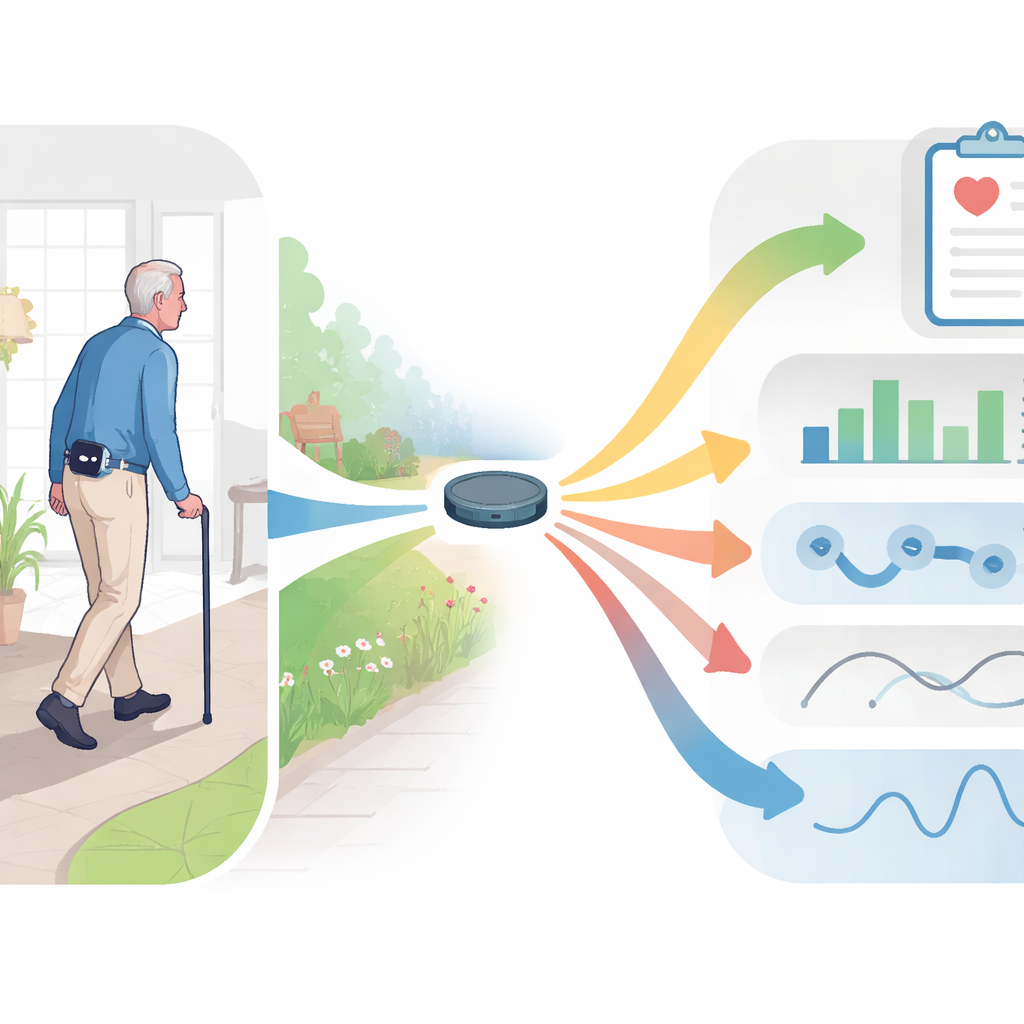
From Hospital Hallways to Real-Life Walking
Recovery after a hip fracture unfolds over months, from the first painful steps after surgery to a new long-term normal. Traditional tests—such as timed walks in a clinic—offer useful clues but cannot follow people into their homes, streets, and shops. The researchers behind this study used lightweight motion sensors worn on a belt or attached to the lower back to monitor real-world walking over seven days in more than 500 adults, average age about 78, from three European countries. These sensors recorded every walking episode, allowing the team to calculate 24 different digital mobility outcomes, such as how much people walked, how often they took walking bouts of different lengths, how fast they moved, and how regular or variable their steps were.
Turning Raw Sensor Signals into Meaningful Measures
The central challenge was not just collecting movement data, but proving that these digital measures actually reflect important aspects of mobility and health. The team focused on three types of evidence. First, they tested whether sensor-based measures lined up with standard clinical tests and questionnaires that capture walking ability, balance, fatigue, and fear of falling. Second, they checked that these digital measures did not relate strongly to largely unrelated features such as hearing ability or blood pressure. Third, they examined whether the measures differed in sensible ways across four recovery stages, from the first two weeks after surgery to more than six months later, when walking tends to stabilize.
What the Wearables Revealed About Recovery
Participants were grouped into acute, post-acute, extended, and long-term recovery phases. Unsurprisingly, those very soon after surgery walked only a few hundred steps per day, while those further along in recovery reached several thousand steps and longer daily walking times. For people beyond the first two weeks, many of the digital measures closely tracked clinic-based tests: those who walked more, took more and longer walking bouts, or walked faster in real life also performed better on supervised walking tests and reported better function. Measures describing "how much" and "how fast" people walked, and most measures describing "how often" they walked in bouts of different durations, showed especially strong and consistent links to established mobility tests. By contrast, some more intricate features—such as subtle beat-to-beat timing of strides or fine-grained variability between bouts—were less clearly tied to clinical status, suggesting these aspects are still experimental.
Expert Judgment on Which Signals to Trust
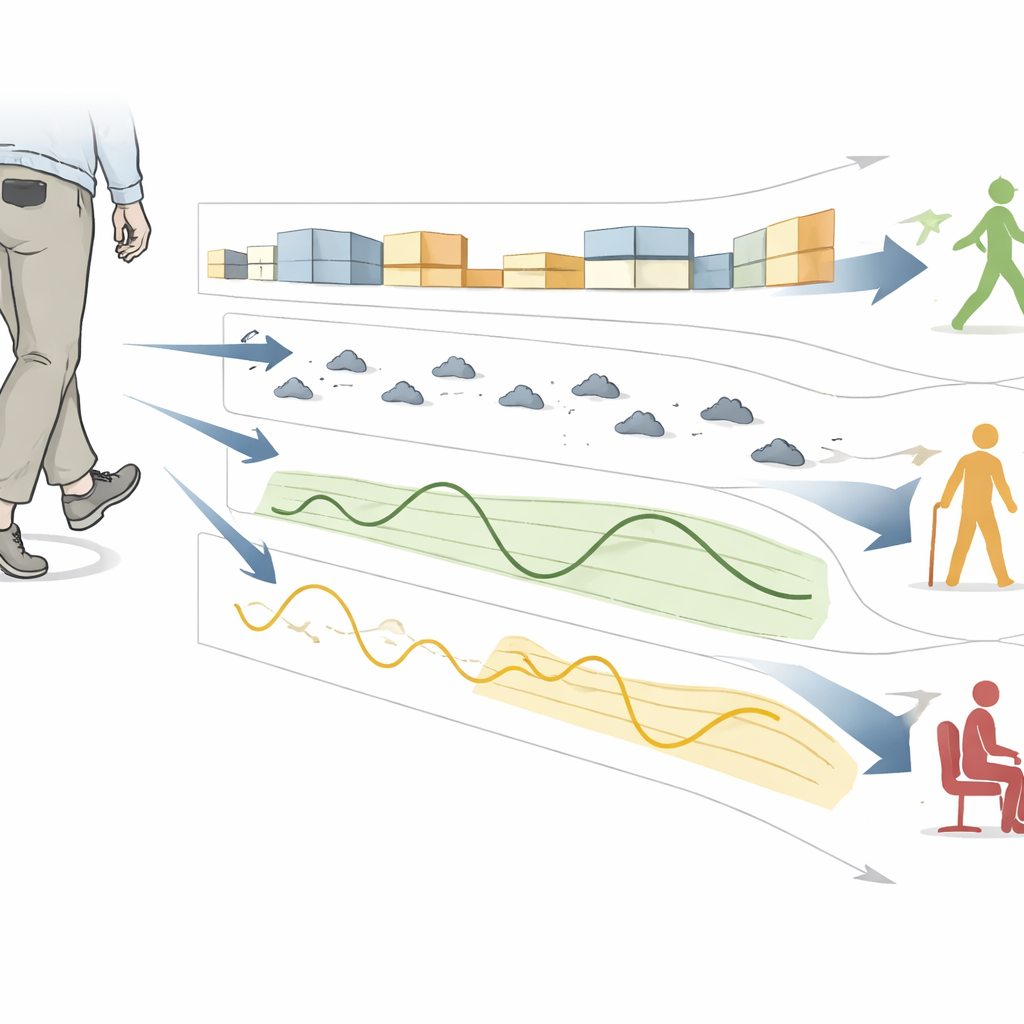
To move beyond statistics, the study invited nine experts in geriatrics, rehabilitation, movement science, and data analysis to judge each of the 24 digital measures. They reviewed the correlations with clinical tests, the lack of association with unrelated traits, and the ability of each measure to distinguish between recovery stages. Through independent voting followed by group discussion, the experts concluded that 17 of the 24 measures provided convincing evidence that they capture meaningful aspects of mobility in patients who are at least two weeks past surgery. These covered all measures related to total walking amount and walking speed, most measures capturing the pattern of walking bouts, and a single, carefully defined measure of day-to-day variability in walking speed.
What This Means for Patients and Their Care Teams
The findings suggest that a single small wearable sensor can provide a rich, reliable picture of how people actually move in daily life after a hip fracture—at least once they are out of the very early, hospital-bound phase. The validated digital measures could help clinicians remotely track recovery, identify people who are falling behind, and tailor rehabilitation programs without requiring frequent clinic visits. They may also help patients see their own progress and stay engaged in their recovery. While more work is still needed to show how changes in these measures predict long-term outcomes and to satisfy regulatory requirements, this study marks a key step toward using everyday walking data as a trusted tool in hip fracture care.
Citation: Eckert, T., Berge, M.A., Long, M. et al. Construct validity of real-world digital mobility outcomes in patients after proximal femoral fracture: a cross-sectional observational study. Sci Rep 16, 9535 (2026). https://doi.org/10.1038/s41598-026-43297-y
Keywords: hip fracture recovery, wearable sensors, walking after surgery, older adult mobility, rehabilitation monitoring