Clear Sky Science · en
Diagnostic value of phenotypic testing combined with molecular biology testing for tuberculosis
Why finding TB early matters to everyone
Tuberculosis (TB) remains the world’s deadliest infectious disease, yet diagnosing it quickly and accurately is still surprisingly hard. Many patients cough up little or no sputum, some tests miss cases, and others are so slow that treatment is delayed. This study looks at a practical question with big public-health stakes: if doctors combine traditional lab tests with modern gene-based tests, and use more than one type of lung sample, can they spot active TB in the lungs earlier and more reliably?
Different ways to look for the same germ
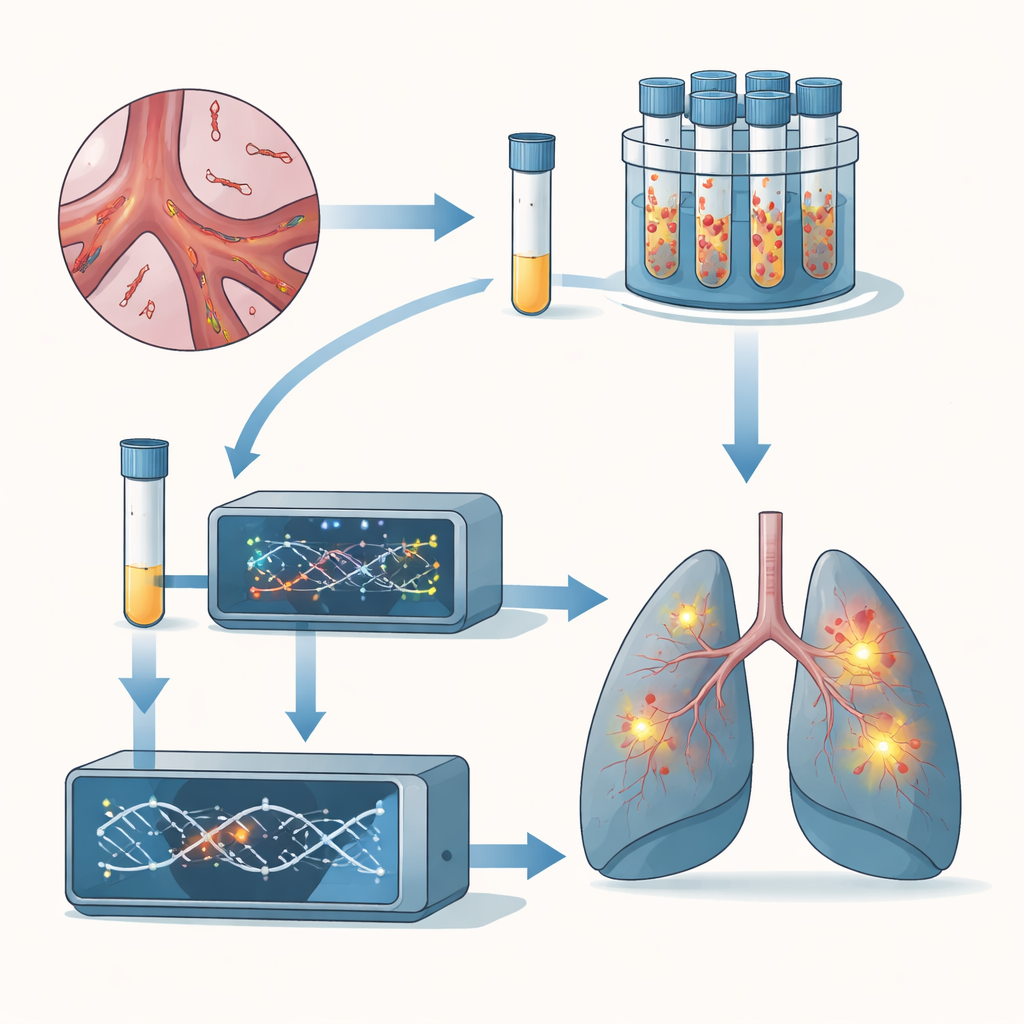
Doctors have two broad families of tools to detect TB bacteria. Phenotypic tests look at the organism’s physical presence or growth in the lab, such as staining bacteria under the microscope or growing them in liquid culture. These methods are specific but can be slow or miss cases with few bacteria. Molecular tests, by contrast, hunt for bacterial genetic material, reading DNA signals with highly sensitive machines in a matter of hours. Each approach has strengths and weaknesses—phenotypic tests distinguish live from dead germs but may take weeks, while molecular tests are fast and sensitive but can give false positives and cannot tell whether the bacteria are alive.
Who was studied and what samples were tested
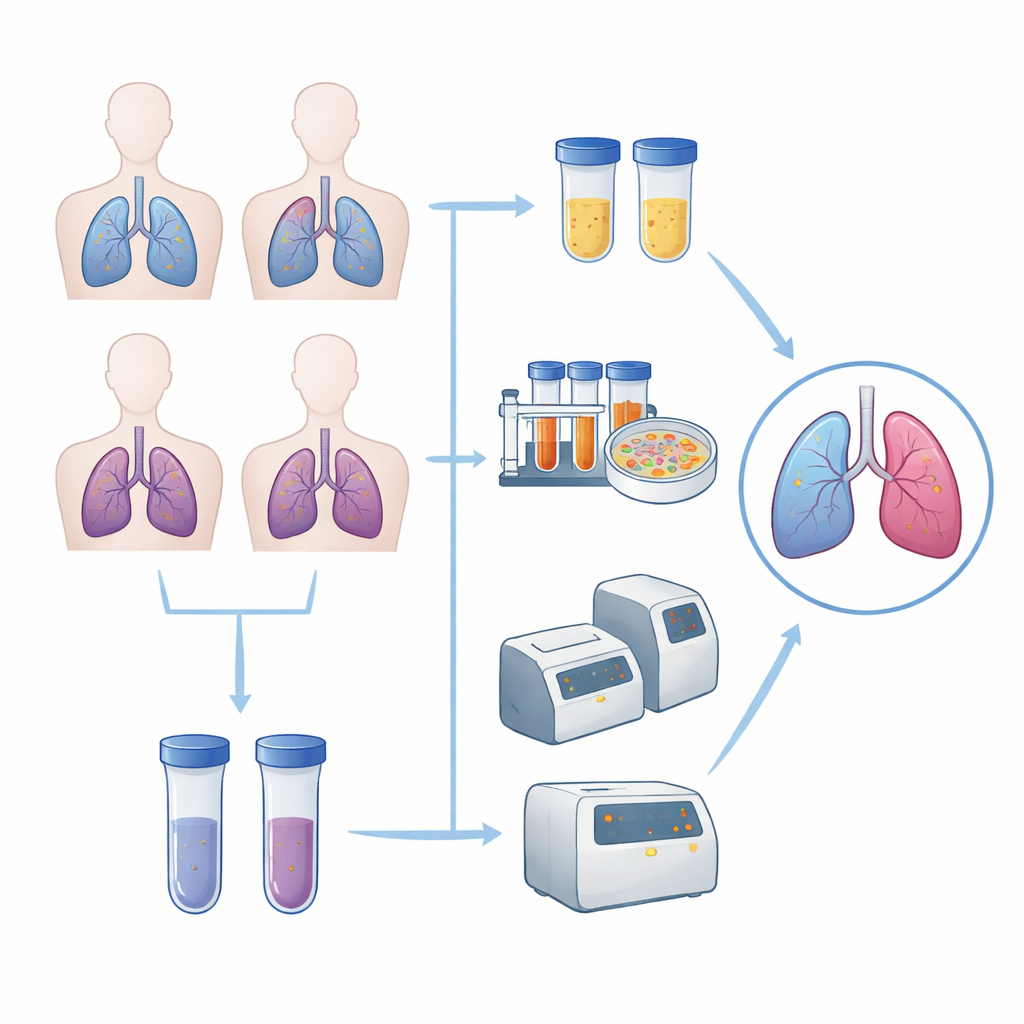
The researchers reviewed records from 264 people in four hospitals in Hebei, China, all suspected of having lung TB. Using national standards and one year of follow-up, 212 were ultimately judged to have active pulmonary TB and 52 were not. From these patients, doctors collected two main types of lung samples: sputum, the mucus coughed up from the airways, and bronchoalveolar lavage fluid, a saline wash retrieved during bronchoscopy. Every sample was tested with four methods: a concentrated acid-fast stain on a special “sandwich cup” membrane, a liquid culture system for mycobacteria, and two DNA-based tests called Boao TaqMan-qPCR and GeneXpert MTB/RIF.
What happened when tests were combined on single samples
Looking first at sputum alone, no single test could detect all patients with active TB. Culture was the most sensitive individual method, but even it missed more than a third of cases. The three advanced tests—culture and both DNA assays—were extremely specific, meaning that when they were positive, nearly all patients truly had TB. When the team combined results from several methods on the same sputum sample, sensitivity improved: using all four tests together picked up about three quarters of active cases, clearly better than any one test alone. A similar pattern appeared when only bronchoscopy fluid was used: each test caught some but not all cases, and combining them raised the overall detection rate.
Using more than one type of sample
The strongest gains came from combining both types of samples and multiple tests. In a subgroup of 57 patients who had all four tests done on both sputum and lavage fluid, the combined approach reached its best performance. Considering the final clinical diagnosis as the benchmark, using all methods across both specimen types produced a very high overall accuracy score and detected more than four out of five true TB cases. Importantly, a simpler pair of tests—the GeneXpert molecular assay plus culture—came close to the full four-test package, providing excellent accuracy and perfect confirmation when both were positive, while slightly reducing the risk of overcalling TB in people without active disease.
What this means for patients and health systems
For patients and clinicians, the message is that no single “silver bullet” test can reliably rule TB in or out, especially when symptoms are subtle or sputum is scarce. Instead, using a smart combination of methods and specimen types can catch more true cases early, when treatment is most effective, while keeping false alarms low. The study suggests that pairing a rapid DNA test with culture, and using both sputum and bronchoscopic samples when needed, offers a practical route to faster, more confident TB diagnosis—helping to start therapy sooner, prevent spread to others, and make better use of limited laboratory resources.
Citation: Wang, X., He, C., Liu, M. et al. Diagnostic value of phenotypic testing combined with molecular biology testing for tuberculosis. Sci Rep 16, 8692 (2026). https://doi.org/10.1038/s41598-026-43218-z
Keywords: tuberculosis diagnosis, molecular testing, sputum and bronchoscopy, GeneXpert, mycobacterial culture