Clear Sky Science · en
VS-4718 enhances apoptosis induced by low-dose carfilzomib and overcomes carfilzomib resistance in PSMB5-mutated proteasome inhibitor resistant multiple myeloma
Why this matters for people with blood cancer
Multiple myeloma is a cancer of the bone marrow that has become far more treatable in recent years, yet many patients still face a grim reality: over time, their disease often learns to ignore even the most powerful drugs, and higher doses can damage the heart and other organs. This study explores whether pairing an experimental medicine called VS-4718 with very low doses of the approved drug carfilzomib can both hit myeloma cells harder and ease side effects, including in forms of the disease that are already resistant to standard treatment. 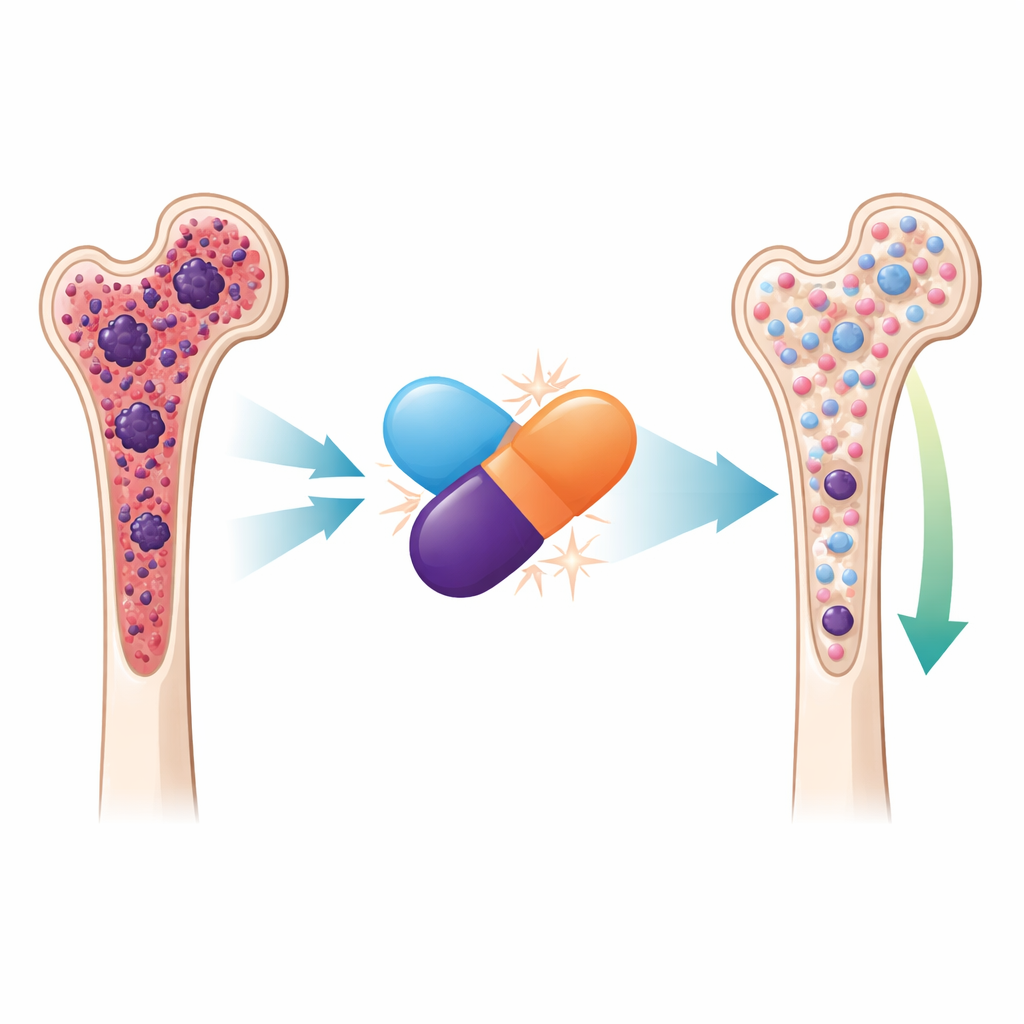
A cancer that outsmarts its medicines
Modern myeloma therapy relies heavily on proteasome inhibitors, drugs that clog the cell’s garbage disposal system so cancer cells drown in their own waste. Carfilzomib is a powerful member of this class and can work even when older drugs have failed. But many patients eventually develop resistance, sometimes through changes in a proteasome building block called PSMB5 that prevent the drug from binding properly. Others cannot tolerate the high doses needed, especially those with fragile health or heart problems. Clinicians therefore urgently need treatment combinations that can restore sensitivity to these drugs while allowing lower, safer dosing.
An added blow from a partner drug
VS-4718 blocks two signaling hubs, PYK2 and FAK, which help cancer cells stick to their surroundings and receive growth and survival cues. The researchers first tested VS-4718 alone in seven human myeloma cell lines with very different genetic makeups. Even at modest concentrations, the drug reduced cell activity and triggered a molecular hallmark of programmed cell death (cleavage of the protein PARP-1) in several lines. Importantly, this response did not depend on how much PYK2 or FAK the cells made, or how strongly those proteins were switched on, suggesting that VS-4718’s cancer-weakening effect is broadly applicable across diverse myeloma types.
Low-dose pairing hits tumor cells, spares healthy blood cells
The team then combined VS-4718 with carfilzomib at “moderate” or even very low doses. In five of the seven myeloma cell lines, the duo reduced survival more than expected from simply adding the effects of each drug alone, a sign of true synergy. Careful dose-tuning in two representative cell lines showed that slightly higher VS-4718 levels allowed carfilzomib doses to be cut to levels that barely harmed cells on their own, yet together wiped out 70–80% of myeloma cells. When the same drug combination was applied to normal immune cells from healthy donors, VS-4718 alone had little impact, and the combination was much less harmful than in cancer cells. This selective sensitivity raises the hope that patients could benefit from the pairing without severely damaging their healthy blood cells. 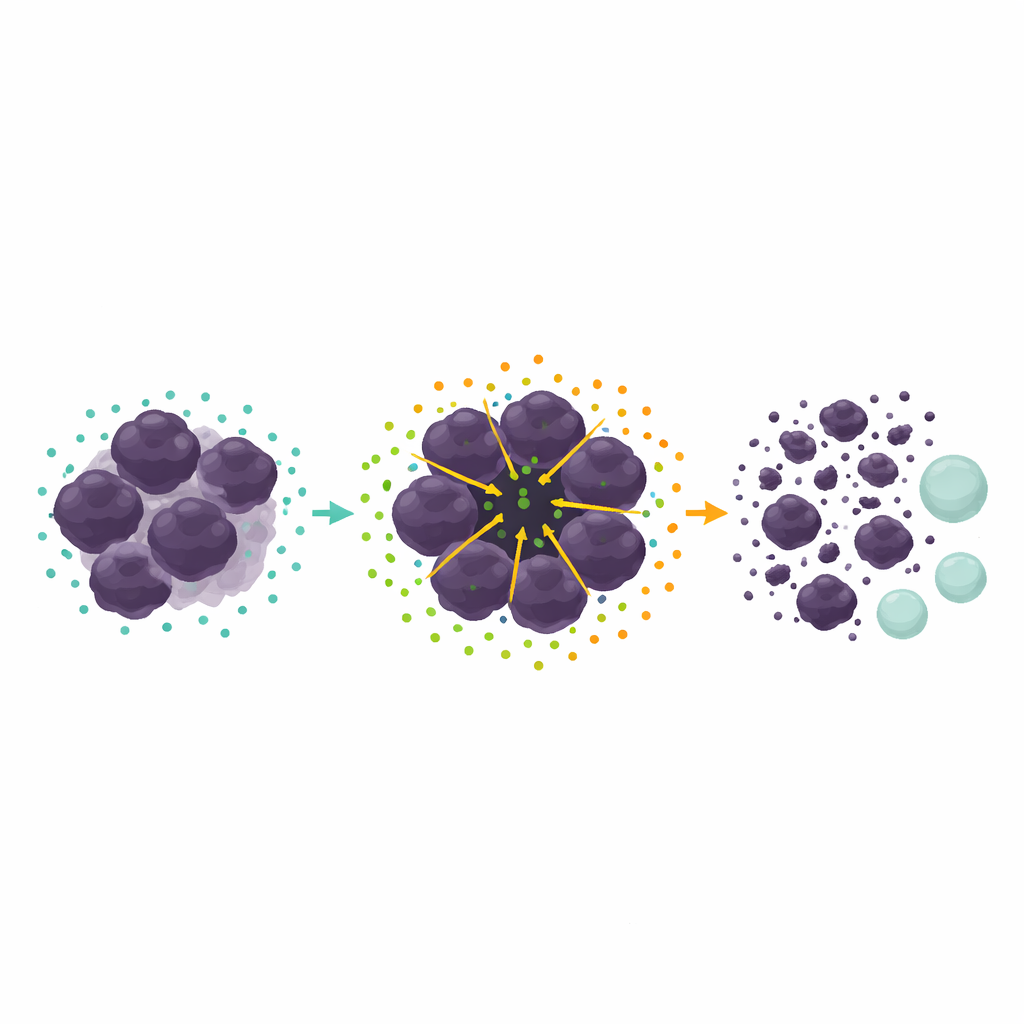
Overcoming tough, drug-resistant myeloma
Perhaps most strikingly, the researchers turned to two specially engineered myeloma cell lines carrying PSMB5 mutations and showing triple resistance to three different proteasome inhibitors, including carfilzomib. On their own, even high carfilzomib doses barely touched these resistant cells. When VS-4718 was added, however, the same or lower carfilzomib doses suddenly became far more effective, killing roughly half to two-thirds of the cells—well beyond what either drug achieved alone. Molecular analyses confirmed that the combination strongly activated the cell-death machinery. Yet this renewed sensitivity did not line up neatly with changes in PYK2 or FAK activation, hinting that VS-4718 may also be acting through additional, still-uncovered pathways that make resistant cells vulnerable again.
What this could mean for patients
For people living with multiple myeloma, these laboratory results suggest a promising future strategy: use VS-4718 to weaken cancer cells so that very low, less toxic doses of carfilzomib can deliver a decisive blow, including in tumors that have already evolved resistance. Because the effect appeared in many different myeloma cell models, regardless of their detailed mutation patterns, this approach might benefit a broad range of patients rather than just a genetically defined few. The authors argue that the next step is to test this combination in primary patient samples and animal models to confirm safety and effectiveness. If successful, such trials could open the door to gentler yet more powerful treatment options for both newly diagnosed and hard-to-treat, drug-resistant myeloma.
Citation: Leich-Zbat, E., Heredia-Guerrero, S.C., Evers, M. et al. VS-4718 enhances apoptosis induced by low-dose carfilzomib and overcomes carfilzomib resistance in PSMB5-mutated proteasome inhibitor resistant multiple myeloma. Sci Rep 16, 9197 (2026). https://doi.org/10.1038/s41598-026-43205-4
Keywords: multiple myeloma, drug resistance, carfilzomib, VS-4718, combination therapy