Clear Sky Science · en
General-practitioner-centered health care: current results from the implementation of the German model
Why your family doctor matters more than you think
Most of us see our family doctor as the first stop for everyday health worries, but this paper asks a bigger question: what happens when family doctors are put firmly in charge of guiding all our care? Using data from almost two million people in one German state, the authors show that a system built around general practitioners (GPs) can mean fewer hospital stays, fewer unnecessary specialist visits, and smarter use of medicines—without taking anything away from patients who need more advanced treatment.
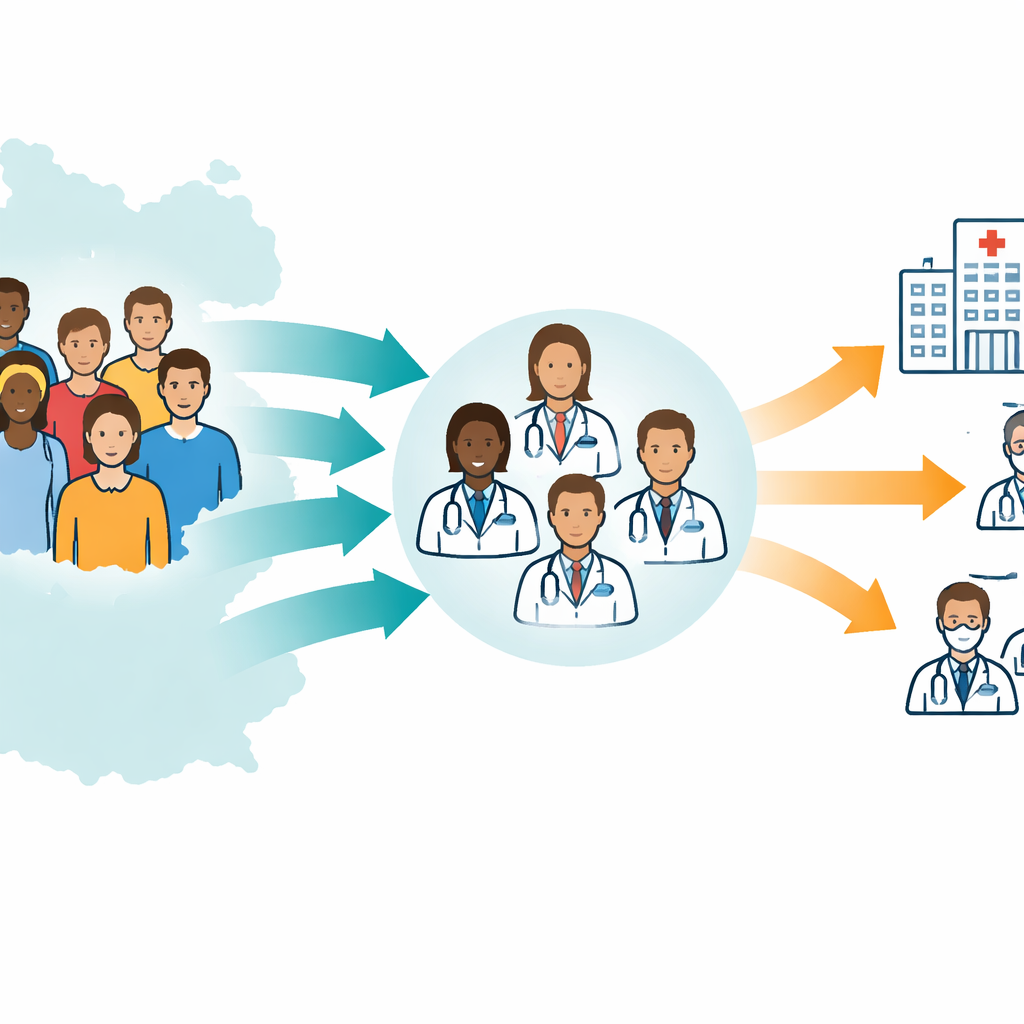
A health system built around one main doctor
The study looks at a program in Germany called “general-practitioner-centered health care.” In this model, each participating patient has a clearly identified GP who acts as their main point of contact and coordinator. Patients still have access to specialists and hospitals, but their GP helps decide when this is truly needed, keeps an overview of all treatments, and stays involved over many years. The program also asks participating GPs to offer longer opening hours, keep up with extra training, use electronic tools to support safer prescribing, and organize care for chronic illnesses such as diabetes, asthma, and heart disease.
What the researchers measured
To find out whether this GP-centered model really makes a difference, the authors analyzed insurance records from the large public insurer AOK Baden-Württemberg in 2022 and over the years 2011 to 2022. They compared people enrolled in the GP program with similar adults receiving usual care. Five everyday outcomes were examined: how often people contacted their GP, how often they went directly to a specialist without GP involvement, how many times they were admitted to hospital, how many of those stays could likely have been avoided with better outpatient care, and how often GPs prescribed so-called “me-too” drugs—expensive copies of older medicines that do not clearly work better.
Clear patterns over more than a decade
The results consistently favored patients in the GP-centered program. In 2022 they saw their GP much more often, but had far fewer unplanned specialist visits. Hospital admissions, including those considered potentially avoidable, were modestly but meaningfully lower, which matters greatly when scaled to hundreds of thousands of people. Prescriptions for me-too drugs were also clearly reduced, suggesting more careful and cost-conscious use of medicines. Long-term data over twelve years confirmed these trends: the gaps between GP-centered care and usual care stayed stable or even widened in favor of the program, despite the fact that enrolled patients tended to be older and sicker on average.
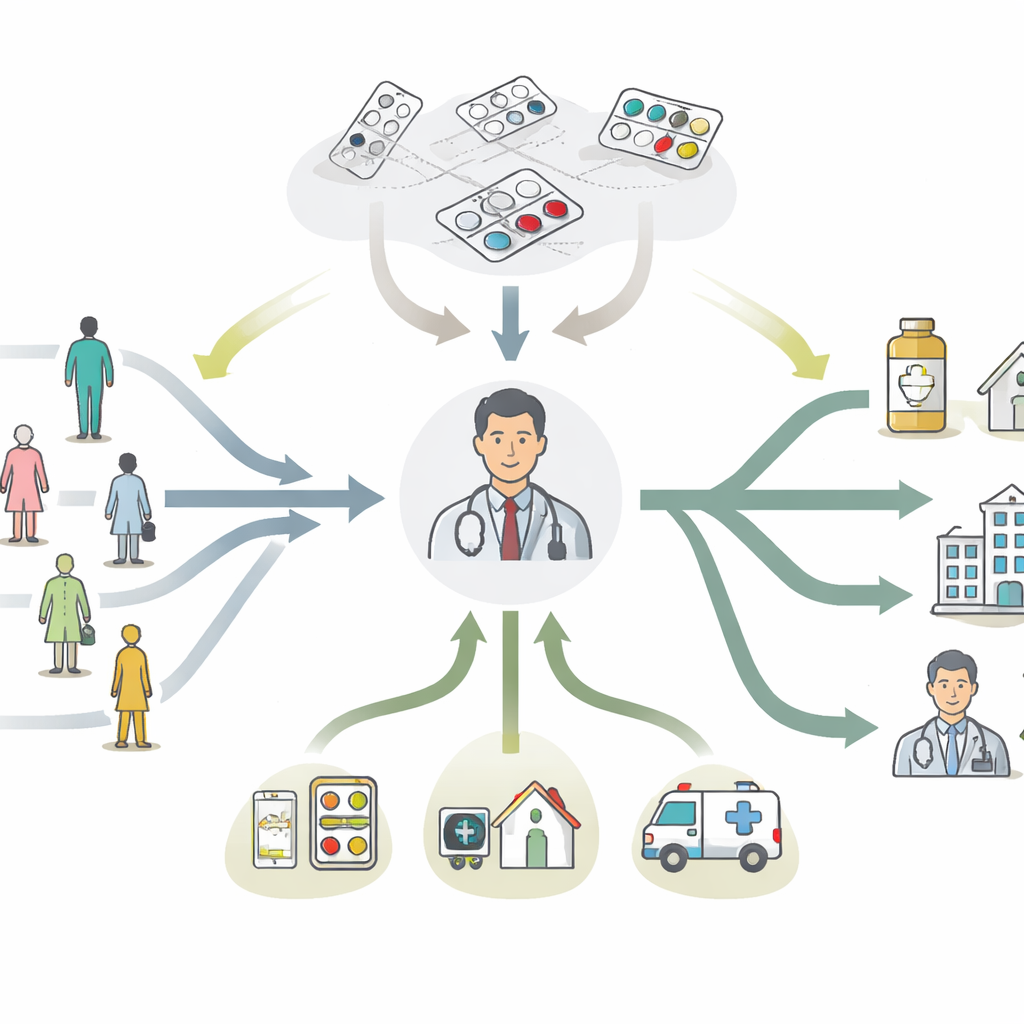
How this fits into the bigger international picture
The German experience mirrors findings from other countries that have invested heavily in strong primary care. Nations such as the Netherlands, Denmark, the United Kingdom, and several Nordic countries—where residents usually register with a specific GP and rely on them as gatekeepers—tend to show fewer avoidable hospital stays, better control of long-term illnesses, and higher patient satisfaction. Similar approaches in the United States, known as patient-centered medical homes, have also reduced emergency visits, hospital use, and overall costs when they are fully implemented. Germany historically spent less of its health budget on primary care, but the rapid spread of the GP-centered model to millions of people suggests a shift toward this more coordinated style of care.
What this means for patients and policy
For ordinary patients, the study’s message is straightforward: having a trusted family doctor who knows you well and coordinates your care is not just comforting, it is linked to fewer hospitalizations, safer medication use, and a smoother journey through the health system. For health planners, the results argue that strengthening primary care—by giving GPs time, tools, and responsibility to guide treatment—can pay off in better outcomes and more efficient use of resources. While this research cannot prove cause and effect beyond all doubt, the long-lasting, consistent advantages seen in the German program, together with similar findings worldwide, make a strong case that putting GPs at the center is a promising way to build more sustainable and people-friendly health care.
Citation: Leutgeb, R., Fuchs, G.E., Altiner, A. et al. General-practitioner-centered health care: current results from the implementation of the German model. Sci Rep 16, 8562 (2026). https://doi.org/10.1038/s41598-026-43163-x
Keywords: primary care, family doctor, health system reform, hospitalization, medication use