Clear Sky Science · en
High alcohol consumption and early hip fracture risk in men and women
Why This Matters for Everyday Drinkers
Most of us know that heavy drinking can harm the liver or the brain, but far fewer realize it can quietly weaken the skeleton long before old age. This study followed more than ten thousand young adults in Stockholm for nearly half a century to ask a simple but important question: do people who drink so heavily that they end up in hospital face a higher risk of breaking a hip in midlife or early older age? The answer, for both men and women, is a resounding yes.
A Long Look at Young Adults
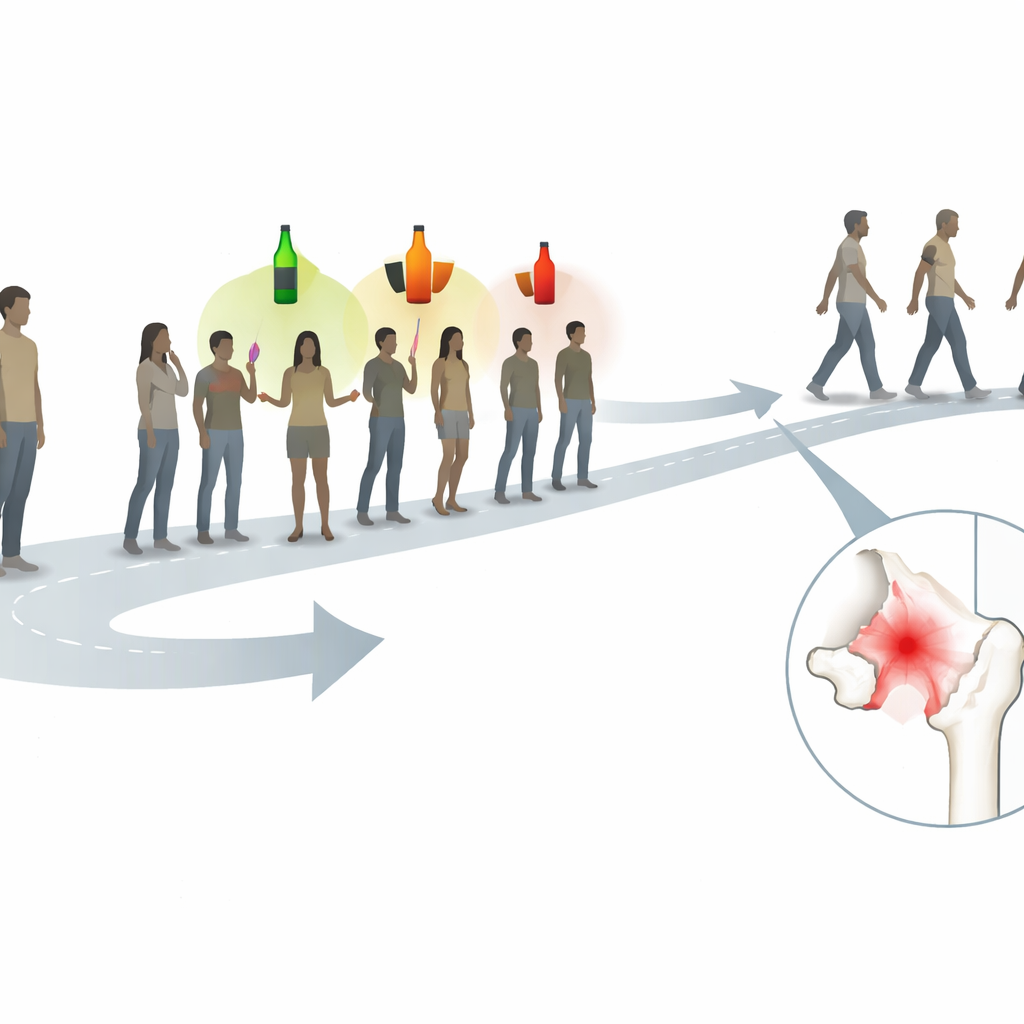
In 1969–1970, researchers surveyed a large, random sample of adults living in Stockholm. For this analysis, they focused on 10,043 people who were 18 to 25 years old at the time. Rather than relying on what people said about their drinking, the team used hospital records collected over the next 47 years, up to 2016. They specifically looked for two kinds of events: admissions for hip fractures and admissions with medical diagnoses that signal long-term heavy alcohol use, such as alcohol-related liver disease, nerve damage, or severe intoxication.
Tracking Heavy Drinking and Broken Hips
Across the follow-up period—covering most of the participants’ adult lives until they were 65 to 72 years old—450 people were hospitalized at least once with a diagnosis indicating serious, long-lasting alcohol problems. These diagnoses were more common in men than in women, and tended to appear around age 40. Over the same period, 151 participants sustained at least one hip fracture, usually around age 61. Twenty-four people had both a heavy-alcohol diagnosis and a hip fracture; in most of these cases, the alcohol-related hospital stay happened before the fracture, hinting at a potential cause-and-effect relationship.
How Big Was the Added Risk?
The researchers used a statistical model that followed people over time and compared periods before and after they had an alcohol-related hospitalization. This allowed them to estimate how much that kind of event changed the odds of a later hip fracture, while taking age into account. For women, having such a diagnosis was linked to about a four-and-a-half-fold increase in the chance of breaking a hip before age 72. For men, the increase was even larger—about seven-and-a-half times higher than men without these diagnoses. Although more women than men had hip fractures overall, the relative impact of heavy drinking on fracture risk appeared stronger in men.
What Might Be Going On Inside the Body?
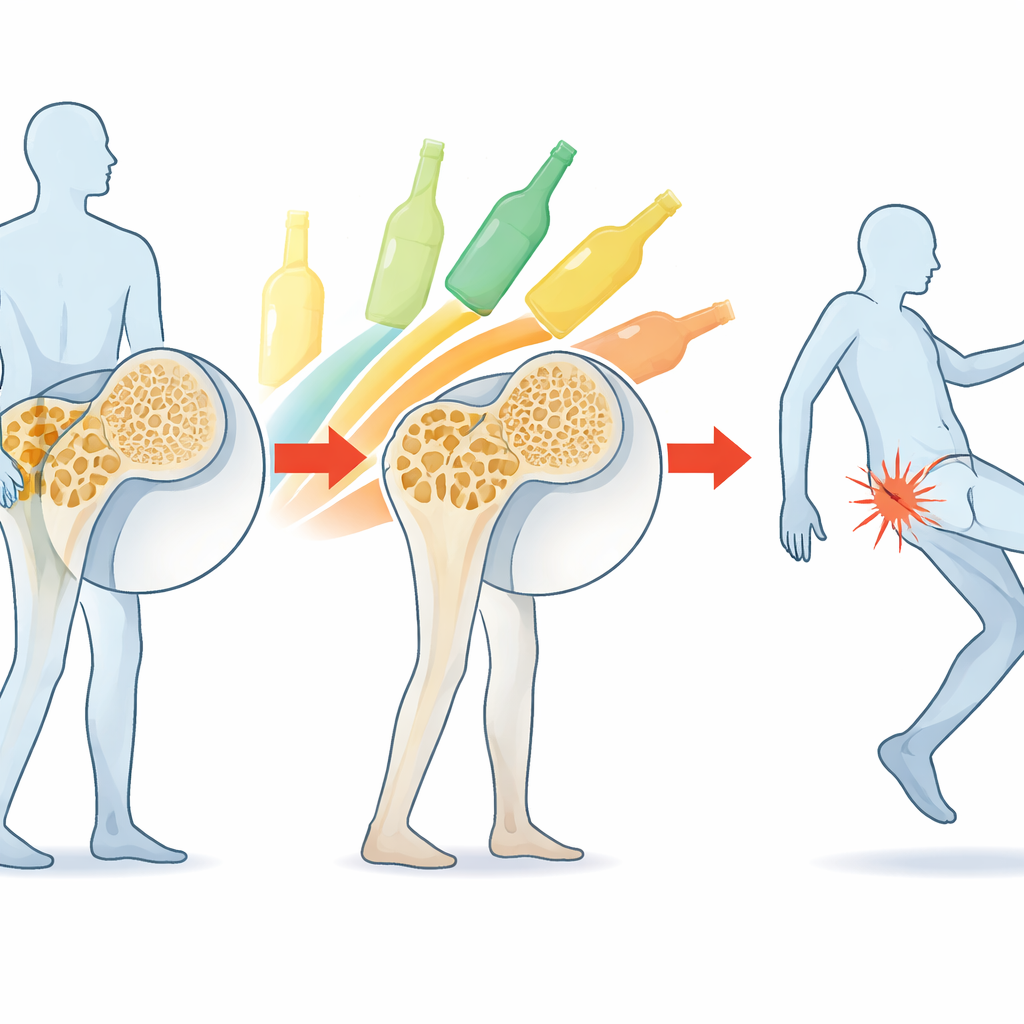
Alcohol can influence bone and falls in several ways. Long-term heavy drinking is known to interfere with how the body builds and maintains bone, tipping the balance toward bone loss and making the skeleton more fragile. It can also damage nerves and muscles, increasing unsteadiness and the likelihood of falls—especially dangerous when bones are already weakened. By using hospital-based diagnoses instead of self-reported drinking, this study likely captured people with the heaviest and most sustained alcohol use, which may explain why the increased fracture risks were higher than in many earlier studies that relied on questionnaires.
Limits and What We Can Learn
The authors note several caveats. Hospital records will miss heavy drinkers who never come to medical attention, and changes in medical coding over 47 years add some uncertainty. The study also lacked information on smoking, another behavior that can weaken bones and often travels together with heavy drinking. And because all participants lived in Stockholm in the late 1960s, the findings may not apply perfectly to countries with different drinking cultures or health systems. Still, Sweden’s detailed national registers and decades-long follow-up provide unusually strong evidence that serious alcohol problems early in adult life cast a long shadow on bone health.
What This Means for You
For the average person, these findings underscore that heavy drinking is not just a short-term risk for accidents or a long-term threat to the liver—it can also quietly set the stage for serious fractures years down the line, even before old age. The study suggests that when doctors see signs of long-term alcohol misuse in younger or middle-aged adults, they should also think about bone health and fall risk, not just liver tests. For individuals, cutting back on heavy drinking is likely one of several steps—alongside not smoking, staying active, and getting enough calcium and vitamin D—that can help keep hips strong and avoid disabling fractures later in life.
Citation: Elleby, C., Skott, P., Johansson, SE. et al. High alcohol consumption and early hip fracture risk in men and women. Sci Rep 16, 9084 (2026). https://doi.org/10.1038/s41598-026-43095-6
Keywords: alcohol and bone health, hip fracture risk, non-elderly adults, osteoporosis, long-term drinking