Clear Sky Science · en
Non-physiological potassium concentrations in commercial culture media trigger acute seizure-like activity in human iPSC-derived neurons
Why the brain’s bathwater matters
Brain cells are usually studied in dishes, not in people’s heads. We often assume that these tiny lab worlds faithfully mimic the real brain. This study shows that a basic ingredient of many popular lab solutions—potassium—can be high enough to push human nerve cells into seizure-like behavior. That finding matters not only for epilepsy research, but for any study that uses human stem-cell–derived neurons to test drugs or to understand how the brain works.
How brain cells live in the body
In the living brain, neurons float in a clear liquid called cerebrospinal fluid, which washes through and around brain tissue. This fluid carefully controls the levels of key salts, or ions, such as sodium, chloride, magnesium, calcium, and especially potassium. Tiny shifts in these ions can dramatically alter how easily neurons fire and how they talk to each other. Earlier work from the same group showed that the brain actively keeps potassium in this fluid lower than in the blood, suggesting that this tight control is not an accident but a protective strategy to prevent runaway electrical activity.
What lab dishes get wrong
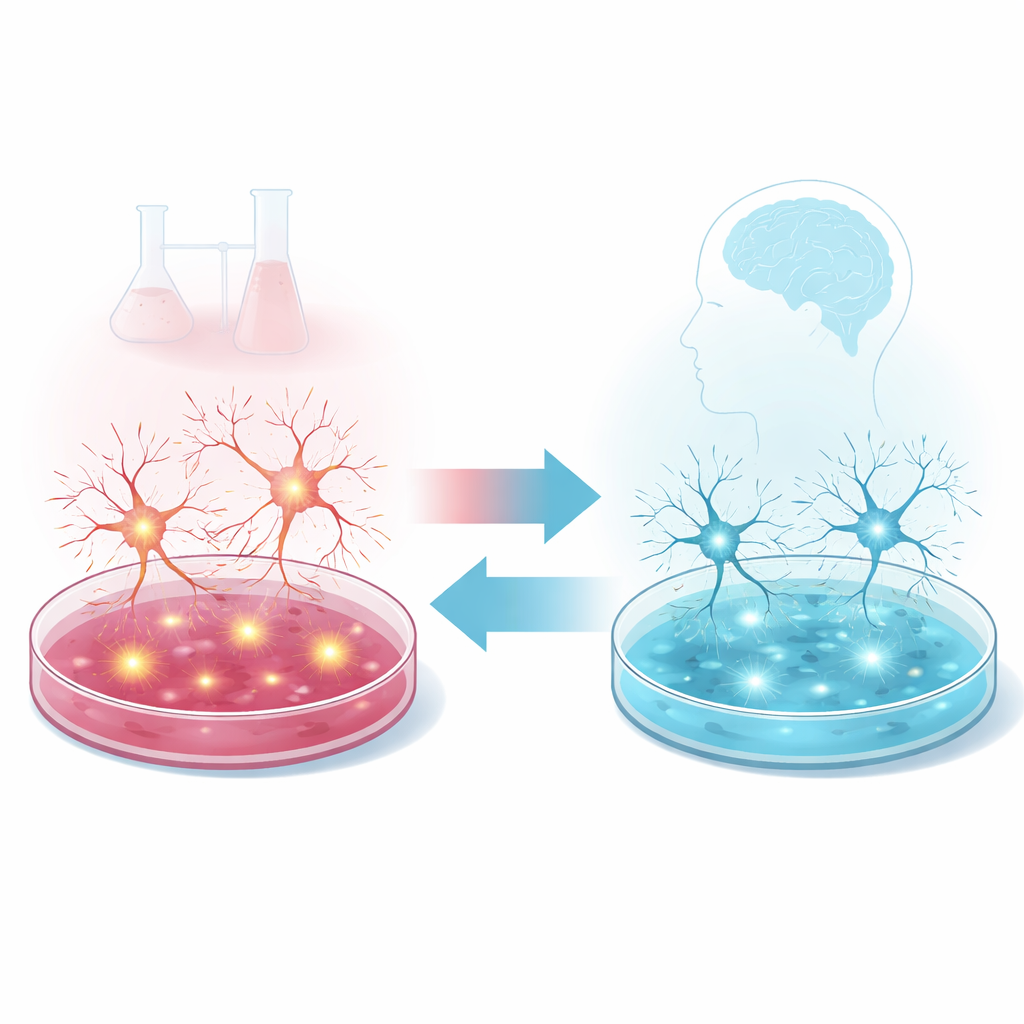
In the lab, neurons are kept alive in commercial culture media or in simplified salt solutions designed to imitate cerebrospinal fluid. The researchers measured the actual ion levels in fluid taken from healthy volunteers and compared them with several widely used media, including BrainPhys, Neurobasal Plus, and DMEM/F12, as well as common artificial cerebrospinal fluid recipes. None of these mixtures truly matched human cerebrospinal fluid. Potassium was consistently higher and magnesium lower in every commercial medium tested, while some also differed in sodium, calcium, and chloride. Literature surveys showed that many labs also use artificial fluids with potassium levels above what the human brain normally sees.
When a small change sparks big storms
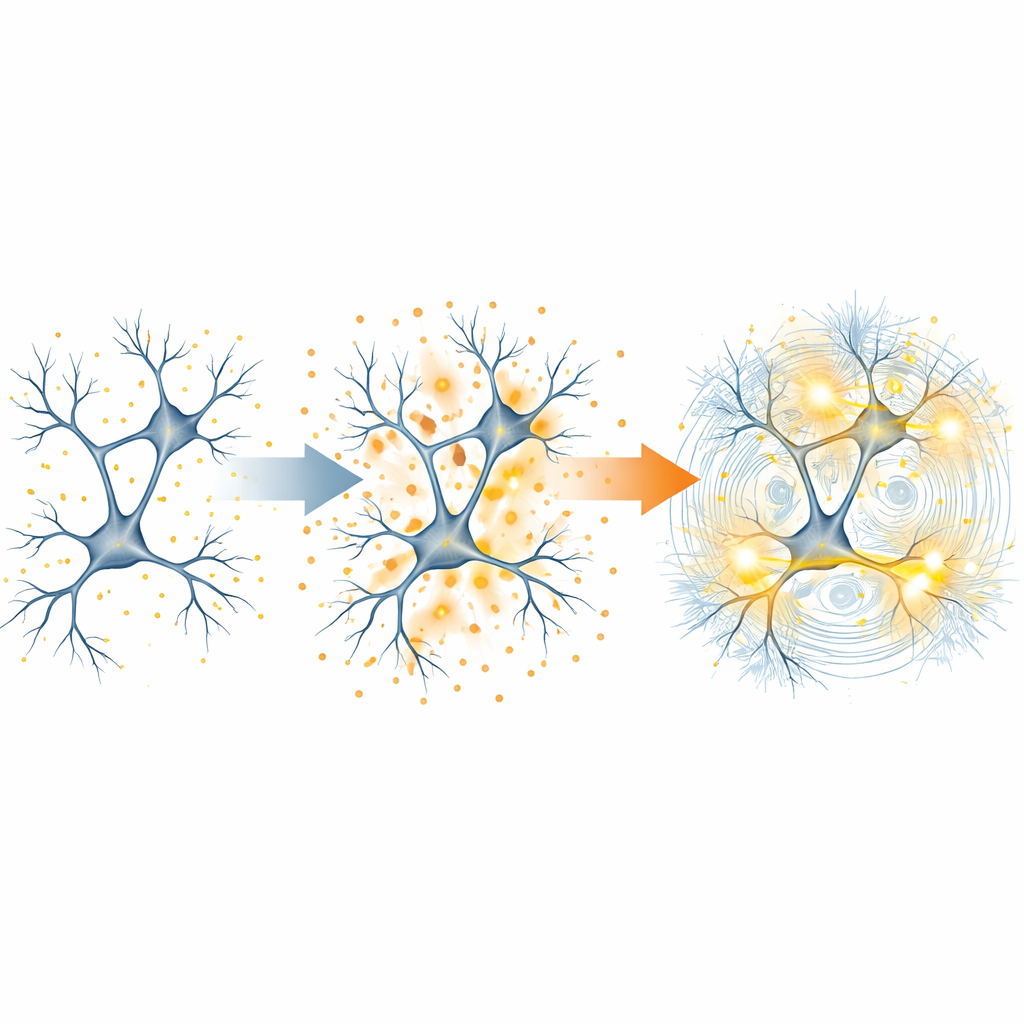
To see what these differences do to human neurons, the team grew three-dimensional networks of nerve cells from human induced pluripotent stem cells and recorded their electrical activity on microelectrode arrays. When they gently raised potassium in an artificial cerebrospinal fluid from a physiological level of about 2.9 millimoles to just 4 millimoles—similar to many lab solutions—the networks rapidly shifted into highly synchronized, rhythmic bursting that resembled seizure activity. A classic seizure-inducing drug produced very similar patterns, strengthening the case that this was not just a harmless increase in firing but a pathologically excited state.
Real brain fluid versus popular media
The researchers then compared three conditions directly: human neurons bathed in carefully ion-matched artificial fluid, in real human cerebrospinal fluid, and in BrainPhys medium. Human cerebrospinal fluid increased network activity compared with ion-matched artificial fluid, but in a way that looked more balanced: more neurons joined in coordinated bursts, yet firing rates and patterns stayed within a moderate range. In sharp contrast, BrainPhys drove stronger, more frequent, and more synchronized bursts than human cerebrospinal fluid, leaving virtually no cultures in a quiet or loosely organized state. Overall, media with high potassium and low magnesium consistently pushed the networks toward overly synchronous, seizure-like behavior.
What this means for brain research
These findings suggest that many in vitro brain models, especially those using standard commercial media, may be operating in a chronically overexcited mode that does not reflect healthy human brain conditions. That does not erase decades of laboratory work, but it raises a caution flag: results about “normal” neuronal behavior may actually describe neurons already teetering on the edge of seizure. The study argues that future experiments—and media formulations—should more closely follow the ion balance of real human cerebrospinal fluid. Getting the brain’s chemical bath right could make lab-grown neurons better stand-ins for the human brain and sharpen our ability to distinguish healthy from truly pathological activity.
Citation: Lyckenvik, T., Izsak, J., Arthursson, E. et al. Non-physiological potassium concentrations in commercial culture media trigger acute seizure-like activity in human iPSC-derived neurons. Sci Rep 16, 9229 (2026). https://doi.org/10.1038/s41598-026-43094-7
Keywords: cerebrospinal fluid, potassium, neuronal networks, seizure-like activity, cell culture media