Clear Sky Science · en
High-resolution regional climate projections and tourism impacts in the Macaronesian archipelagos
Why Island Holidays Are Changing
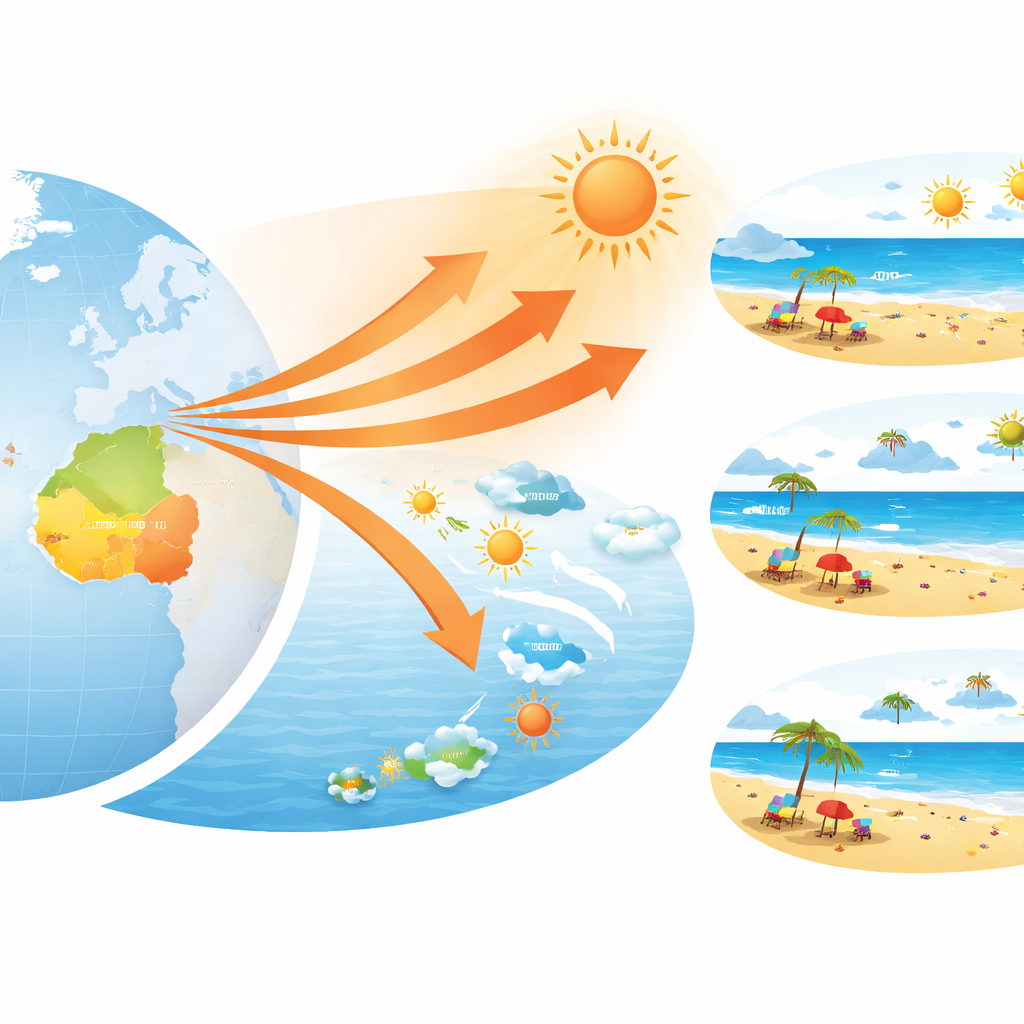
For millions of travelers, the Atlantic islands of the Azores, Madeira, the Canary Islands, and Cabo Verde are dream destinations of sun, sand, and mild breezes. This study asks a simple but vital question: as the planet warms, will these islands become better or worse places for a beach holiday—and in which season? Using detailed climate simulations, the authors show that climate change is likely to reshape when, more than whether, these archipelagos are attractive for tourism, with important consequences for local economies that depend heavily on visitors.
Four Island Chains on the Front Line
The Macaronesian archipelagos sit in the North Atlantic off Europe and West Africa, spanning cooler northern islands (the Azores and Madeira) and warmer southern ones (the Canary Islands and Cabo Verde). Tourism already provides between a sixth and over a third of gross domestic product in these regions, and even more in exports. Because the islands are small, mountainous, and surrounded by ocean, their local weather is shaped by subtle interactions among winds, currents, and topography that global climate models cannot resolve well. The authors therefore used a high‑resolution regional climate model to zoom in on each archipelago at about 3‑kilometer detail, capturing microclimates along individual coasts and beaches.
Turning Weather into Holiday Quality
Instead of looking only at temperature or rainfall, the study translates daily weather into how it actually feels to tourists. It uses established “tourism climate indices” that blend heat, humidity, rain, cloud cover, sunshine, and wind into a single score of how good a day is for different activities. The main focus is a beach index measuring how many days per month offer “excellent” or “ideal” conditions—warm but not sweltering, mostly sunny, little or no rain, and comfortable breezes. The team first checked that their model could reproduce past observations from weather stations and satellites, then applied a standard method to imprint future global warming signals from multiple international climate models onto the regional simulations for mid‑century and late‑century, under both low and high emissions pathways.
How Future Climate Shapes Beach Days
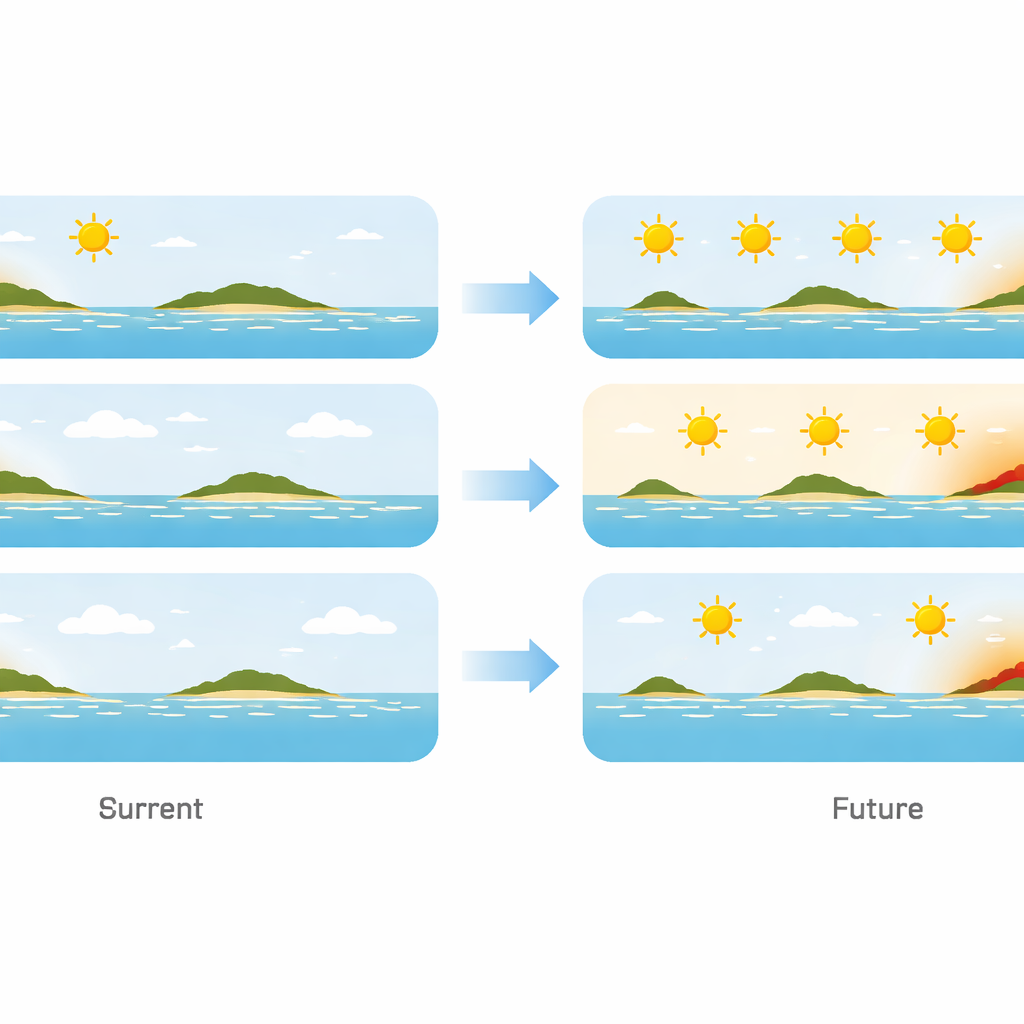
The simulations show a clear climate‑change signal by the end of the century under a high‑emissions scenario. Overall, the number of excellent beach days increases across all four archipelagos, but not uniformly. In the cooler northern islands, especially the Azores, warmer summers tend to push conditions toward a thermal “sweet spot,” producing more ideal beach days with little evidence of heat stress. Madeira also gains, though with some areas where the signal is less certain. Further south, in the Canary Islands and Cabo Verde, the story is more mixed: winters become notably more suitable as cooler, marginal days warm into comfortable territory, but the hottest parts of summer in some coastal zones begin to lose top‑rated days as conditions grow uncomfortably hot.
Seasonal Swaps and Island Contrasts
A striking pattern emerges when the results are viewed by latitude and season. The northern archipelagos are projected to benefit most in summer, while the southern archipelagos see their strongest gains in winter. In other words, climate change tends to shift the seasonal peak of comfort: northern islands become more competitive summer beach destinations, and already warm southern islands become even more attractive in the cooler months. The physical driver is usually thermal comfort—how hot and humid it feels—except in Cabo Verde, where projected reductions in cloudiness and small changes in rainfall play an unusually large role in making beach weather more appealing. Some localized coastal stretches in the southern islands, however, could face fewer excellent days in mid‑summer as heat intensifies.
What This Means for Future Holidays
For travelers, these findings suggest that Macaronesian beach destinations are unlikely to disappear from the tourist map; instead, their best seasons may shift. For local governments and businesses, this creates both opportunities and risks. Longer shoulder seasons and improved winter conditions could spread visitor numbers more evenly through the year, but hotter summers in some southern resorts may require new cooling, shade, and health measures—and all islands must still contend with threats not captured by these indices, such as rising seas eroding beaches. By clarifying how climate change is likely to alter the feel of a beach day, this work offers a detailed roadmap for adapting tourism on these vulnerable yet resilient Atlantic islands.
Citation: Rodríguez-Rull, J., Expósito, F.J., Díaz, J.P. et al. High-resolution regional climate projections and tourism impacts in the Macaronesian archipelagos. Sci Rep 16, 8696 (2026). https://doi.org/10.1038/s41598-026-43092-9
Keywords: climate change, coastal tourism, Macaronesia, regional climate modelling, beach holidays