Clear Sky Science · en
Obesity-related differences in amygdala and hippocampal volume and metabolism before and after a placebo-controlled antidepressant trial in major depressive disorder
Why this study matters to everyday health
Depression and obesity are two of the most common health problems worldwide, and they often occur together. Doctors know that people with higher body weight sometimes respond differently to antidepressant medications, but the reasons for this are not well understood. This study asks a simple but important question: does extra body fat around the waist change how key emotion and memory centers in the brain behave during depression treatment—and does that help explain who feels better?
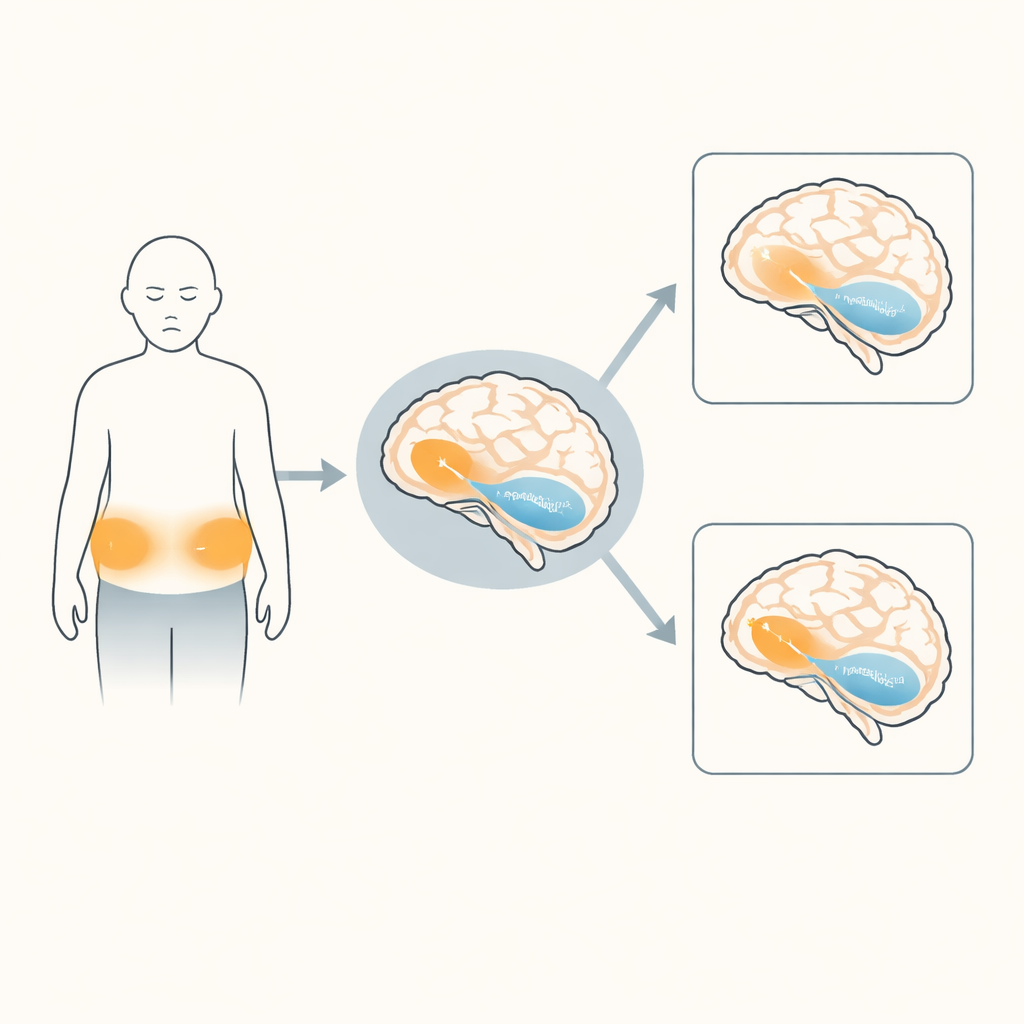
Taking a closer look at body fat and the brain
The researchers focused on two small but crucial brain regions: the amygdala, which is deeply involved in processing emotions like fear and stress, and the hippocampus, which helps with memory and mood regulation. Both regions are known to change in people with depression and in people with obesity. The team studied 85 adults with major depressive disorder who took part in a double-blind trial where they received either the antidepressant escitalopram or a placebo pill. Everyone had detailed brain scans before and after about two months of treatment, using MRI to measure brain volume and PET imaging to measure how actively the brain was using sugar, an indicator of metabolism.
Measuring more than just the number on the scale
Instead of relying only on body mass index (BMI), which is weight adjusted for height, the study emphasized waist circumference as a marker of abdominal, or visceral, fat. This kind of fat, packed around internal organs, is strongly linked to inflammation, hormonal changes, and metabolic diseases—all of which can affect the brain. Participants had their waist size, weight, and depression severity measured before treatment, and their mood was tracked again afterward. By comparing these body measures with changes in the amygdala and hippocampus over time, the researchers looked for patterns that connect obesity, brain biology, and response to treatment.
What the scans revealed about obesity and brain structure
At the start of the study, people with larger waists and higher BMI tended to have larger amygdalae and, to a lesser extent, larger hippocampi. This was somewhat surprising, because many earlier depression studies reported smaller volumes in these regions, and obesity is often linked to shrinkage of brain tissue. Here, however, greater body fat was associated with enlargement of these emotion and memory centers, especially at higher levels of obesity. Importantly, these brain differences were not simply a reflection of worse depression: waist size and BMI were not related to how severe people’s symptoms were at the outset.
How body fat shaped brain changes during treatment
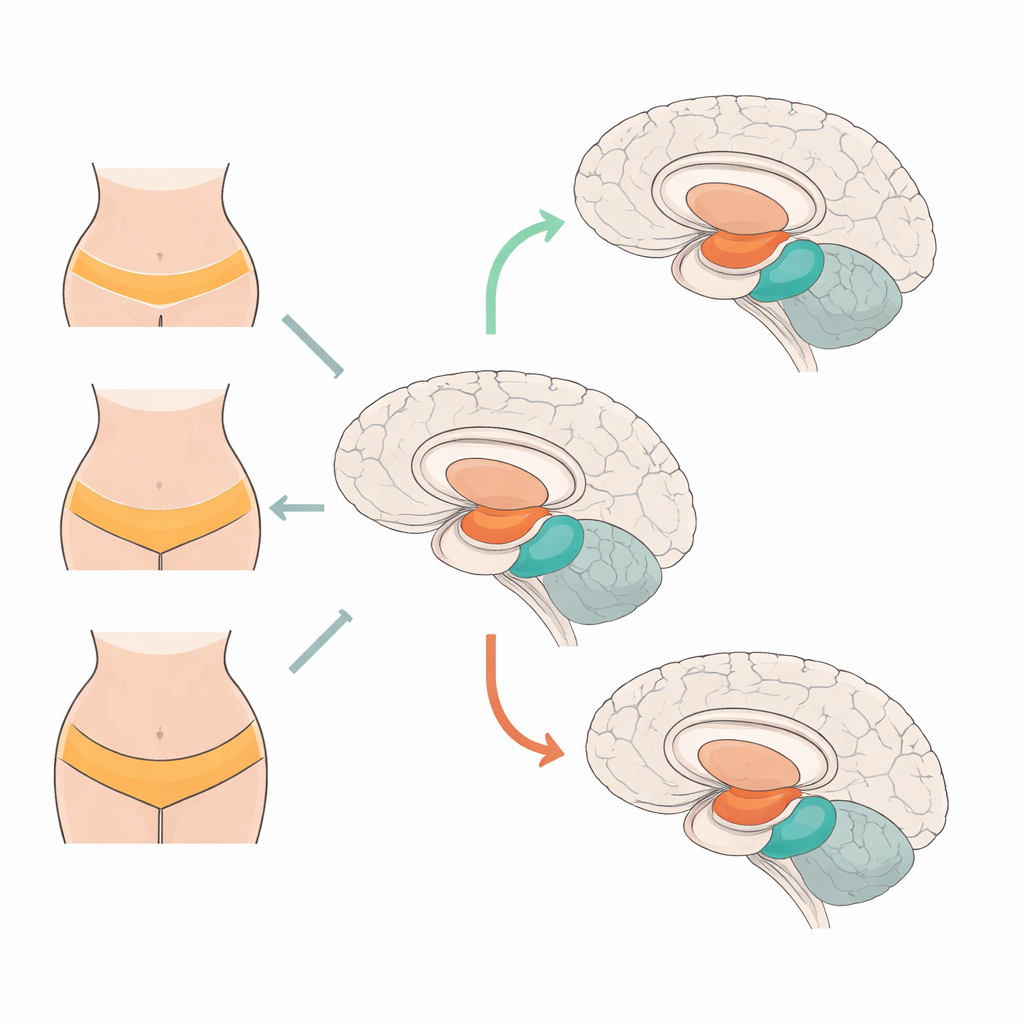
Typically, successful depression treatment is associated with modest growth in the amygdala and hippocampus and a drop in their metabolic activity, which may reflect healthier brain functioning. In this study, however, people with larger waists or higher BMI showed the opposite trend in the amygdala. The heavier a participant was, the more likely their amygdala volume was to decrease over the treatment period rather than increase. In exploratory analyses using BMI, higher values were also linked to increases, rather than decreases, in amygdala and hippocampal metabolism. Across the range of BMI in the sample, this could translate into sizable differences in how energetically these regions were working after the intervention.
What this means for mood and daily life
Despite these clear links between obesity and brain changes, the study did not find that people with larger waists or higher BMI improved less in their depression symptoms. Changes in brain volume and metabolism did not neatly translate into better or worse scores on standard mood scales over the roughly two-month period. This suggests that while excess body fat is tied to how the brain’s emotion and memory hubs physically and metabolically respond to treatment, those differences may not immediately show up in how people feel. The authors conclude that obesity appears to shape the brain’s response to antidepressant or placebo treatment in depression, particularly in the amygdala, but much larger and more diverse studies—ideally including measures of inflammation, hormones, lifestyle, and longer-term outcomes—are needed to determine whether these brain differences ultimately matter for recovery and everyday functioning.
Citation: Lin, K., Hasegawa, K., Rapelli, V. et al. Obesity-related differences in amygdala and hippocampal volume and metabolism before and after a placebo-controlled antidepressant trial in major depressive disorder. Sci Rep 16, 10979 (2026). https://doi.org/10.1038/s41598-026-43078-7
Keywords: depression, obesity, amygdala, hippocampus, antidepressant treatment