Clear Sky Science · en
Real-world outcomes of ketogenic diet therapy in children with drug-resistant epilepsy in a prospective cohort study
Why this food-based treatment matters
For families of children with hard-to-treat epilepsy, the search for better seizure control can feel endless. Many children continue to have frequent, disruptive seizures even after trying several medicines. This study looks at a non-drug option—the ketogenic diet, a high-fat, very low-carbohydrate eating plan—and asks a practical question: when used in everyday hospital practice in China, does it really help children with drug-resistant epilepsy, and is it safe to follow for several months?
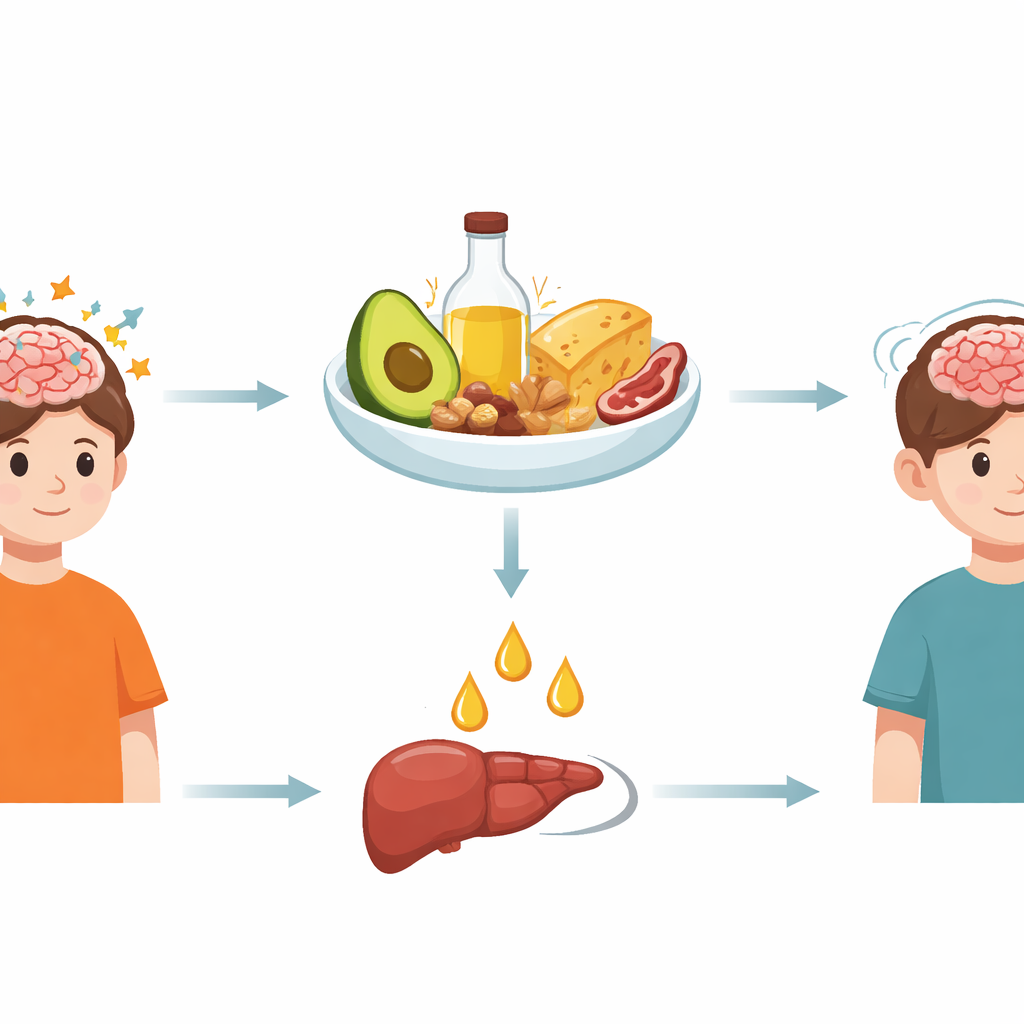
Turning food into a therapy
The ketogenic diet has been used for nearly a century, but in recent years it has drawn renewed interest as an option for children whose seizures do not respond to standard anti-seizure medicines. By sharply cutting carbohydrates and increasing fats, the body shifts from using sugar to using substances called ketone bodies for energy. These fuels can power the brain in a different way and may calm the overactive nerve cells that trigger seizures. Unlike adding yet another pill, this approach works by changing the brain’s energy supply and electrical balance through what children eat every day.
How the study was set up
Researchers followed 136 children with drug-resistant epilepsy treated at a large hospital in Zhengzhou, China, between 2022 and 2023. All had already tried at least two suitable seizure medicines without becoming seizure-free. Families chose whether their child would start the ketogenic diet in addition to current medicines or continue with carefully adjusted medicines alone. Seventy-three children entered the diet group, and 63 formed the comparison group. The team tracked seizure counts, brain-wave recordings (EEGs), thinking and developmental skills, growth, and side effects for six months.
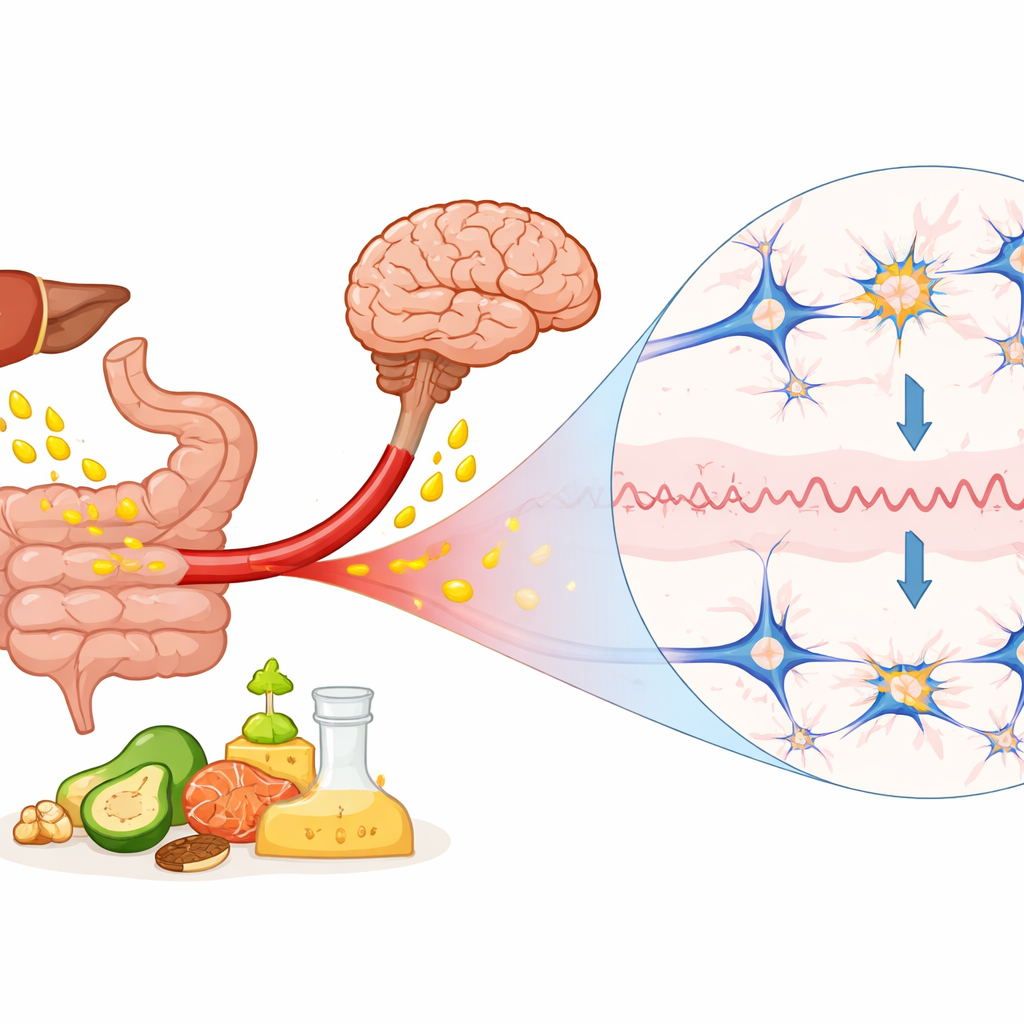
Fewer seizures and calmer brain activity
Children on the ketogenic diet were more likely to see meaningful drops in seizure frequency than those receiving medicine changes alone. By six months, about half of the diet group had at least a 50% reduction in seizures, compared with roughly one third in the comparison group. Many diet-treated children improved early, within the first months, and statistical analyses that accounted for age, sex, and disease duration confirmed that diet therapy independently increased the chances of better seizure control. EEG tests echoed this pattern: more children in the diet group showed quieter brain-wave patterns, with fewer abnormal bursts, suggesting that the underlying brain activity had become more stable.
Gains in thinking and everyday skills
Seizures are only part of the burden of epilepsy; many children struggle with movement, language, and learning. To explore these broader effects, the team used age-appropriate developmental and intelligence tests. About one in three children on the ketogenic diet showed measurable gains in at least one area—such as gross motor skills, language, eye–hand coordination, or overall IQ—compared with about one in five in the comparison group. Improvements were especially notable in younger children’s basic skills. These changes may stem partly from having fewer seizures and more normal brain rhythms, but they hint that shifting the brain’s fuel supply might also support healthier development.
Side effects and real-world limits
Any strict medical diet raises concerns about safety and practicality. In this study, side effects in the diet group were generally mild or moderate—such as digestive upset or changes in blood fats—and were similar in number and severity to those seen in the comparison group. No life-threatening complications occurred, though some families stopped the diet because preparing special meals and keeping to the plan proved too challenging. The authors also note important caveats: families, not random assignment, chose the treatment path, and the follow-up lasted only six months, so the results cannot prove cause-and-effect or speak to longer-term outcomes.
What this means for families and clinicians
For children whose seizures continue despite multiple medicines, this real-world study suggests that a well-supervised ketogenic diet can meaningfully reduce seizures, calm abnormal brain activity, and support certain aspects of thinking and development, without causing serious harm over six months. The approach is not a cure, and it demands committed caregivers and a skilled medical and nutrition team. Still, it offers a promising non-drug tool that may improve daily life for many children with stubborn epilepsy. Larger, longer, and randomized studies will be needed to confirm these benefits and clarify which children stand to gain the most.
Citation: Han, R., Xu, Y., Sun, J. et al. Real-world outcomes of ketogenic diet therapy in children with drug-resistant epilepsy in a prospective cohort study. Sci Rep 16, 8877 (2026). https://doi.org/10.1038/s41598-026-42913-1
Keywords: ketogenic diet, drug-resistant epilepsy, pediatric neurology, seizure control, cognitive development