Clear Sky Science · en
A latent class analysis of cardiometabolic risk factors and the predicted prevalence of subclinical atherosclerosis in middle-aged Swedish adults
Why everyday habits quietly shape artery health
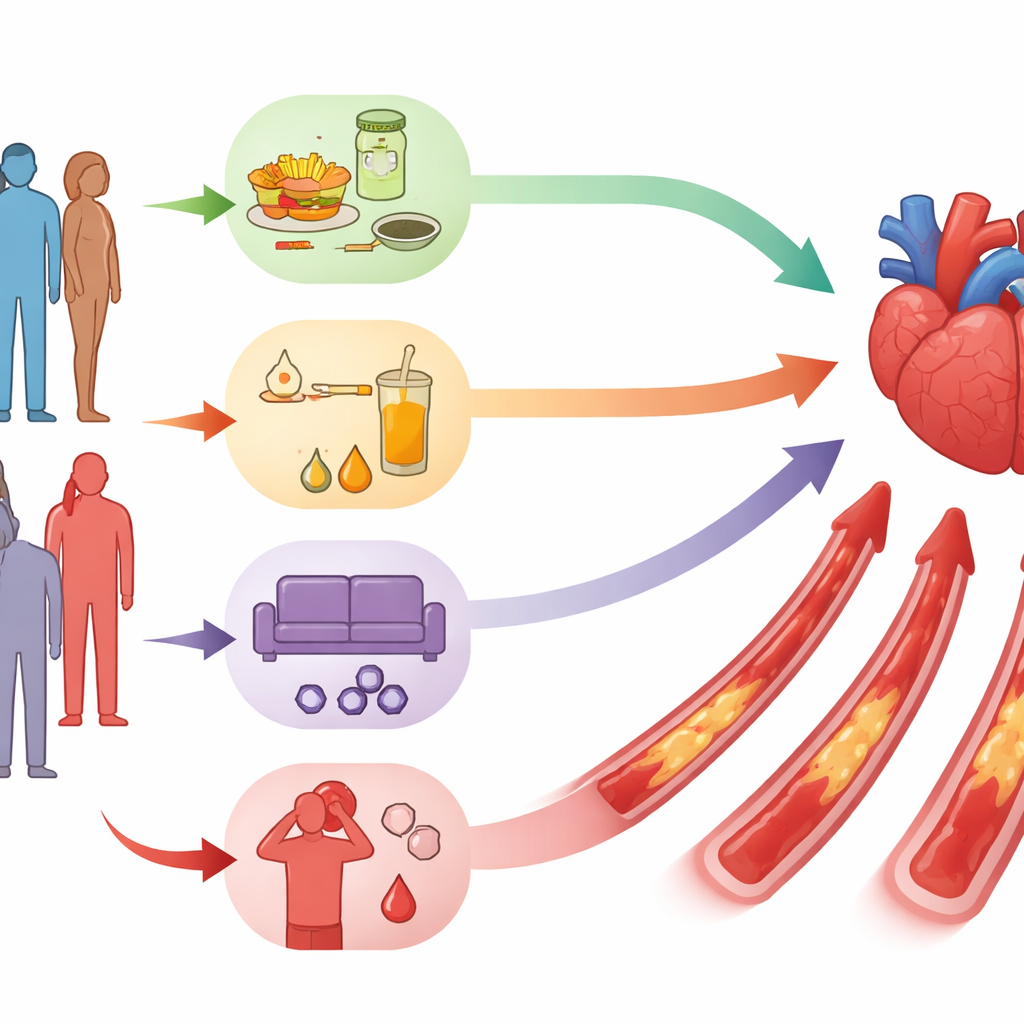
Heart attacks and strokes often seem to strike without warning, but the damage usually builds up silently over many years. This study looked at how everyday habits and common health measures tend to cluster together in middle-aged adults, and how those patterns relate to “hidden” artery disease long before symptoms appear. Understanding these patterns could help doctors and communities design smarter, more targeted ways to keep hearts and blood vessels healthy.
Looking beneath the surface of silent artery disease
The researchers focused on subclinical atherosclerosis – early plaque build-up in the arteries that has not yet caused chest pain, heart attacks, or strokes. Using data from more than 28,000 men and women aged 50 to 64 in the Swedish CArdioPulmonary bioImage Study, they combined detailed lifestyle questionnaires, body measurements, blood tests, and advanced scans of the heart and neck arteries. Two types of imaging were used: one to measure calcium deposits in the heart’s arteries, and another to detect plaques in the carotid arteries in the neck, which supply blood to the brain. These silent changes are important warning signs, because they often appear long before serious cardiovascular events.
From single risks to real-world profiles
Most previous research has treated risk factors one by one or used a few predefined combinations, such as “smoker with high blood pressure.” But real lives are messier: people may smoke, eat too much salt, move too little, and have raised blood sugar all at once, or show only one or two of these features. To capture this complexity, the team used a statistical approach called latent class analysis, which groups people into profiles based on how their risk factors naturally cluster. They included 11 factors, spanning smoking, alcohol intake, salt and fiber in the diet, physical activity, stress, body fat around the waist, blood fats, blood pressure, and fasting blood sugar.
Four common patterns of risk in midlife
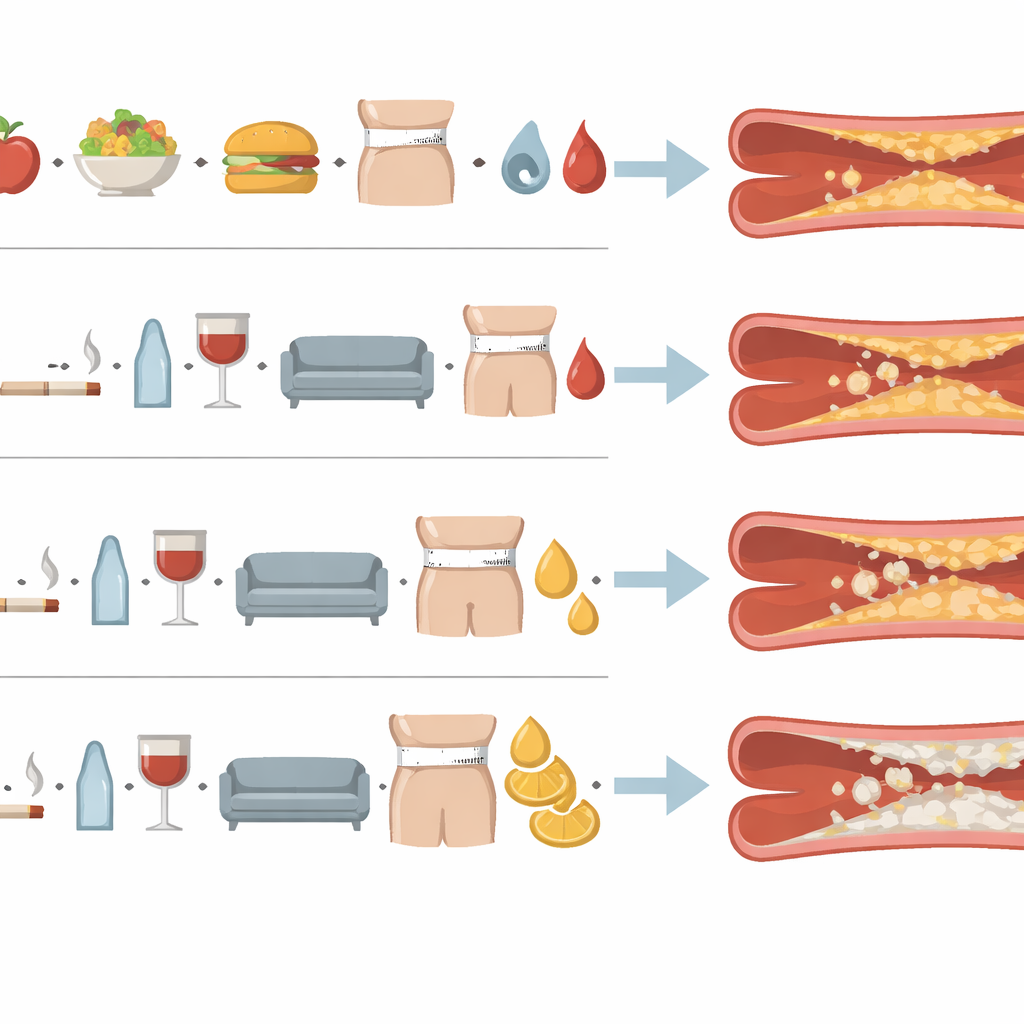
The analysis revealed four clear cardiometabolic profiles. The largest group, over half the participants, had low fiber intake but generally healthy blood fat levels; they often ate in ways that were less than ideal but did not yet show strong signs of metabolic disturbance. A smaller group was marked by high salt intake paired with otherwise similar, relatively healthy metabolic readings; many in this class were women, reflecting Swedish eating patterns where salty but otherwise wholesome foods are common. A third group combined multiple unhealthy lifestyle habits — notably high alcohol use and low physical activity — with early metabolic changes, such as larger waists and raised triglycerides. The fourth group showed both unhealthy lifestyle behaviors and clearly unfavorable metabolic measures, including low levels of protective HDL cholesterol; this group carried a concentrated burden of traditional risk factors.
How these profiles link to hidden artery damage
When the researchers compared these four profiles to the imaging results, they found that all groups already carried a substantial burden of silent artery disease, but the levels differed. In the two diet-focused groups with healthier metabolic readings, roughly one in ten people had a heart artery calcium score high enough to signal moderate plaque build-up, and about half had some plaque in the neck arteries. The lifestyle-and-metabolism groups fared worse: the “unhealthy lifestyle and heightened metabolic risk” class showed somewhat higher calcium scores, while the “unhealthy lifestyle and high metabolic risk” class stood out with more than double the average heart calcium burden compared with the healthier classes. In contrast, differences in neck artery plaque between the groups were modest, suggesting that, in this age range, these risk profiles separate people more clearly for coronary disease than for carotid disease.
What this means for prevention in everyday life
For a layperson, the takeaway is that it is not only individual numbers — such as blood pressure or cholesterol — that matter, but the way multiple habits and measurements tend to travel together. Even people whose blood fat levels are still in the normal range can already harbor substantial plaque if they consistently eat low-fiber, high-salt diets or live with several mild risks at once. The study’s profiles are not meant to replace personal medical advice or established risk scores; instead, they offer a map of how risky behaviors and body changes cluster across the population. This map can help health professionals design more tailored prevention strategies, such as focusing on combined lifestyle changes for people who drink heavily and are inactive, or improving labeling and reformulation of salty processed foods that many otherwise health-conscious people eat. In short, clustered small risks in midlife can quietly add up to real plaque in the arteries, making early, profile-aware prevention a powerful tool for protecting heart and brain health.
Citation: Anindya, K., Bendtsen, M., Jernberg, T. et al. A latent class analysis of cardiometabolic risk factors and the predicted prevalence of subclinical atherosclerosis in middle-aged Swedish adults. Sci Rep 16, 8255 (2026). https://doi.org/10.1038/s41598-026-42858-5
Keywords: subclinical atherosclerosis, cardiometabolic risk, lifestyle patterns, latent class analysis, coronary calcium