Clear Sky Science · en
Strategies and recommendations for embedding sustainability in innovation and design processes
Why everyday products matter for the planet
From home appliances to digital services, the things we use every day quietly shape how much energy and resources we consume. This paper looks at how companies can build sustainability directly into the way products and services are invented and designed, so that the greener choice becomes the easier, more attractive choice for people. By focusing on how products influence real-world behavior, the authors explore how designers, engineers, and managers can help cut emissions that occur when customers actually use products, not just when they are made.
From a throwaway world to smarter use
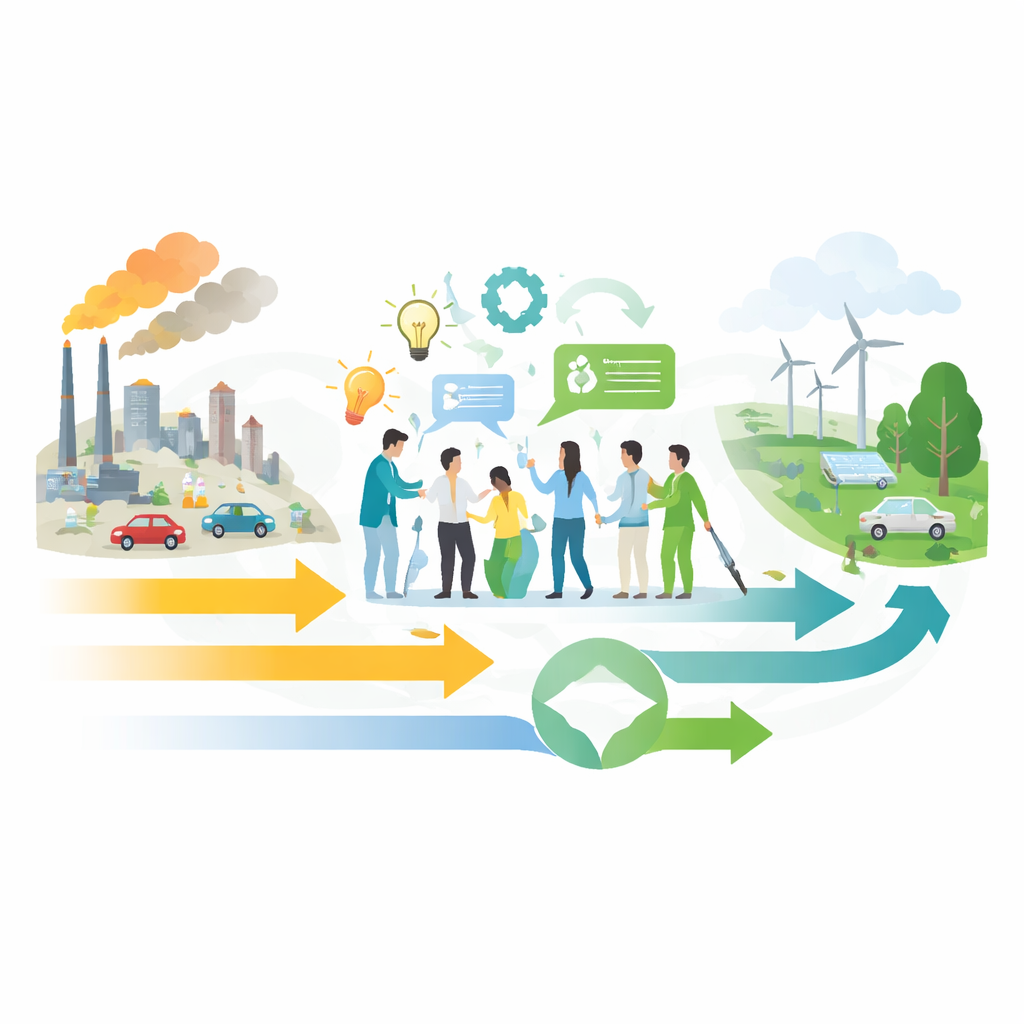
For more than half a century, our economy has largely followed a “take, make, use, dispose” pattern: extract resources, manufacture goods, sell them, and throw them away. This linear model has helped drive climate change, pollution, and biodiversity loss. The paper explains how ideas like the circular economy aim to change this by keeping materials in use for longer, reusing and repairing products, and recovering resources at the end of life. But looking only at factories and recycling plants is not enough. A large share of climate impact now comes from what people do with products during the use phase—such as how they drive a car, run a heating system, or operate a washing machine. These downstream effects, known in business as Scope 3 emissions, are often much bigger than the emissions a company directly controls.
Designing products that nudge better choices
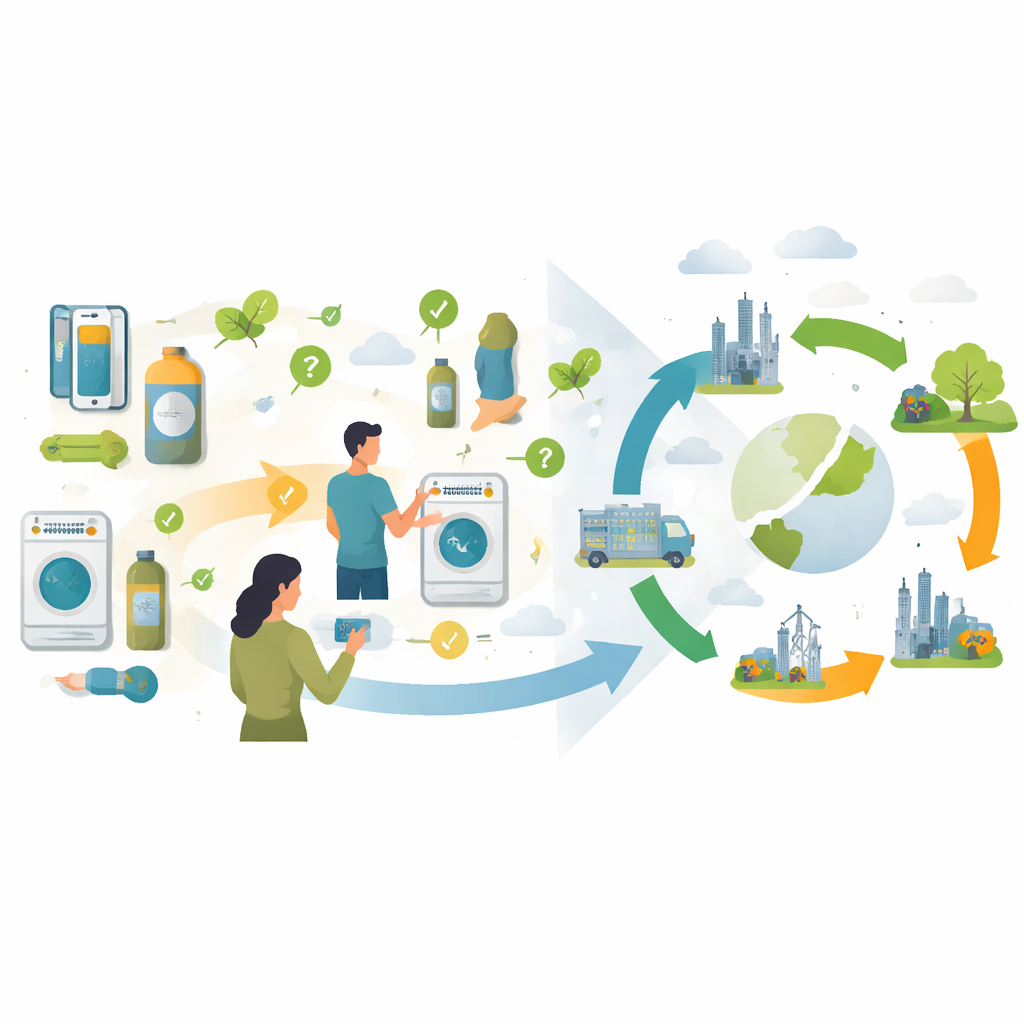
The authors argue that product design has enormous power to steer everyday behavior in a more sustainable direction. Instead of relying only on information campaigns or good intentions, companies can build in features that gently “nudge” people toward greener choices. Examples include making the most efficient setting the default option, giving clear feedback on energy use, or shaping menus and controls so that low-impact options are the easiest to pick. The paper draws on a behavioral design model called CREATE, which breaks behavior into stages such as what first grabs attention, how people react, how easy an action feels, and what they experience afterward. Design features can target each of these stages, helping reduce waste and emissions without demanding constant effort from users.
What experts say companies are doing today
To see how these ideas play out in real organizations, the researchers combined in-depth interviews with six innovation and design experts and a survey of 79 professionals working in roles such as sustainability management, product development, and user research. Many companies are already investing in internal structures: they run sustainability trainings, set internal guidelines, and define key performance indicators to track progress. Regulations such as new European reporting rules are pushing this trend. At the same time, participants reported that sustainability still often takes a back seat to short-term economic targets, technical ease, and traditional customer requirements. Supplier rules, incentives for sustainable behavior, and concrete design tools for influencing user choices are much less developed.
Gaps between good intentions and real change
The study highlights a clear gap between recognizing the importance of sustainability and systematically acting on it in product design. Many experts said they had limited knowledge of behavioral techniques beyond basic attention-grabbing features, like labels or simple prompts. More powerful tools—such as reshaping choice options, building habits, or rewarding sustainable behavior—were rarely used. Obstacles include the belief that sustainability always adds costs, lack of long-term commitment from leadership, and resistance from stakeholders focused on quick financial returns. Most respondents agreed that sustainability and behavioral thinking should run through the entire innovation process, especially from the very beginning, but they lacked practical methods, clear guidelines, and shared language to make this happen.
Turning insight into everyday practice
To close these gaps, the authors propose guidelines that help companies weave sustainability and behavioral insight into each step of innovation and design. This means training designers and engineers in behavior change basics, building sustainability into decision rules and project checkpoints, and extending efforts beyond internal reporting to the actual experience of using a product. When done well, everyday items can quietly guide users toward more efficient, low-impact habits—reducing downstream emissions while remaining convenient and appealing. In simple terms, the paper shows that if we redesign not just what products are, but how they are used, we can move closer to an economy that works with the planet instead of against it.
Citation: Höpfl, L., Dolezalek, P., Peter, C. et al. Strategies and recommendations for embedding sustainability in innovation and design processes. Sci Rep 16, 8483 (2026). https://doi.org/10.1038/s41598-026-42854-9
Keywords: sustainable design, behavioral interventions, circular economy, product innovation, Scope 3 emissions