Clear Sky Science · en
Spatial inequality in school physical education resources in Shaanxi, China (2021–2024): patterns, determinants, and policy implications
Why gym class resources matter
Behind every school sports field, gym teacher, and ball rack lies an important question: are children getting a fair chance to move, play, and build healthy habits? This study looks at how resources for physical education classes are spread across counties in Shaanxi, a province in northwestern China. By tracking where teachers, facilities, and funding are plentiful—or lacking—the authors show how geography and local budgets can quietly shape students’ opportunities for an active, healthy childhood.
Looking beyond simple head counts
Most debates about fairness in education focus on how much money is spent or how many teachers are hired overall. But gym class depends on things that cannot easily be shared between subjects: specialist PE teachers, safe fields and courts, and proper equipment. Simply knowing how much a school system spends in total says little about whether kids actually have enough space to run or a qualified teacher to guide them. To fix this blind spot, the researchers built a detailed index of PE resources for all 107 counties in Shaanxi from 2021 to 2024. They adjusted everything for student numbers, so that a county with many children is not judged as well off just because it naturally has more teachers or bigger budgets.
Uneven map of chances to be active
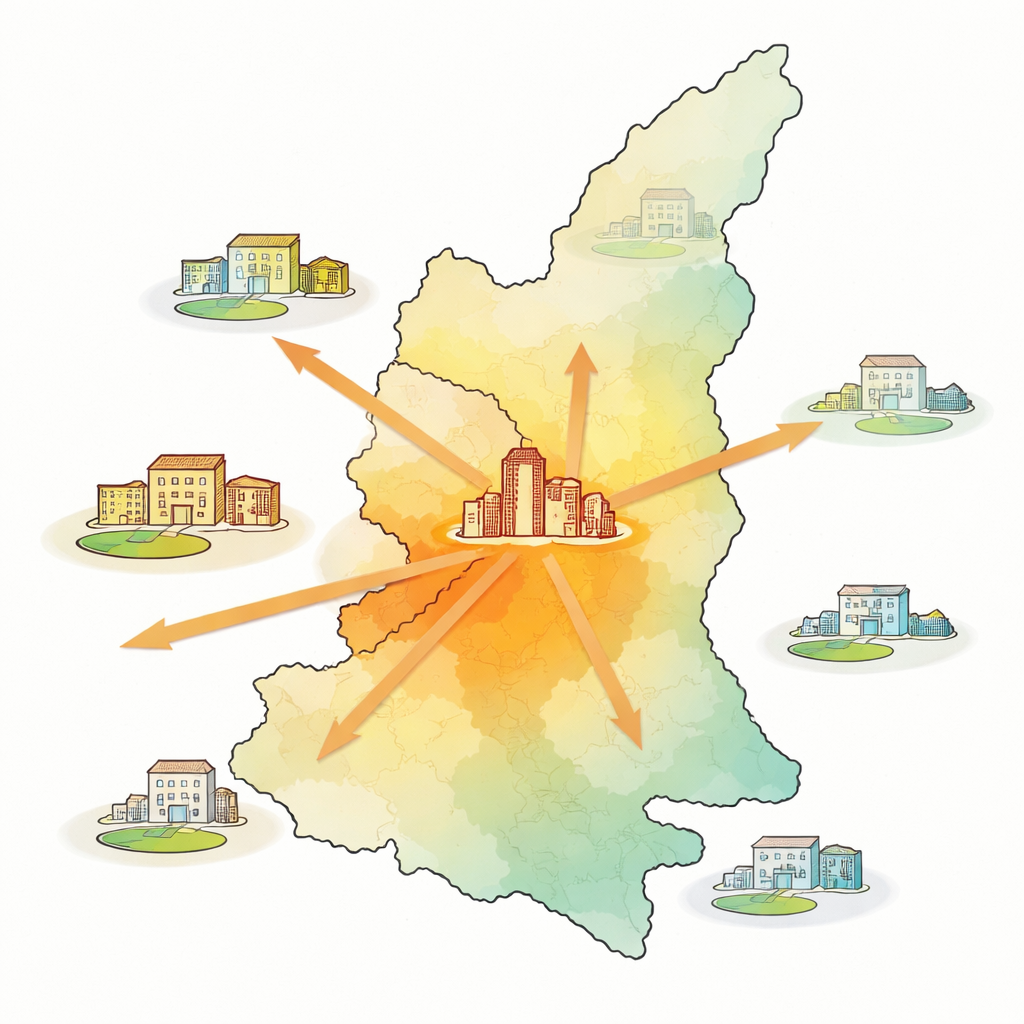
Once resources were scaled to demand, a clear pattern emerged. Counties around Xi’an, the prosperous provincial capital, consistently had better PE provision than those in the northern and southern periphery. In 2024, roughly seven out of ten counties still fell into the lowest two tiers of adequacy. The team also looked at how student crowding interacts with supply. Some counties had high demand—many students packed into limited space—but still low PE adequacy. These “low-supply, high-demand” areas are where children face the sharpest mismatch between their need for active time and what schools can realistically provide.
Clusters, not isolated weak spots
Using spatial analysis tools typically applied in geography, the authors found that counties with similar PE conditions tend to cluster together rather than appear as random exceptions. High-resource clusters are concentrated around the urban core, while large patches of low-resource counties stretch across the periphery. Over the four-year period, the overall province-wide clustering weakened somewhat, but these local pockets of disadvantage remained stubborn. Inequality also followed administrative lines: differences between cities (and the counties they govern) explained about half of the total gap, while variation among counties within the same city was relatively small. This suggests that the policies and finances of city-level governments strongly shape what happens in their schools.
Money, teachers, and fields work together
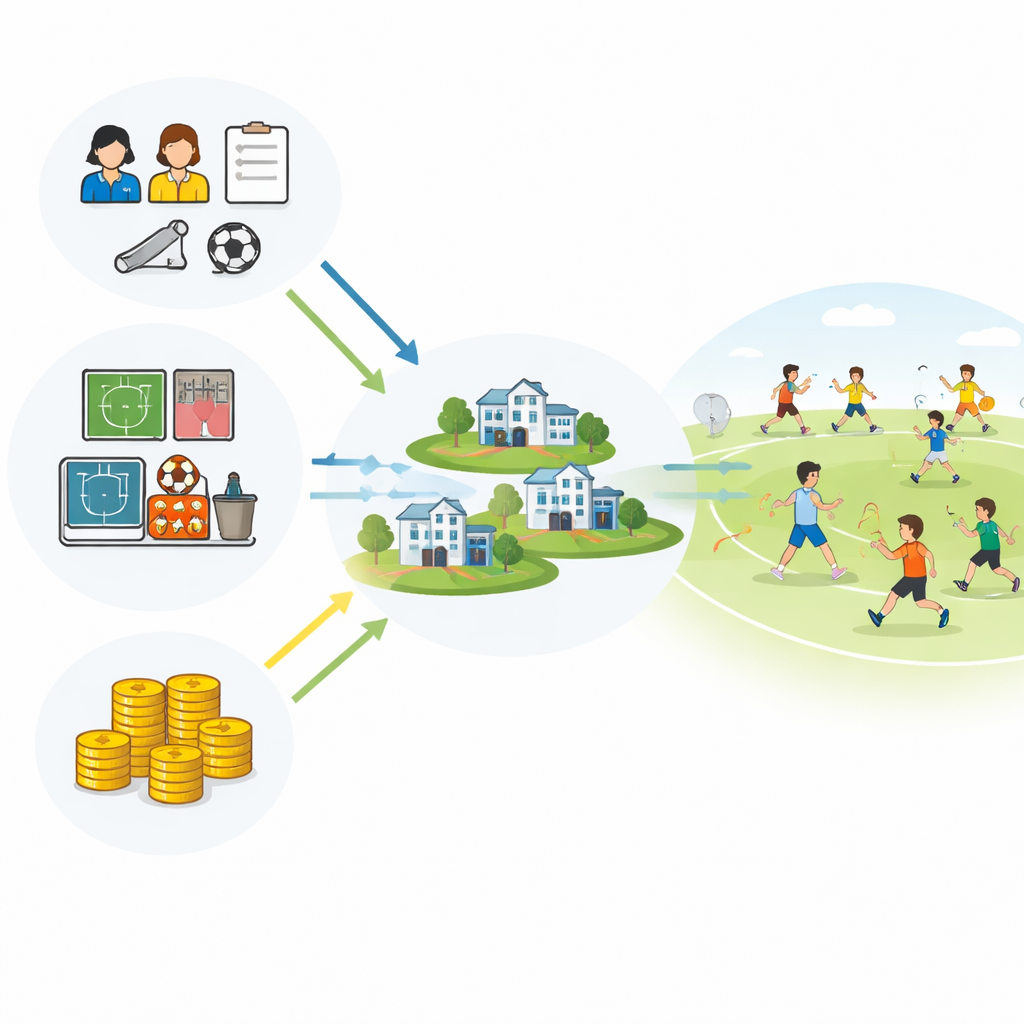
The study then asked what best predicts whether a county scores high or low on PE adequacy. Early on, general economic development—how rich an area is—played the biggest role. By 2024, however, more specific choices mattered more: how much of the education budget was earmarked for PE, how urbanized an area was, how dense the student population was, and how many schools and PE teachers were available. Crucially, these factors did not act alone. When the researchers looked at how they interact, they found that funding has the greatest payoff where enough teachers and school infrastructure already exist to turn money into real improvements. In other words, simply increasing budgets without investing in people and places may bring disappointing results.
What this means for children and policy
For families, the message is straightforward: where you live in Shaanxi still has a strong influence on the quality of your child’s gym class and access to healthy physical activity at school. For policymakers, the study argues that closing these gaps requires more than across-the-board spending hikes. Efforts need to focus on under-served clusters of counties, especially those with many students but weak PE provision, and on raising the baseline capacity of lagging cities. Packages that combine targeted PE funding with teacher recruitment, training, and basic facility upgrades are likely to work better than single-step fixes. Although the details are specific to Shaanxi, the core lesson travels widely: fair opportunities for school-based physical activity depend on aligning money, staff, and space where student demand is greatest.
Citation: Xu, C., Shi, B. Spatial inequality in school physical education resources in Shaanxi, China (2021–2024): patterns, determinants, and policy implications. Sci Rep 16, 8647 (2026). https://doi.org/10.1038/s41598-026-42848-7
Keywords: physical education, educational inequality, spatial analysis, school resources, China