Clear Sky Science · en
Dream content and slow waves benefit prey against predator in a video game confrontation
Why Nighttime Stories of Danger Matter
Imagine spending an afternoon running for your life in a video game—unarmed, chased through dark corridors by an opponent with a powerful weapon. Then you take a nap. When you wake up and play again, you somehow dodge better and find safer routes, especially if you happened to dream about the game. This study uses just such a setup to explore a deep question: do sleep and dreams especially help us cope when we are in a vulnerable, prey‑like position, rather than when we hold the upper hand?
A Game of Hunter and Hunted
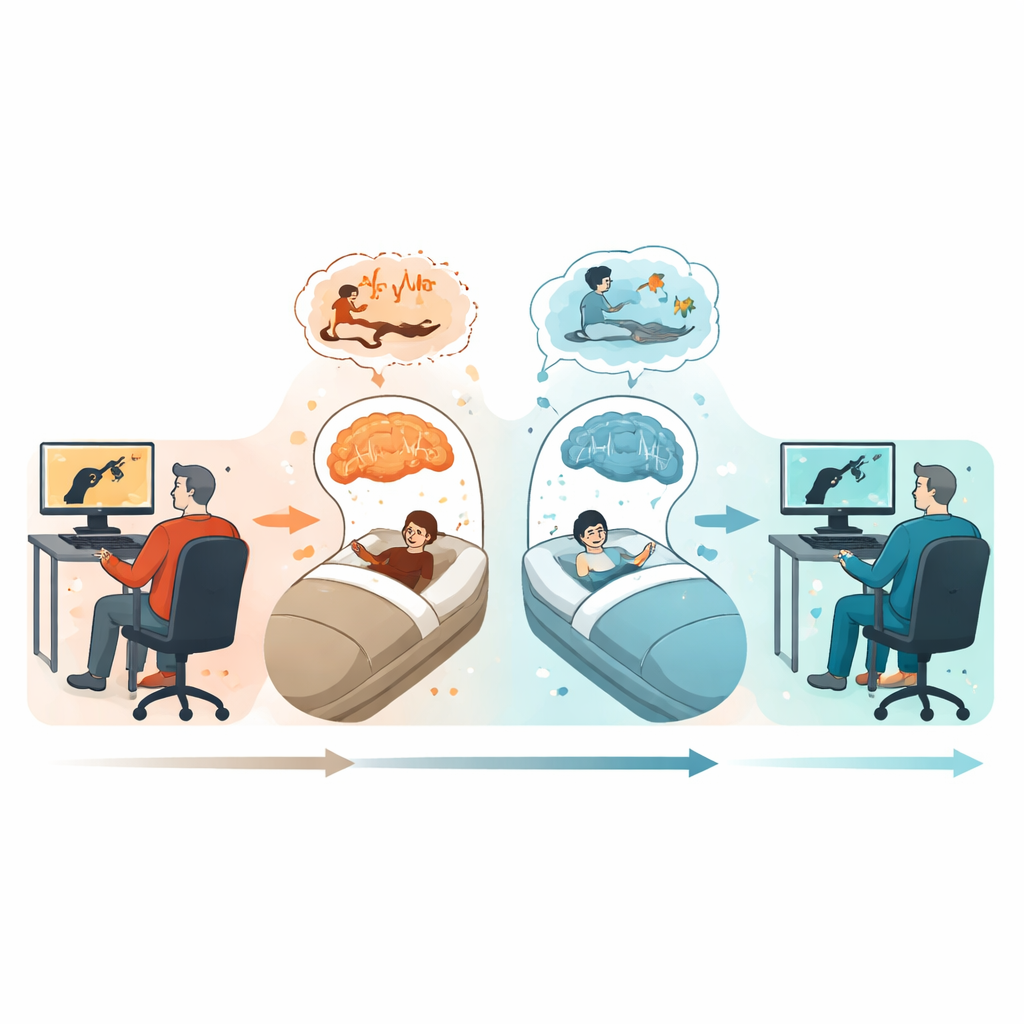
The researchers recruited pairs of young adults and had them face off in a first‑person shooter game that mimicked a predator–prey encounter. One player, the “predator,” had a shotgun and the clear combat advantage. The other, the “prey,” had no gun and was instructed to survive while collecting health packs scattered around the map. Each pair played a 45‑minute round, then both participants took a monitored nap in the lab with sensors recording their brain and heart activity. After the nap, they reported any dreams or thoughts they could recall, then played a second 45‑minute round in the same roles.
What Changed After Sleep
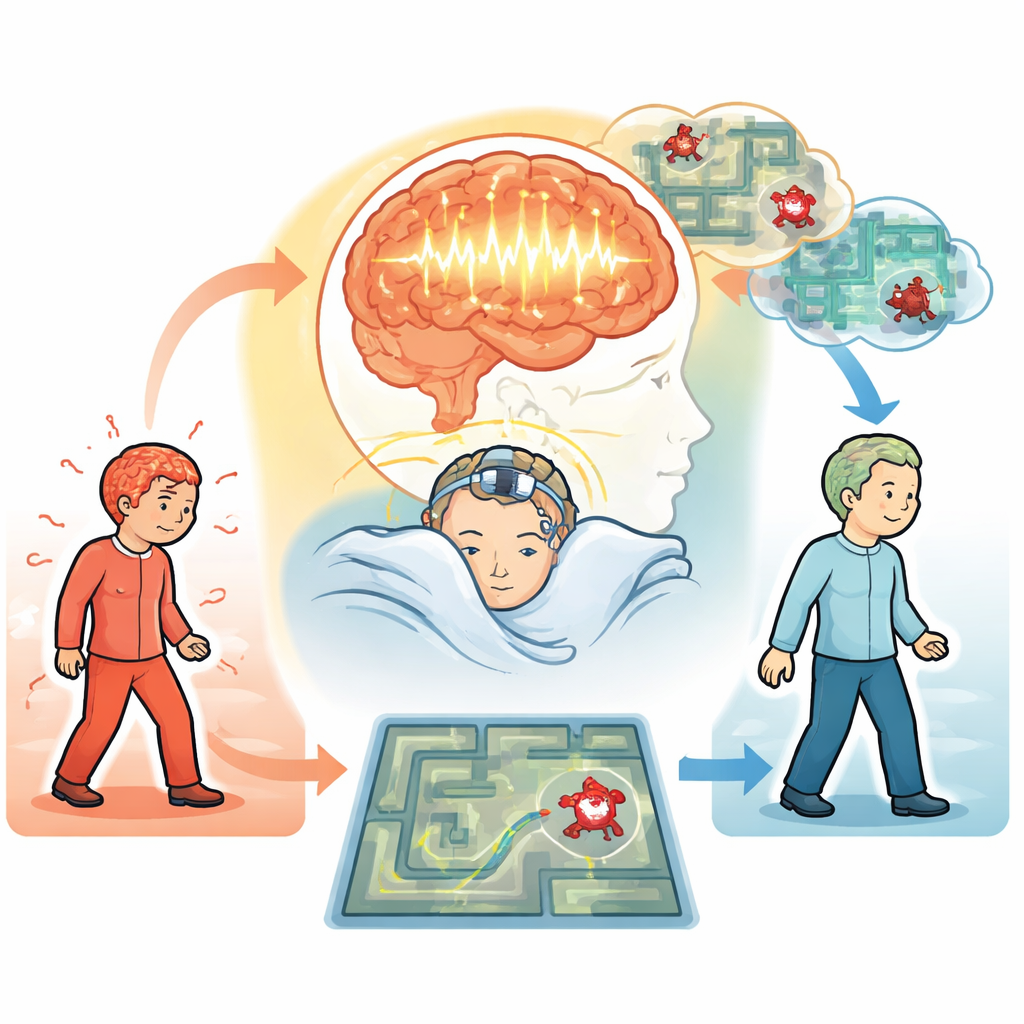
On the surface, predators and preys looked similar: their overall scores did not differ dramatically, and both groups showed only modest shifts in wins, losses, and collections across rounds. But once the scientists looked at what predicted improvement from round one to round two, a striking split appeared. For prey players, score gains were strongly linked to two nap‑time features: the strength of slow waves in their sleeping brain and how closely their dreams resembled the game they had just played. The more their sleeping brains produced powerful slow rhythms, and the more their dreams replayed the chase and the environment, the better they performed after waking. For predators, none of these sleep or dream measures reliably foretold who would improve.
Brain Waves, Stress, and Night Practice
Slow waves are large, rolling brain rhythms that dominate deep, restorative sleep and are known to support memory. In the prey players, improvements after the nap were tied not just to having some slow waves, but to the total “dose” of slow‑wave activity across the brain. At the same time, higher activity in faster beta rhythms—which often rise with stress and restless sleep—was linked to smaller gains. Heart data suggested that how stressed players were during the first round also mattered: variation in heart rate, a marker of stress reactivity, predicted later gains for preys but not for predators. Together, these findings suggest that for vulnerable players, an optimal mix of challenge, stress, and deep, high‑quality sleep lets the brain selectively strengthen the most relevant memories: safe paths, hiding spots, and evasive maneuvers.
Dreams That Help Versus Dreams That Distract
The content of dreams turned out to be crucial. When independent judges read the participants’ post‑nap reports, they rated how strongly each one related to the video game, the lab setting, or the person’s everyday life. Among preys, those whose dreams clearly incorporated the game showed the largest boosts in performance. By contrast, there was a hint that dreams focused on personal life might actually undercut improvement, as if the sleeping brain had shifted its limited learning resources away from the game and toward other worries. This pattern fits with the idea that dreams provide a kind of off‑line rehearsal space, but only when the dream stays on topic—running danger scenarios that map onto real‑world challenges.
From Hunter–Hunted Roles to Everyday Life
Putting the pieces together, the study suggests that sleep and dreaming are especially helpful when we are in low‑power, high‑threat situations—more like prey than predator. During deep sleep, strong slow waves and vivid, game‑related dreams seem to help vulnerable players quietly practice strategies, sharpen their sense of space, and regain a feeling of control before facing the challenge again. When we feel cornered in waking life—whether by social pressure, deadlines, or real danger—our dreams may similarly serve as overnight training grounds, turning frightening experiences into better plans for escape or coping the next day.
Citation: Brandão, D.S., Scott, R.N.B., Soares, E.S. et al. Dream content and slow waves benefit prey against predator in a video game confrontation. Sci Rep 16, 9331 (2026). https://doi.org/10.1038/s41598-026-42759-7
Keywords: dreams, sleep, stress, video games, predator prey