Clear Sky Science · en
Hypoxia and aspirin additively increase intracellular glutamine accumulation in PIK3CA-mutated colorectal cancer cells
A Common Pill, a Hidden Cancer Weakness
Aspirin is best known as a painkiller and heart-protective drug, but in recent years scientists have noticed something intriguing: people with certain genetic forms of colorectal (bowel) cancer seem to live longer if they regularly take low-dose aspirin. This study digs into why that might be, focusing on tumors that carry a mutation in a gene called PIK3CA and often grow in low-oxygen pockets inside the body. By tracing how these cancer cells handle a key nutrient, glutamine, the researchers uncover a metabolic weak spot that could be targeted with a new drug combination.
Why Oxygen Levels and Fuel Choices Matter
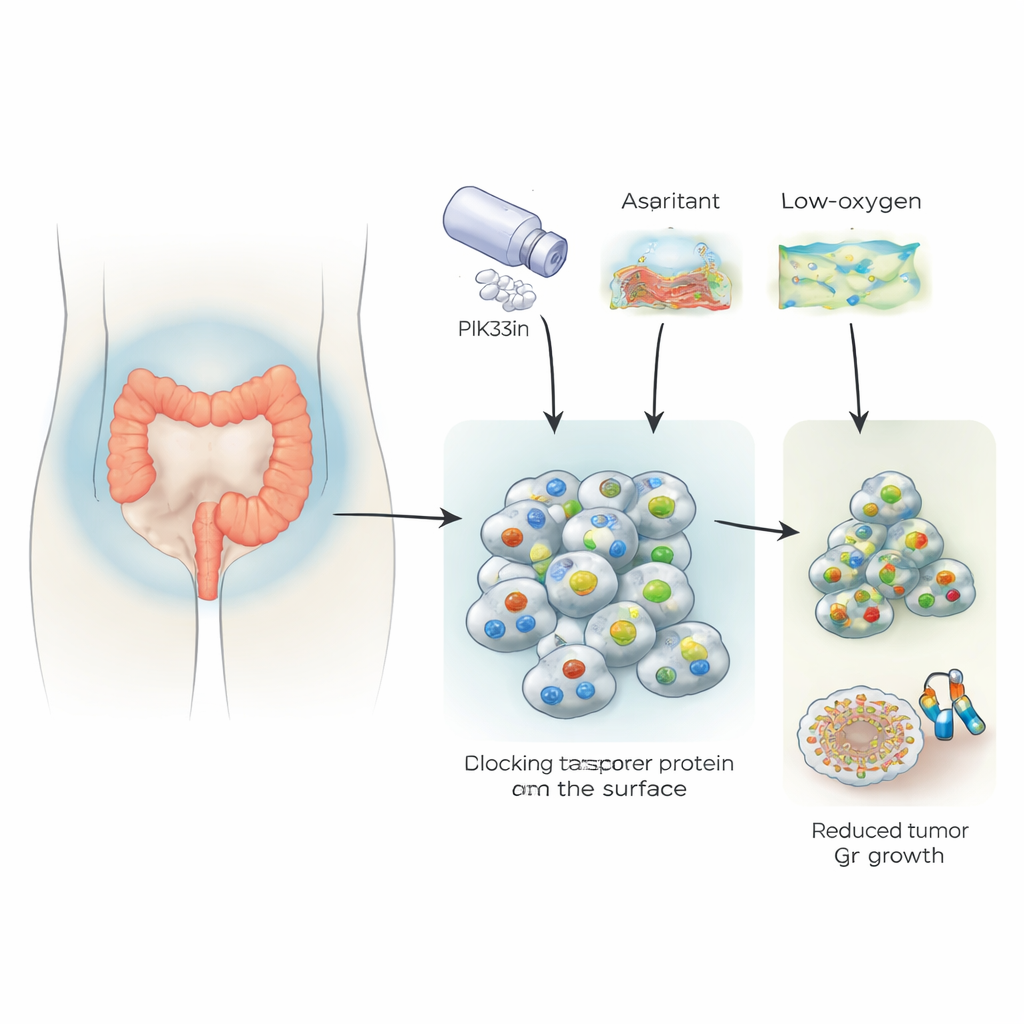
Solid tumors, including colorectal cancers, often grow faster than their blood supply, creating areas with very low oxygen—known as hypoxia. Cancer cells adapt to this harsh environment by rewiring how they use fuel. Instead of relying mainly on sugar, they lean heavily on the amino acid glutamine, which feeds their energy factories, helps build DNA and proteins, and keeps damaging molecules called reactive oxygen species in check. Earlier work showed that PIK3CA-mutated colorectal cancer cells are especially dependent on glutamine, and that aspirin’s ability to slow their growth drops if glutamine is removed. This raised a key question: what happens to glutamine handling when these tumors face both aspirin and hypoxia at the same time?
Probing Cancer Cells Under Stress
To answer this, the team used several human colorectal cancer cell lines grown in the lab, some carrying PIK3CA mutations and others not. They compared cells kept in normal oxygen to those in hypoxia and exposed them to aspirin. With large-scale gene activity maps, they found that in PIK3CA-mutated colon cancer cells, aspirin was strongly linked to pathways involved in amino acid use and low-oxygen signaling, but this pattern did not appear in most other cell types. They then zeroed in on genes that control the import of amino acids into cells and saw that, under hypoxia, aspirin boosted these transport pathways specifically in the PIK3CA-mutant cells, suggesting that the drug-tumor interaction depends on the cancer’s genetic and metabolic background.
A Surprising Glutamine Build-Up
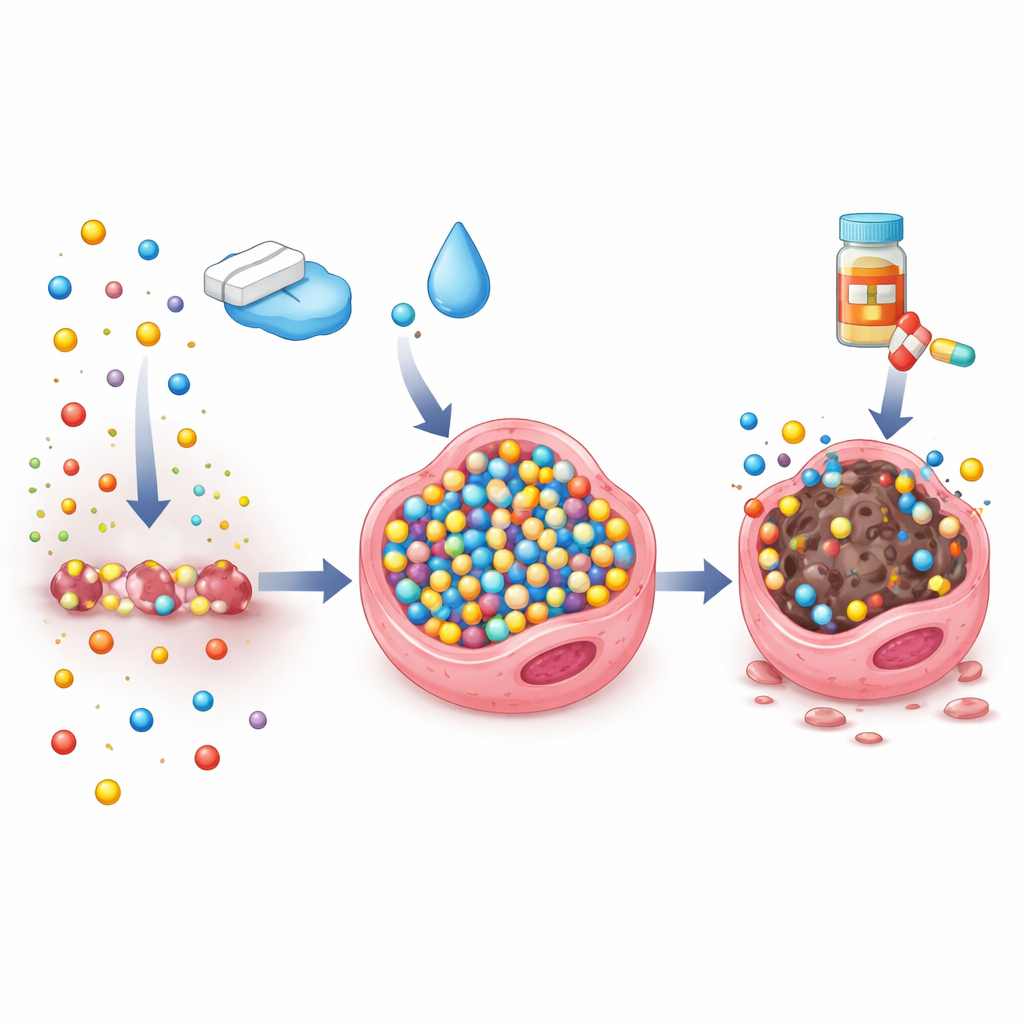
Next, the researchers directly measured dozens of metabolic compounds inside the cells using sensitive mass spectrometry. Glutamine emerged as the standout player. Aspirin alone raised intracellular glutamine levels in colorectal cancer cells. When low oxygen was added, PIK3CA-mutant cells showed an even stronger, additive rise in glutamine inside the cells, whereas their non-mutant counterparts did not. To figure out why, the team blocked two key routes by which cells maintain glutamine: new production and import from outside. An inhibitor of glutamine synthesis and a drug called V-9302, which blocks a transporter protein that ferries glutamine across the cell membrane, both lowered glutamine levels and erased the aspirin-driven glutamine surge. This pointed to a combined effect of increased uptake and altered use, especially under hypoxia.
Turning a Strength Into a Weakness
Although piling up glutamine might at first sound like an advantage for cancer cells, it comes at a cost. Glutamine normally helps control oxidative stress by feeding into pathways that neutralize reactive oxygen species. When the researchers combined aspirin with either of the glutamine-targeting drugs, the cells showed higher levels of these damaging molecules and, more importantly, poorer survival. In multiple assays of cell growth and colony formation, the pairing of aspirin with V-9302—blocking glutamine entry—was particularly powerful, shrinking the long-term growth capacity of PIK3CA-mutant colorectal cancer cells under both normal and low-oxygen conditions. This suggests that when aspirin and hypoxia push these cells into hoarding glutamine, they become acutely dependent on continued glutamine supply from outside.
What This Could Mean for Patients
Taken together, the work shows that in PIK3CA-mutated colorectal cancer, aspirin and tumor hypoxia act together to drive an unusual build-up of glutamine inside cancer cells. Rather than purely helping the tumor, this creates a metabolic vulnerability: if doctors also block glutamine transport with a drug like V-9302, the cancer cells struggle to cope and their growth is sharply curtailed in lab models. While this study was done in cultured cells and used aspirin doses higher than typically seen in patients, it offers a clear, intuitive message for non-specialists: by understanding how a familiar medicine reshapes the fuel economy of genetically defined tumors, researchers can design smarter combinations that turn a cheap, old drug into a more precise anticancer tool.
Citation: Umezaki, N., Boku, S., Matsuo, Y. et al. Hypoxia and aspirin additively increase intracellular glutamine accumulation in PIK3CA-mutated colorectal cancer cells. Sci Rep 16, 9202 (2026). https://doi.org/10.1038/s41598-026-42753-z
Keywords: aspirin, colorectal cancer, PIK3CA mutation, glutamine metabolism, tumor hypoxia