Clear Sky Science · en
A hybrid machine learning approach for reliably predicting surface roughness in CNC turning operations
Why the Smoothness of Metal Surfaces Matters
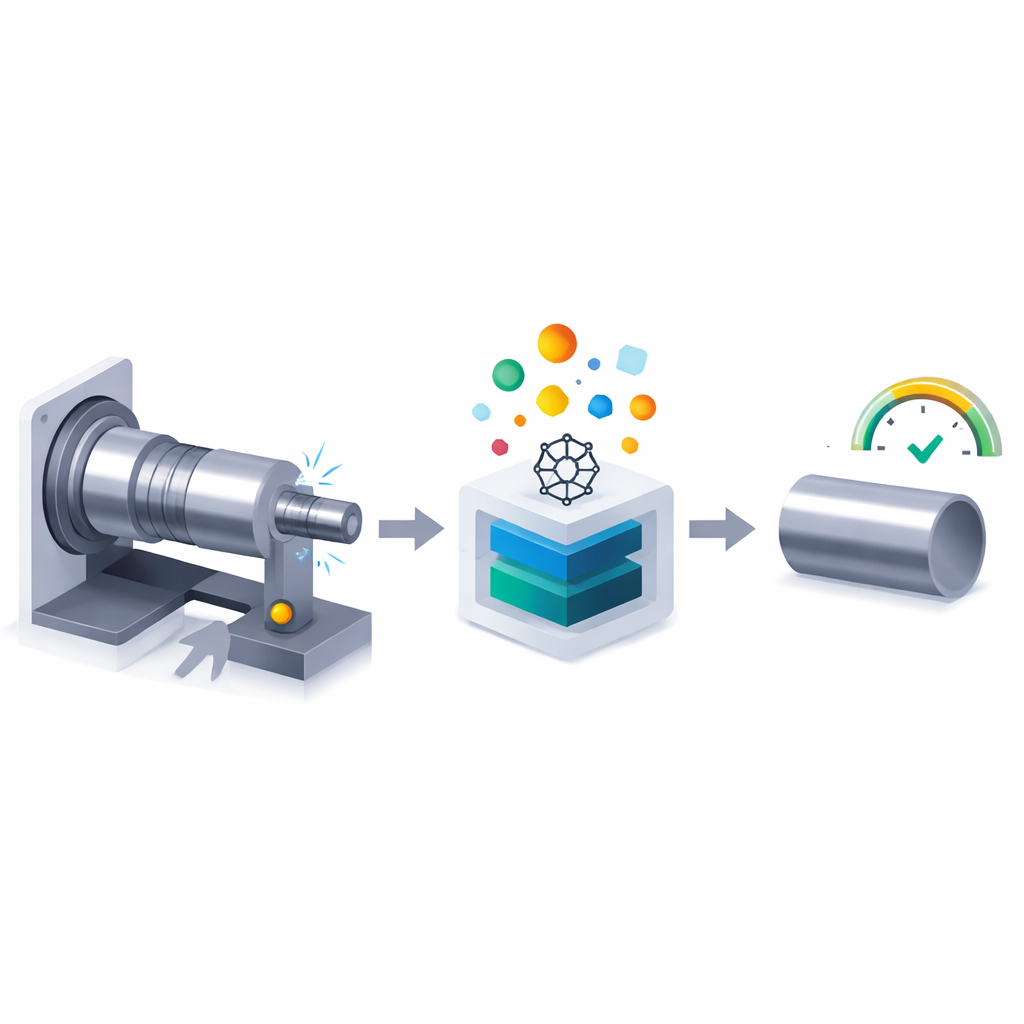
Whenever a metal part slides, seals or locks into place inside a machine, the tiny hills and valleys on its surface can make the difference between long life and early failure. In factory settings, those surfaces are often shaped on computer-controlled lathes, known as CNC turning centers. Traditionally, checking how smooth a finished part is means stopping the process and measuring it, which costs time and money. This study explores how data and modern machine learning can be combined to predict surface smoothness in real time, even as the cutting tool wears out, so factories can keep quality high without constant manual checks.
How Metal is Shaped on Modern Machines
CNC turning is a workhorse of manufacturing. A round metal bar spins at high speed while a sharp tool scrapes away material to reach the desired shape. For demanding steels such as AISI H13, which are used in hot, high-stress parts like injection molds, getting the surface just right is crucial for performance and durability. The team behind this paper relied on a rich, openly available dataset from carefully controlled turning experiments on this steel. In those tests, researchers systematically varied how fast the workpiece rotated, how quickly the tool advanced along the surface, how deep it cut into the metal and how large the cutting forces became, while also tracking how much the tool wore down over time.
Turning Measurements into Predictive Insight
From these experiments, the authors focused on predicting a standard measure of surface smoothness, called Ra, using only the operating settings and measured cutting forces as inputs. Instead of crafting a single complicated formula, they turned to machine learning: computer programs that learn patterns directly from data. They tested three different types of models with distinct strengths. One compares each new case to its closest past examples. Two others rely on many decision trees, each looking at the data in different ways and then averaging their judgments. These models were trained and tested using a rigorous cross-checking procedure to reduce the chance of overfitting to quirks in the data.
Blending Models into a Stronger Predictor
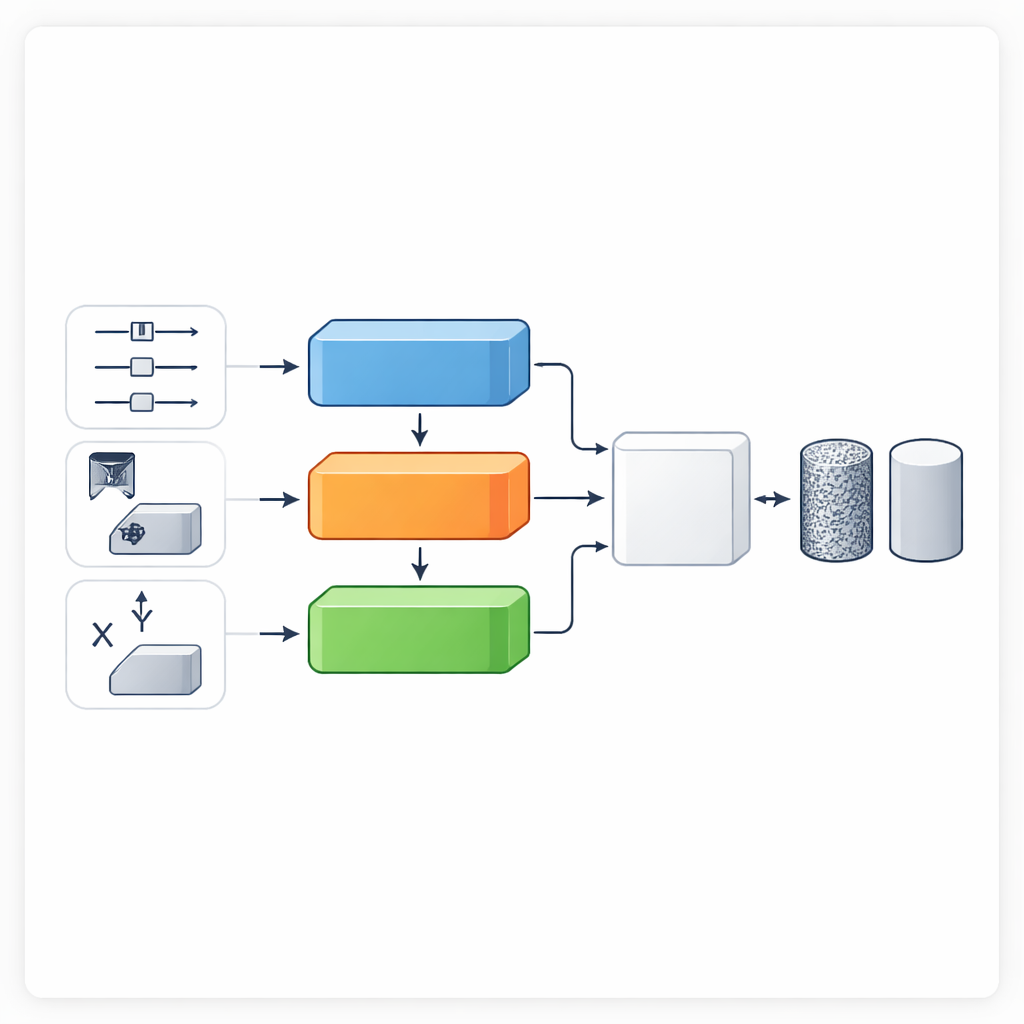
The heart of the study is a "stacking" approach that treats these individual models as expert advisers. Each adviser makes its own prediction of surface smoothness, and a simple final model learns how to best combine those opinions. This hybrid arrangement takes advantage of the different ways the base models see the data: one is good at capturing local patterns, while the tree-based models are better at complex, branching relationships. Across two sets of experiments—one with fresh tools and one with tools deliberately worn to different stages—the stacked model consistently predicted surface roughness more accurately than any single model. It explained over 98 percent of the variation in measured smoothness under worn-tool conditions, with errors much smaller than those reported in many earlier studies.
Peeking Inside the Black Box
Because factories need to understand why a model makes a particular call, not just what it predicts, the authors used modern explanation tools to open up the workings of their hybrid system. These methods estimate how much each input factor contributes to each prediction, both on average and for individual parts. The analyses showed that the feed rate—how fast the tool moves along the spinning workpiece—is the main driver of surface roughness under all conditions. As the tool wears, the role of cutting forces and the combined effect of cut depth and feed rate grow more important, reflecting how a blunt or damaged tool interacts differently with the metal. This matches practical shop-floor experience and builds trust that the model is learning meaningful relationships rather than spurious patterns.
What This Means for Real-World Production
For non-specialists, the key message is that the smoothness of turned metal surfaces can now be predicted very reliably from routine machine settings and force measurements, even as cutting tools age. By blending several machine learning approaches and then explaining how the final system makes its decisions, the authors offer a practical and transparent recipe that manufacturers can adapt for their own equipment and materials. Within the tested range of steels and cutting conditions, such a model could support automatic quality monitoring, smarter tool replacement and reduced scrap, helping factories produce better parts at lower cost while keeping critical surfaces as smooth as required.
Citation: Yurtkuran, H., Demirtaş, G., Alpsalaz, F. et al. A hybrid machine learning approach for reliably predicting surface roughness in CNC turning operations. Sci Rep 16, 8930 (2026). https://doi.org/10.1038/s41598-026-42719-1
Keywords: CNC turning, surface roughness, machine learning, tool wear, manufacturing quality