Clear Sky Science · en
A comprehensive cancer analysis investigating the oncogenic role of zinc finger protein 36 (ZFP36) in human tumors
Why this hidden molecule matters for cancer
Cancer is often described as a disease of damaged DNA, but a quieter layer of control sits one step downstream: the life and death of messenger RNA, the molecules that carry genetic instructions. This study focuses on one such RNA‑controlling molecule, called ZFP36, and asks a big question: across many different cancers in the body, does this single regulator help drive tumors, shape the immune response, and predict how patients fare? By mining large public cancer databases and then testing real cancer cells in the lab, the authors piece together a pan‑cancer portrait of this overlooked player.
A traffic cop for genetic messages
ZFP36 belongs to a family of proteins that act like traffic cops for genetic messages inside cells. Rather than changing the genes themselves, ZFP36 binds to short sequence tags on certain messenger RNAs and marks them for destruction. Many of these tagged messages encode factors that control inflammation, cell growth, and cell death. Because those processes are central to how tumors arise and how the immune system reacts to them, the authors suspected that abnormal ZFP36 levels might be a common feature across cancers and might help explain why some tumors grow aggressively or evade immune attack.
Scanning cancers from head to toe
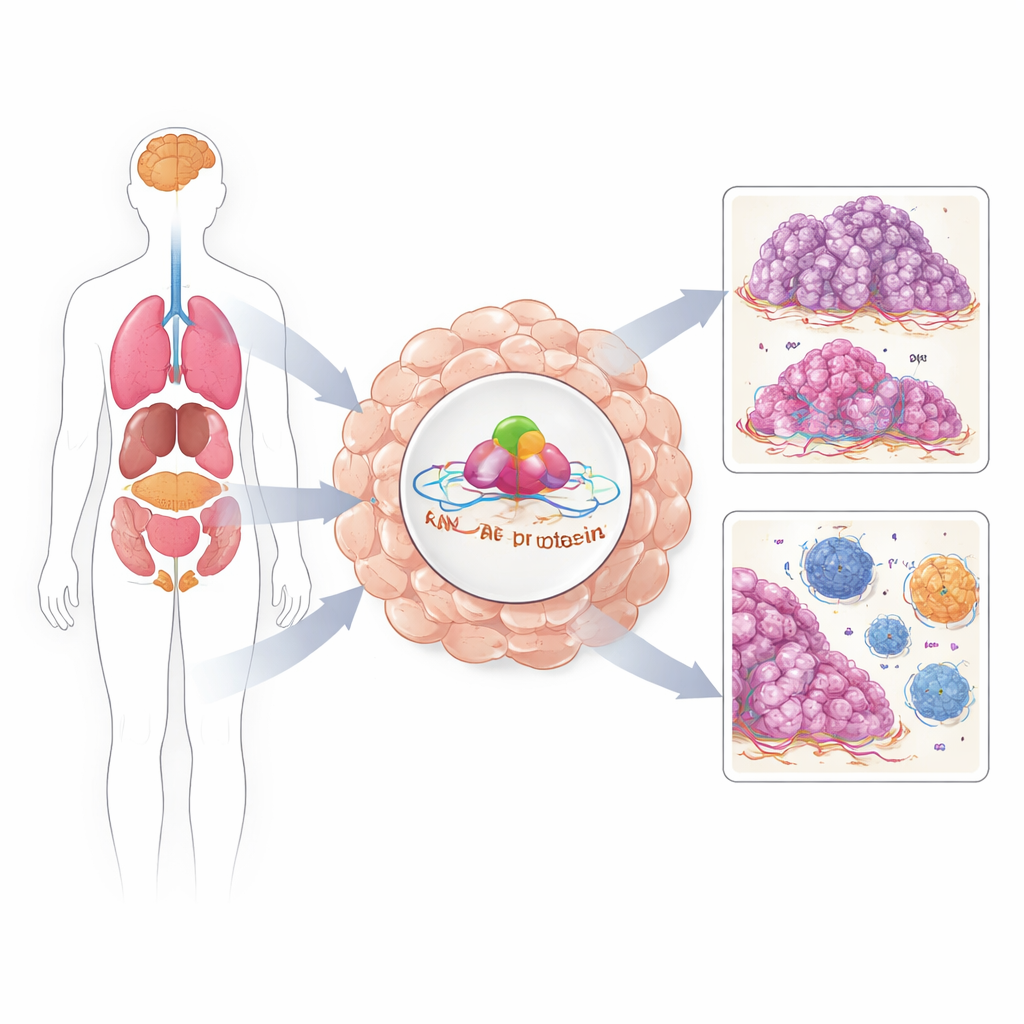
To see the big picture, the team turned to large resources such as The Cancer Genome Atlas and other public datasets that contain gene activity and clinical information from thousands of patients and dozens of tumor types. They compared ZFP36 levels in tumors versus normal tissues, tracked how its activity changed with disease stage, and asked whether patients whose tumors made more or less ZFP36 lived longer. They also examined DNA changes in the ZFP36 gene itself, patterns of immune cell presence within tumors, and networks of other genes that rise and fall in tandem with ZFP36. This sweeping analysis revealed that ZFP36 is not uniformly good or bad: it is frequently higher than normal in many cancers, including breast, lung, liver, bladder, and stomach tumors, but lower in others such as certain skin and testicular cancers.
Links to patient outlook and the immune neighborhood
When the researchers connected ZFP36 levels to patient outcomes, notable patterns emerged. In some brain and kidney tumors, especially lower‑grade glioma, higher ZFP36 was associated with poorer survival, suggesting that in these settings it may support tumor growth or treatment resistance. The team also explored the local "neighborhood" around tumors – the mix of support cells and immune cells that can either restrain or assist cancer. Using several computational tools, they found that ZFP36 levels tracked with the presence of cancer‑associated fibroblasts and other immune‑related features in a context‑dependent way. In certain cancers, such as specific prostate, testicular, and breast subtypes, this relationship was particularly strong, hinting that ZFP36 may help coordinate how tumors interact with the body’s defense system.
A shared gene network behind diverse tumors
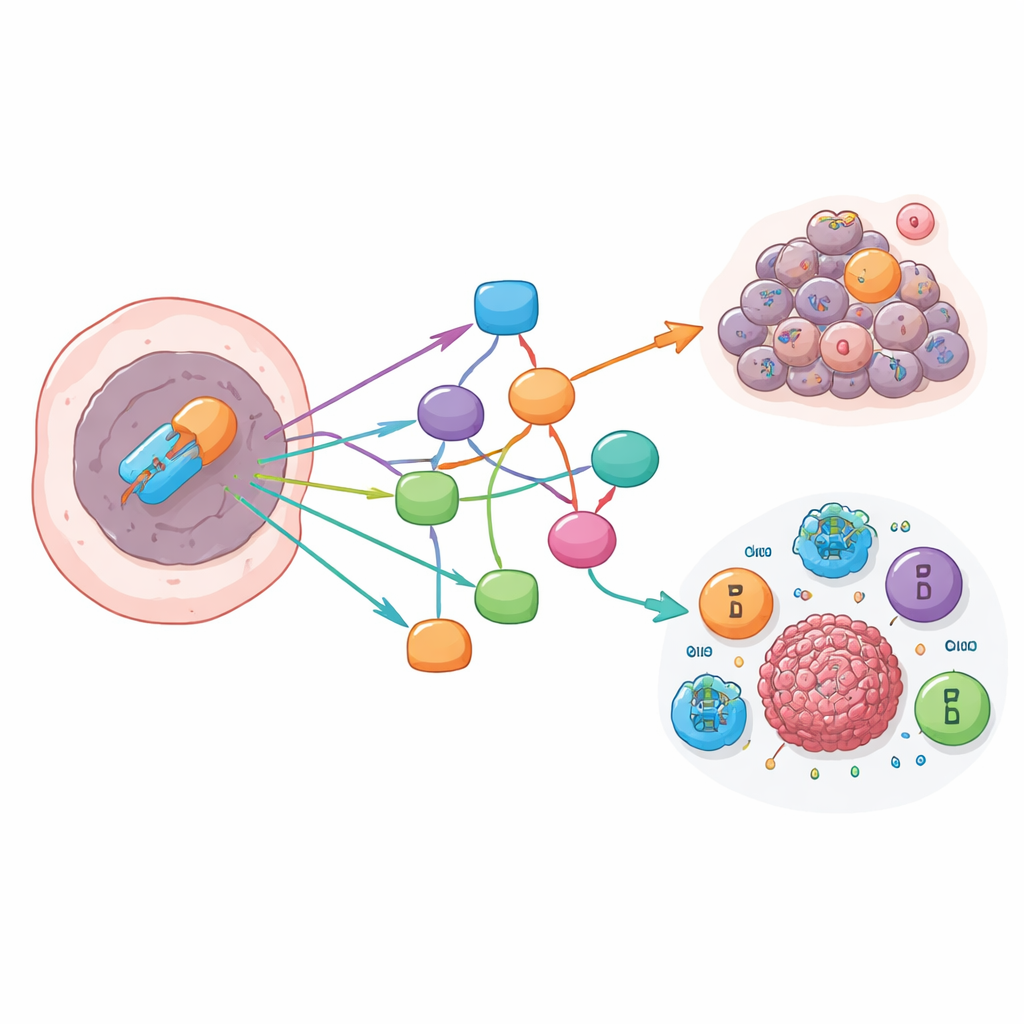
To move beyond correlations, the authors mapped out a network of molecules that physically or functionally partner with ZFP36. They identified dozens of interacting proteins and, from patient data, a tightly linked set of genes whose activity rose and fell with ZFP36, including SOCS3, JUN, SLC7A11, and CSRNP1. Many of these partners are involved in immune signaling, stress responses, or a form of iron‑dependent cell death. When the team measured these genes directly in cell lines from liver, lung, and breast cancers, they found a consistent pattern: both ZFP36 and its network genes were markedly higher in cancer cells than in their normal counterparts. This coherence across three very different tumor types suggests that ZFP36 sits at the center of a shared control system that can be repurposed by cancers.
What this means for future cancer care
Taken together, the study portrays ZFP36 as a kind of master tuner for cancer‑relevant messages inside cells, with effects that ripple out to the tumor’s immune surroundings. Its frequent rise in tumors, its ties to patient survival in specific cancers, and its coordinated behavior with a defined group of partner genes make it a promising candidate biomarker – a measurable signal that could help diagnose cancers earlier or refine prognosis. While more work is needed at the protein level and in diverse model systems, the findings suggest that watching, and eventually targeting, this RNA‑regulating node could become part of more precise strategies to assess and treat cancer.
Citation: Xie, S., Wu, H., Li, X. et al. A comprehensive cancer analysis investigating the oncogenic role of zinc finger protein 36 (ZFP36) in human tumors. Sci Rep 16, 8855 (2026). https://doi.org/10.1038/s41598-026-42715-5
Keywords: ZFP36, RNA-binding protein, pan-cancer, tumor immune microenvironment, biomarker