Clear Sky Science · en
Influence of synthetic derivatives of cytokinin and auxin on yield and quality of rainy season guava (Psidium guajava L.) cv. Shweta
Why Rainy-Season Guavas Often Disappoint
For many growers and consumers in India, guavas harvested during the rainy season are a mixed blessing: there are plenty of fruits, but they are often watery, less sweet, and more prone to rotting on the tree or in the market. This study explores whether carefully timed sprays of two man‑made versions of natural plant hormones can turn those lackluster monsoon guavas into firmer, tastier fruits, while also helping farmers harvest more per tree and per hectare.
The Challenge of Growing Fruit in the Monsoon
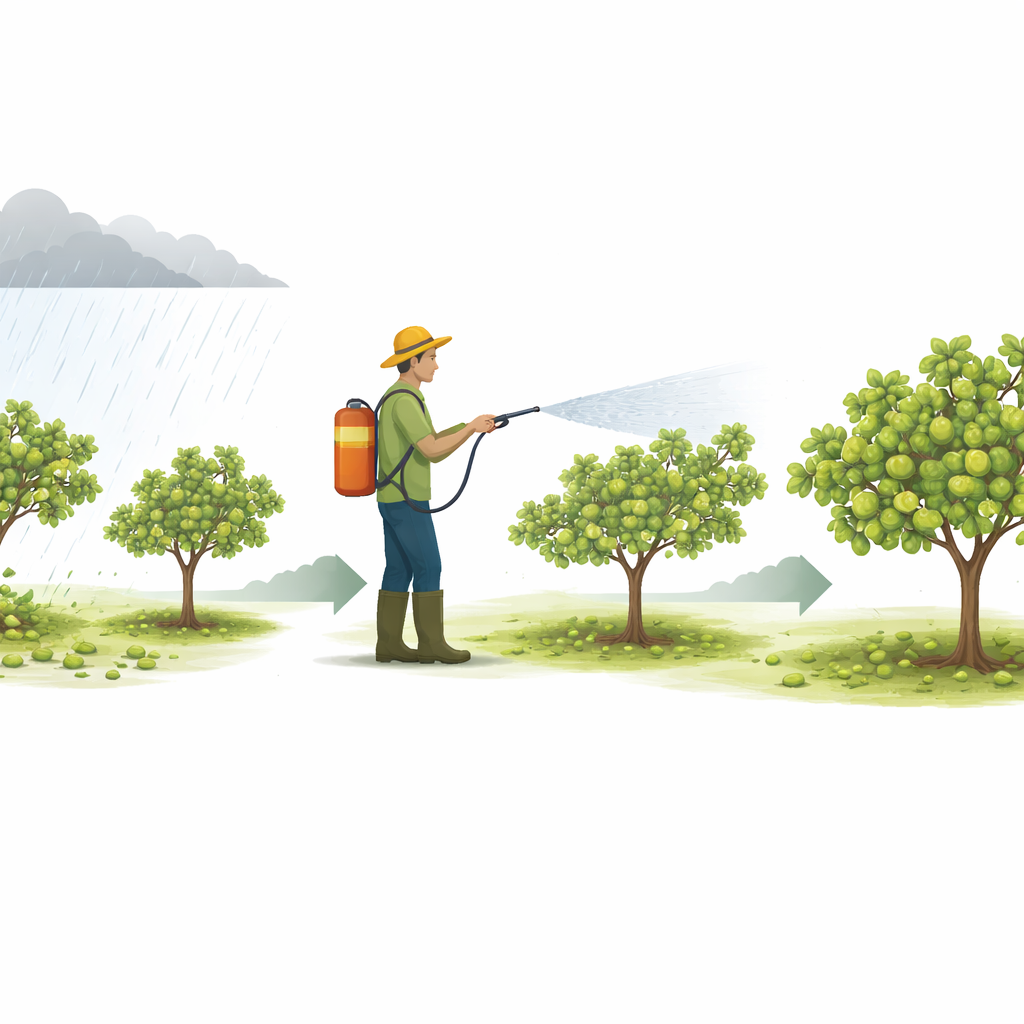
Guava, sometimes called the “apple of the tropics,” is a major fruit crop in India, especially in Uttar Pradesh. But the monsoon months are a tough time for guava trees. Heavy rain, high humidity, cloud cover, and occasional waterlogging interfere with photosynthesis and root health. As a result, many young fruits drop before they mature, and those that remain tend to be smaller, softer, and less flavorful than winter fruits. Pests and diseases are also more common, further reducing the number of marketable fruits. Farmers therefore earn less from rainy‑season harvests, even though demand for fresh fruit remains high.
A Hormone-Based Boost for Guava Trees
The researchers focused on two synthetic compounds that mimic natural plant hormones: CPPU, related to cytokinins, and NAA, a form of auxin. In plants, these hormones influence how cells divide and enlarge, how fruits set on the tree, and how long they are retained before dropping. The team worked with eight‑year‑old guava trees of the variety ‘Shweta’ in Lucknow, India, during the 2025–26 rainy season. They tested ten different spray treatments, including several doses of CPPU alone, NAA alone, and combinations of the two, plus a control group that received only water. Each treatment was sprayed once onto the leaves and young “pea‑sized” fruits two to four weeks after fruit set, a critical window when many fruits are normally lost.
Measuring Yield, Firmness, and Flavor
To see how these sprays altered performance, the scientists counted how many flowers became fruits, how many fruits stayed on the tree until harvest, and how many dropped early. They weighed fruits, measured their length, diameter, volume, and firmness, and calculated yield per tree and per hectare. They also analyzed fruit juice for sweetness (total soluble solids and total sugars), sourness (titratable acidity), vitamin C content, and pectin, the natural gelling substance that helps fruit flesh stay firm. Statistical tools, including standard comparisons of averages and pattern‑finding methods such as principal component analysis and clustering, were used to judge which treatments truly stood out and how groups of traits were linked.
The Winning Combination on the Tree
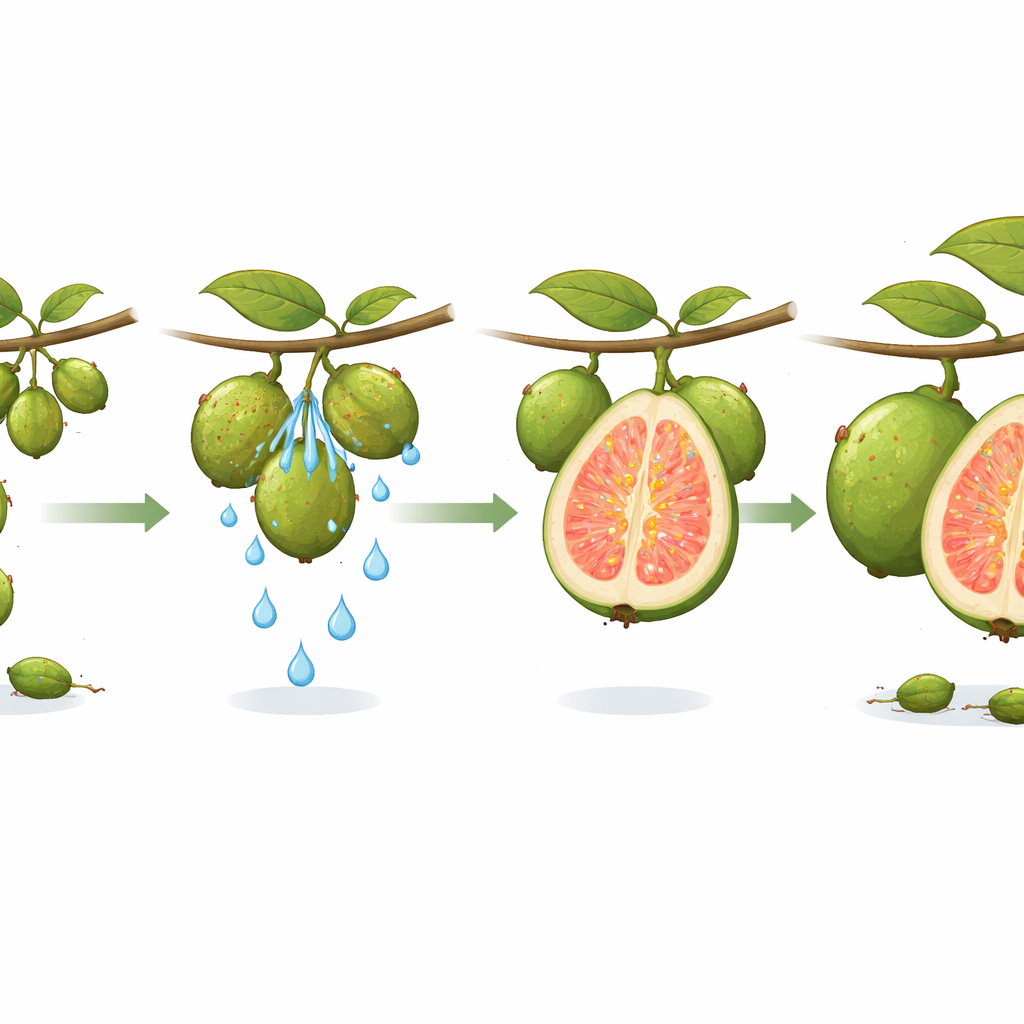
One treatment clearly rose above the rest: a moderate combination of CPPU at 10 parts per million and NAA at 30 parts per million. Trees receiving this spray showed the highest fruit set and fruit retention, meaning more flowers turned into fruits and more fruits stayed on the tree until picking time. Fruit drop, a chronic problem in the rainy season, fell sharply compared with unsprayed trees. The same treatment produced heavier, longer, and wider fruits with greater volume and firmer flesh. Yields per plant and per hectare increased substantially, reflecting both more fruits and better fruit size. Chemical tests told a similar story: fruits from the combined treatment were sweeter, had more vitamin C and pectin, and were less acidic, giving them a more pleasant sugar‑acid balance and improved texture.
What the Patterns Reveal About Fruit Quality
When the researchers looked at all measured traits together, treatments clustered into groups. The combined CPPU+NAA sprays and moderate NAA alone tended to be associated with traits growers value most, such as high yield, larger fruit size, more sugars and vitamin C, and better firmness. In contrast, the unsprayed control treatment grouped with high fruit drop and higher acidity, markers of poor market quality. Intermediate treatments dominated by CPPU alone improved some features like firmness and fruit size, but not as broadly as the balanced combination. These pattern‑based analyses reinforced the basic comparisons, highlighting that the synergy between the two hormones was more important than simply using higher doses of one or the other.
What This Means for Growers and Consumers
In plain terms, a single, well‑timed spray combining modest amounts of CPPU and NAA helped guava trees hang on to more fruits, grow them larger and firmer, and pack them with more sweetness and vitamin C during the rainy season. For farmers, this means heavier harvests and a higher share of attractive, saleable fruit, even under difficult monsoon conditions. For consumers, it promises juicier, tastier guavas at a time of year when quality is usually low. The authors caution that their results come from one location and season, and recommend further testing before broad adoption. Still, the work suggests that smart use of plant hormone mimics could turn the rainy season from a weak link into a productive, profitable window for guava production.
Citation: Mourya, A., Darshan, D., Kumar, A. et al. Influence of synthetic derivatives of cytokinin and auxin on yield and quality of rainy season guava (Psidium guajava L.) cv. Shweta. Sci Rep 16, 8936 (2026). https://doi.org/10.1038/s41598-026-42599-5
Keywords: guava production, plant growth regulators, rainy season agriculture, fruit yield and quality, hormone sprays