Clear Sky Science · en
Accurate water quality assessment using IoNT-enabled deep learning frameworks
Why Smarter Water Checks Matter
Safe drinking water is something most of us take for granted, yet polluted rivers, lakes, and wells quietly threaten communities around the world. Testing water the traditional way—by collecting bottles and sending them to laboratories—is slow, costly, and too infrequent to catch sudden contamination. This paper explores a new approach that combines tiny sensors, long‑range wireless links, and advanced pattern‑finding software to watch over water quality continuously and raise alarms early, before people get sick.
Tiny Watchers in Our Water
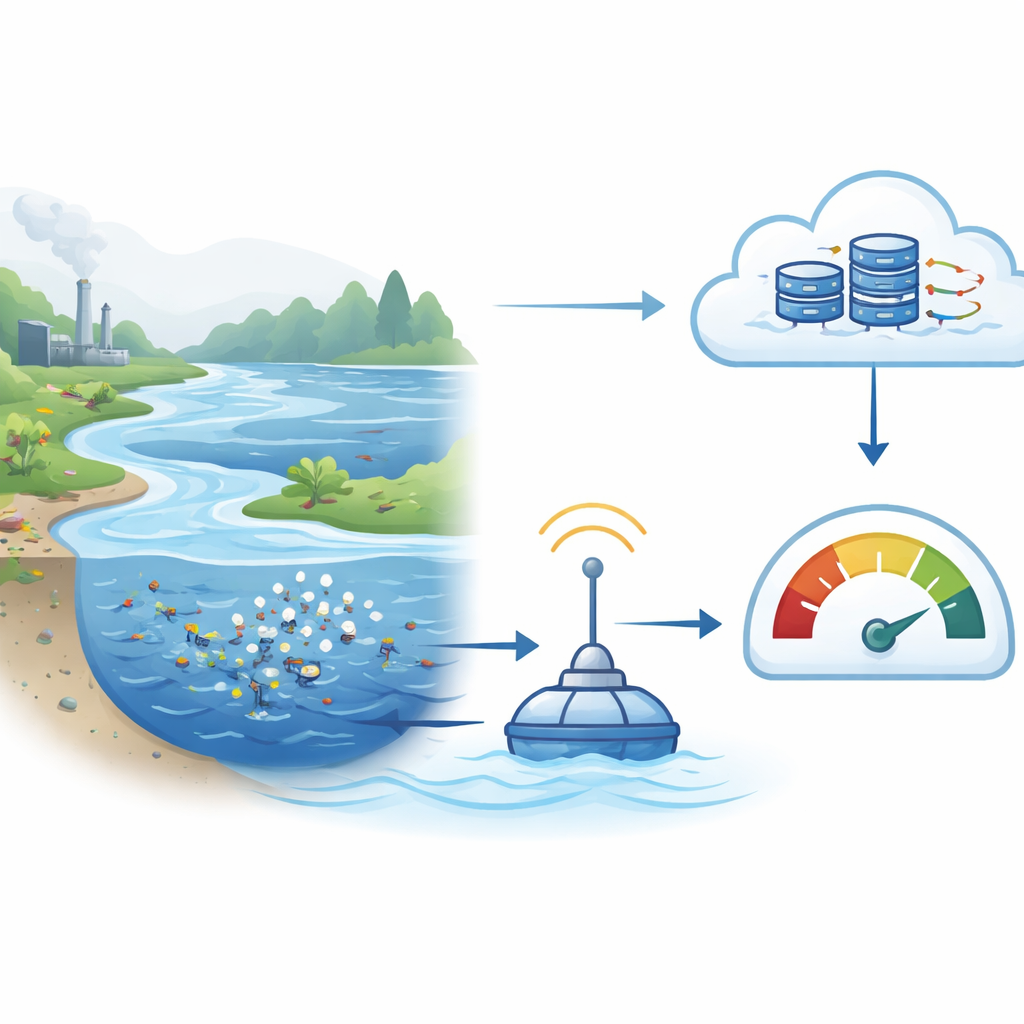
At the heart of the work is the idea of an “Internet of Nano‑Things”: swarms of microscopic or very small sensors placed in freshwater sources. These devices track basic traits of water such as temperature, acidity, dissolved oxygen, and electrical conductivity, as well as signs of pollution like oxygen demand and harmful bacteria. Different sensor types are used together—light‑based probes, metal‑particle detectors, and ultra‑thin carbon materials—to capture a detailed picture of what is happening in the water at any moment. Instead of relying on a technician to collect samples, the sensors send their readings wirelessly to a nearby control unit.
From Remote Streams to a Digital Nerve Center
Once the raw measurements reach this control unit, they are transmitted over low‑power long‑range radio links to a data processing system. The authors design a full end‑to‑end setup with four stages: sensing in the field, coordination and wireless transfer, data processing, and finally prediction of overall water condition. The goal is to create a single, seamless pipeline—from the instant a nanosensor detects a change in the water to the moment a decision maker sees a simple water quality score—so that human operators can respond quickly to emerging problems rather than waiting days for lab results.
Teaching Machines to Fill Gaps and Spot Trouble
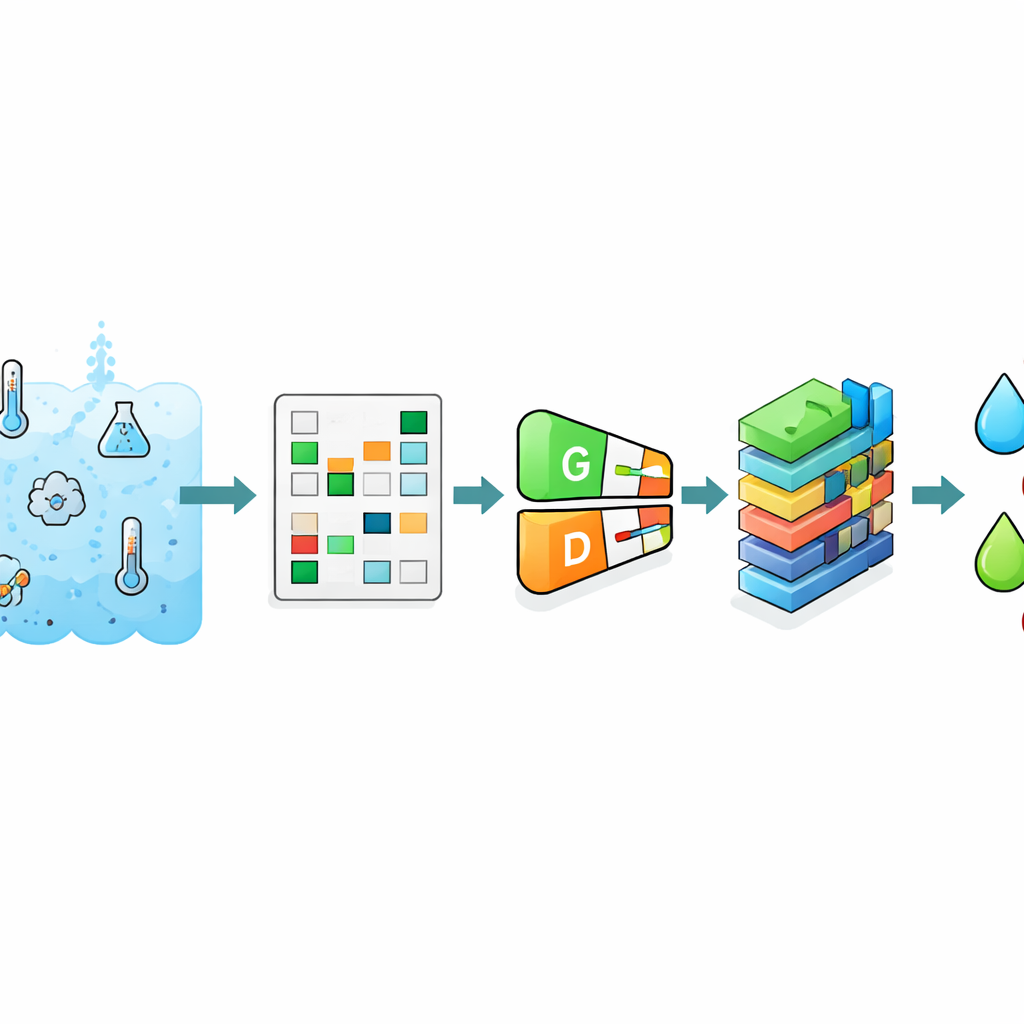
Real‑world sensors are messy: they fail, drift, or briefly lose connection, leaving gaps and glitches in the data. Instead of tossing out these incomplete records, the system uses a special type of deep learning model to intelligently “guess” missing values based on patterns over time and across locations. After this cleaning step, another deep learning model—the convolutional network at the center of the framework—learns how combinations of measurements relate to a standard water quality index that classifies water as excellent, good, poor, very poor, or unsafe. The model is trained on months of time‑stamped readings from multiple monitoring stations, learning subtle relationships such as how organic pollution tends to reduce oxygen levels.
Beating Existing Smart Monitoring Tools
To test whether their integrated system actually helps, the researchers re‑implemented several leading computer‑based approaches and evaluated all of them on the same set of sensor data. Their pipeline not only ran faster—using less computing time at every training step—but also produced smaller prediction errors and higher overall accuracy. In practical terms, the new method correctly classified water quality nearly 99 percent of the time and showed a better balance between false alarms and missed events. Crucially, it did this while considering a richer set of water indicators than some rival methods, which had left out key measures such as organic pollution.
What This Means for Everyday Water Safety
For non‑specialists, the core message is straightforward: by combining dense networks of tiny water sensors with advanced but carefully integrated artificial intelligence, it becomes possible to track the health of rivers, lakes, and wells in close to real time. The proposed framework is not yet a fully field‑tested product, but it demonstrates that such systems can be both accurate and efficient, turning complex chemistry into an easy‑to‑understand quality score and timely alerts. With further refinement and broader testing across seasons and regions, similar tools could help water managers detect contamination sooner, target cleanup efforts more precisely, and better protect communities that depend on vulnerable water supplies.
Citation: Rajakumareswaran, V., Uma, K.V., Babu, S. et al. Accurate water quality assessment using IoNT-enabled deep learning frameworks. Sci Rep 16, 8897 (2026). https://doi.org/10.1038/s41598-026-42563-3
Keywords: water quality monitoring, nanosensors, Internet of Nano-Things, deep learning, environmental management