Clear Sky Science · en
Geospatial patterns and socio-environmental factors of household overcrowding in Ethiopia: Evidence from 2019 Ethiopian demographic and health survey data
Why crowded homes matter
Imagine sharing a small room where sleeping, cooking, studying, and playtime all compete for the same cramped space. For many families in Ethiopia, this is daily life. Crowded homes do more than reduce comfort: they can help diseases spread, strain family relationships, and limit children’s chances to learn and thrive. This study looks across Ethiopia to ask where household overcrowding is worst, what local conditions drive it, and how tailored solutions could make homes healthier and lives more secure.
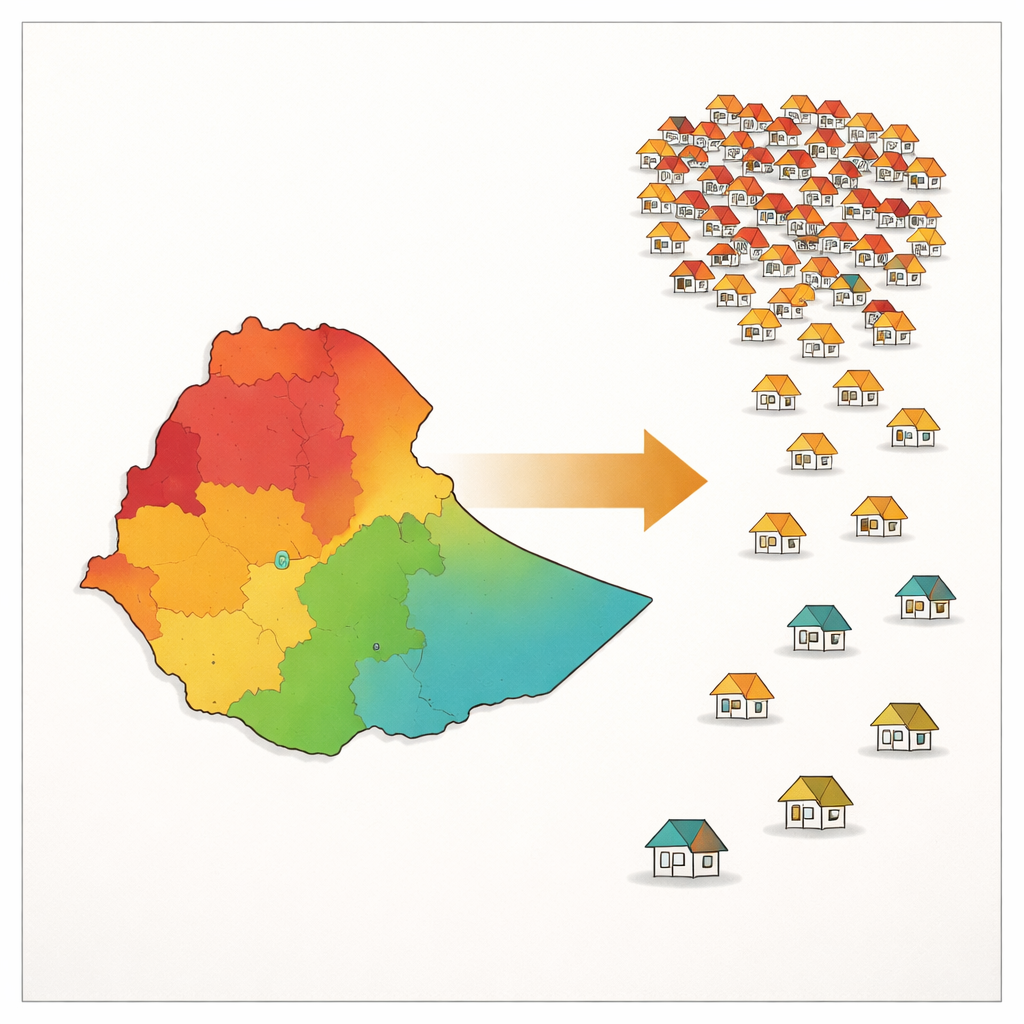
Taking a nationwide look at living space
The researchers used data from the 2019 Ethiopian Mini Demographic and Health Survey, which visited more than 8,600 households across all regions and both cities and rural areas. They defined a home as overcrowded when more than two people shared a single sleeping room, counting living rooms and kitchens if they were used for sleep. By combining survey information with mapped locations of survey clusters, they could examine how crowding varies from place to place and how it relates to education, wealth, family size, livelihoods, and basic services such as sanitation and media access.
Where the problem is most severe
Across the country, nearly seven out of ten households were overcrowded, a higher share than in many other African nations. Yet this national figure hides striking regional differences. The Somali region had the heaviest burden, with more than four out of five households overcrowded, followed closely by Oromia and the Southern Nations, Nationalities and Peoples’ Region. Addis Ababa, the capital, fared better but still had almost half of households living in cramped conditions. Using statistical tools that detect geographic “hotspots,” the team found strong clusters of overcrowding stretching across south and central Ethiopia and into the east, while parts of Tigray, Afar, and Amhara showed relatively fewer packed homes.
What drives crowded homes in different places
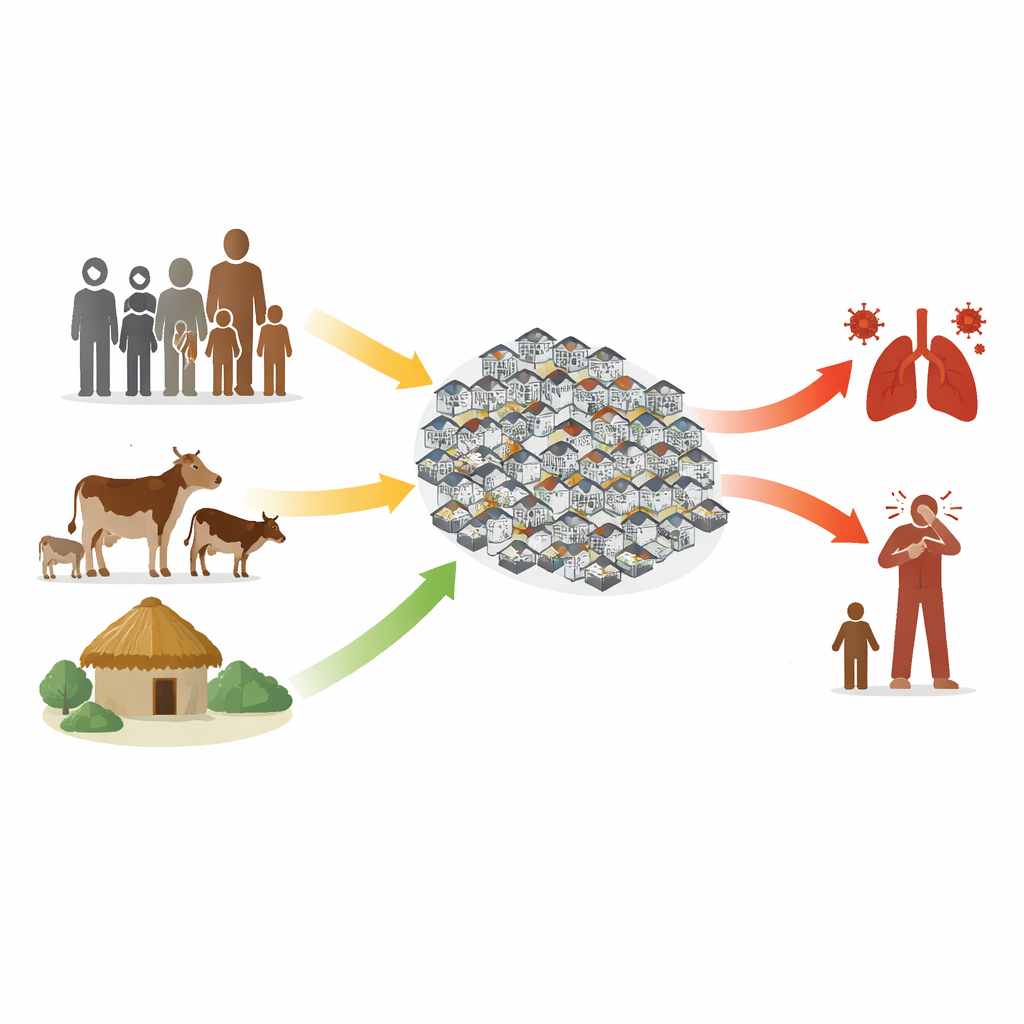
To understand why some areas are worse off, the researchers examined links between overcrowding and social and environmental conditions. Households headed by someone with no schooling or only primary schooling were far more likely to be crowded than those led by someone with secondary or higher education. Having five or more family members almost guaranteed a crowded home. Families living in pastoralist regions—areas where many people depend on herding and mobile lifestyles—were also more affected, likely because incomes are unstable, formal housing is scarce, and extended families tend to live together. Lack of exposure to radio, television, or newspapers was another warning sign, suggesting that limited access to information goes hand in hand with poor housing conditions.
Why location changes the story
Importantly, these drivers do not operate the same way everywhere. Using a technique that allows relationships to vary across the map, the study showed that large family size was a particularly strong factor in the northwest of Ethiopia, including Tigray and Amhara, while lack of education and pastoralist livelihoods were especially influential in eastern regions such as Somali and Afar. In the far north, not having media exposure mattered more, hinting at how isolation from information and services can compound physical crowding. This patchwork of patterns means that a single nationwide policy is unlikely to solve the problem; what matters in one region may be less important in another.
What it means for people and policy
For ordinary families, the message is clear: crowded homes are not just an inconvenience but a sign of deeper social and economic strain. They raise the risk of infections, increase stress, and limit privacy and learning space, especially for children. For decision-makers, the study argues that reducing overcrowding will require more than building houses. In pastoralist and eastern regions, investments in education, stable livelihoods, basic infrastructure, and culturally appropriate housing design are crucial. In the northwest, improving access to information and supporting families to manage household size may be more effective. By treating overcrowding as a place-specific problem tied to education, income, and access to services, Ethiopia can move closer to the global goal of making cities and communities safer, healthier, and more livable for everyone.
Citation: Keleb, A., Kassaw, A.B., Bezie, A.E. et al. Geospatial patterns and socio-environmental factors of household overcrowding in Ethiopia: Evidence from 2019 Ethiopian demographic and health survey data. Sci Rep 16, 8504 (2026). https://doi.org/10.1038/s41598-026-42516-w
Keywords: household overcrowding, Ethiopia housing, spatial public health, pastoralist communities, urbanization and health