Clear Sky Science · en
Predicting identity dissociation using childhood maltreatment and genetic variation in the stress-response gene FKBP5: a machine learning analysis
Why this study matters for everyday life
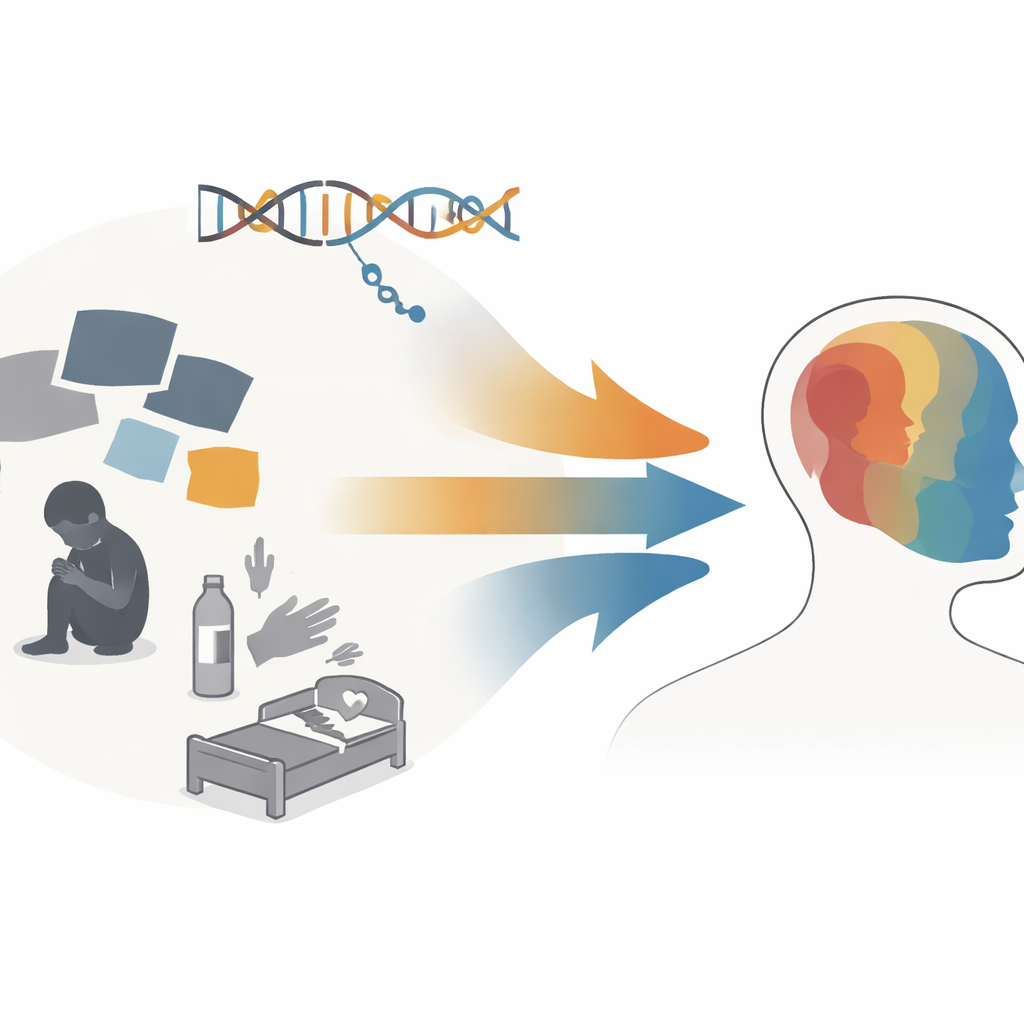
Many people who have lived through childhood abuse or neglect struggle later with feeling like a stranger to themselves, as if different "selves" take turns being in charge. This experience, called identity dissociation, can be deeply distressing and hard for clinicians to recognize early. The study summarized here asks a practical question with human consequences: can we combine information about someone’s childhood experiences and their genetic sensitivity to stress to spot who is most at risk, and thus who might need closer support and care?
Childhood scars and a shaken sense of self
Identity dissociation involves a breakdown in the feeling of being one continuous, coherent person over time. It is common in severe trauma-related conditions, such as dissociative identity disorder and some complex forms of post-traumatic stress. These problems have long been linked to childhood maltreatment, including emotional, physical, and sexual abuse, as well as emotional and physical neglect. The authors build on earlier work showing that both traumatic childhood experiences and variation in a stress-related gene called FKBP5 are tied to dissociative symptoms. They focus on a specific pattern of this gene, known as the CATT haplotype, which is associated with a stronger and more persistent stress response.
Who took part and what was measured
The research team studied 377 adults from a large, predominantly Black, low-income urban community in Atlanta, most of whom had faced significant trauma. Participants completed established questionnaires about childhood maltreatment and current dissociative experiences. Identity dissociation was defined using a strict cutoff on a specialized dissociation scale, flagging only relatively severe cases. The scientists also analyzed each person’s DNA to determine how many copies of the FKBP5 CATT haplotype they carried. This allowed them to look not only at whether bad childhood experiences or genetics alone mattered, but also at how the two might combine to raise risk.
Using machine learning to predict risk
Instead of relying on simple statistical links, the authors used a machine learning approach called elastic net logistic regression to build a prediction model. The model took in five types of childhood maltreatment, biological sex, the number of FKBP5 CATT haplotypes, and interactions between each maltreatment type and the gene variant. It was trained on one part of the sample and then tested on a separate group of 183 people. In the validation group, about 16% had clinically meaningful identity dissociation. The model was able to distinguish those with and without this problem at a fair level, with an overall accuracy of around three quarters and an area-under-the-curve value of 0.71, a common measure of predictive performance.
What the model got right and where it fell short
The model was better at ruling out identity dissociation than confirming it. When it predicted that someone did not have severe identity dissociation, it was correct about nine times out of ten, suggesting usefulness as a screening tool to identify people at low risk who may not need intensive evaluation. However, when it predicted that someone did have identity dissociation, it was right only about one third of the time, in part because the condition was relatively rare in the sample. Detailed inspection of the model showed that emotional abuse and emotional neglect in childhood, especially when combined with genetic sensitivity in the FKBP5 gene, were among the strongest contributors to higher risk. Decision curve analysis, which weighs the harms of missing cases against the harms of false alarms, indicated that using the model could still offer a net benefit for many real-world decision thresholds.
How biology and trauma may work together
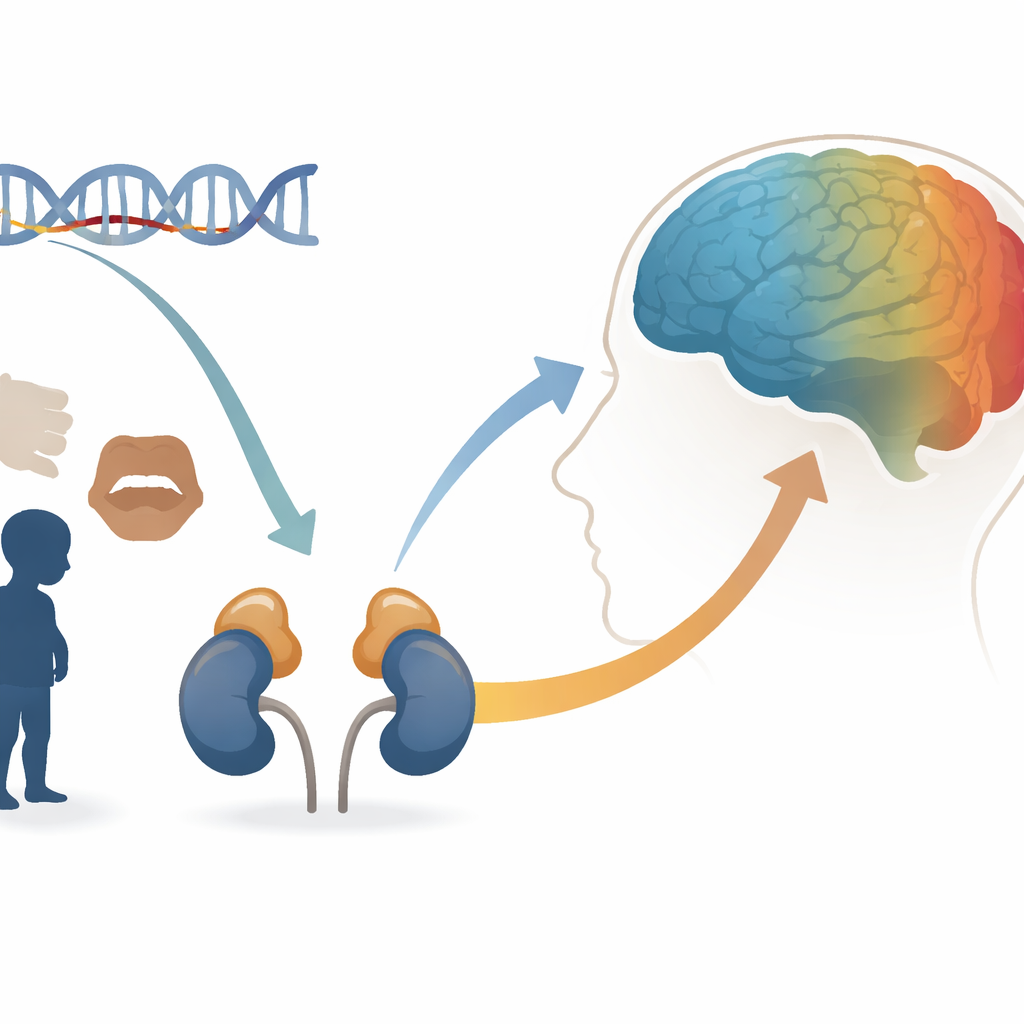
The FKBP5 gene helps regulate the body’s stress system, which links brain centers to hormone-releasing glands. Certain versions of FKBP5, including the CATT haplotype, are thought to make this system more reactive and slower to shut off after stress. The authors speculate that when a child with this biological sensitivity lives through repeated emotional abuse or neglect, the stress system may remain on high alert, altering brain circuits involved in memory, self-reflection, and narrative identity. Over time, this combination could make it harder to weave life experiences into a single, stable sense of self, opening the door to identity dissociation. Although additional tests of DNA methylation patterns—chemical tags that regulate gene activity—did not show clear results here, prior work suggests that stress can leave long-lasting marks on these systems.
What this means for prevention and care
For non-specialists, the core message is that severe disruptions in one’s sense of self are not just “in the mind” in a dismissive sense, nor solely the result of life events. Instead, they appear to grow from a complex dance between early emotional injuries and built-in biological sensitivities in stress-regulation systems. This study shows that a relatively simple combination of childhood maltreatment history and a single genetic marker can begin to flag who might be at higher risk, with enough reliability to help rule out low-risk individuals and direct scarce clinical resources. At the same time, the predictions are far from perfect, underscoring that identity dissociation is shaped by many other psychological, social, and biological factors. The work points toward a future where personalized assessment blends trauma histories, genes, brain measures, and daily-life data to better detect, understand, and ultimately treat people whose sense of self has been fractured by early adversity.
Citation: Kratzer, L., Knoblauch, H., Powers, A. et al. Predicting identity dissociation using childhood maltreatment and genetic variation in the stress-response gene FKBP5: a machine learning analysis. Sci Rep 16, 8485 (2026). https://doi.org/10.1038/s41598-026-42512-0
Keywords: identity dissociation, childhood trauma, stress response genes, gene–environment interaction, FKBP5