Clear Sky Science · en
Developmental coordination disorder traits persistently affect physical activity and sedentary behavior in adults
Why this research matters to everyday life
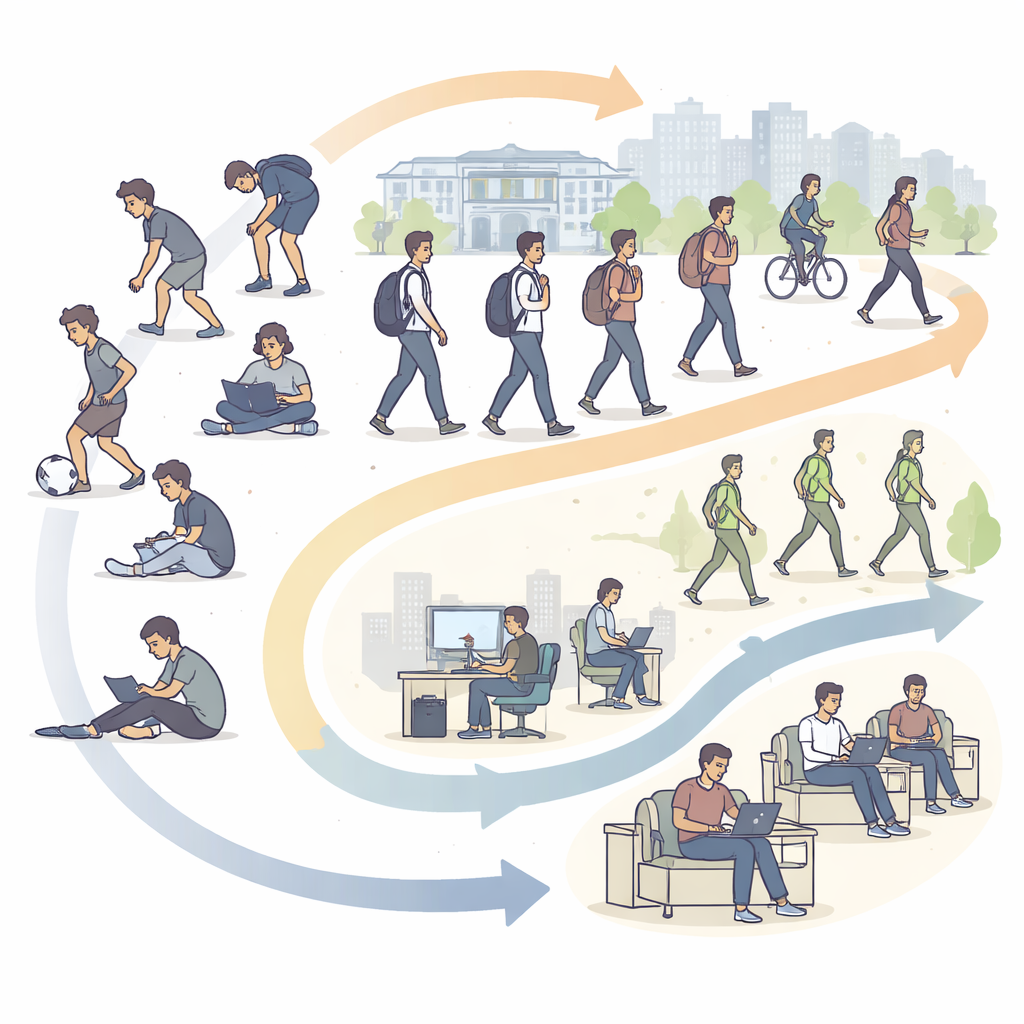
Many of us think of clumsiness in childhood as something people simply “grow out of.” This study challenges that idea by showing that movement difficulties linked to Developmental Coordination Disorder (DCD) may echo into adult life, shaping how active—or inactive—we become. For young adults in college, where sitting in class, commuting, and studying already take up long hours, understanding who is most at risk of inactivity and long sitting time can help universities and health services better support students’ health.
What is hidden behind lifelong clumsiness
DCD is a neurodevelopmental condition in which everyday actions like running, catching, or using tools feel unusually hard to coordinate. Because a formal diagnosis is uncommon, this research focused on “DCD traits”: patterns of difficulties that look like DCD, even if the person has never been officially diagnosed. The authors studied Brazilian university students to see whether having these traits—both remembered from childhood and experienced now in adult life—was linked to how much they moved and how long they sat each day.
How the study was carried out
The researchers surveyed 124 students from a large public university in the state of Bahia. Participants answered an adult checklist that captures motor difficulties in childhood and adulthood, a standard questionnaire about weekly physical activity and sitting time, and questions about their background and health (such as field of study, work, prior diagnoses, and use of medication, tobacco, or alcohol). The team then grouped people into those with and without DCD-like traits and used statistical models to ask: do these traits predict being insufficiently active, or spending a lot of time sitting, even after taking into account age, sex, and other social and health factors?
What the researchers found
Half of the students were not active enough according to international guidelines, and over a quarter spent especially long hours sitting. Students who showed DCD traits—whether reported for childhood, current adult life, or both—were more likely to be insufficiently active and far more likely to have high sitting time. When the researchers adjusted for age, sex, and social factors such as course type and living situation, DCD traits still predicted low activity and high sitting. When they further adjusted for health factors, the link with low activity weakened, but the link with long sitting remained strong across all time periods. In other words, movement difficulties appeared to be a particularly robust driver of sedentary habits.
Looking at severity and life course
The team went a step further by zooming in on students whose scores suggested a stronger, “probable” DCD profile. For these students, the pattern was even clearer. Those with more severe traits had markedly greater odds of being highly sedentary—sometimes many times higher than their peers—regardless of demographic or health differences. The connection with low physical activity was also present but more easily explained away when health factors were considered. This suggests that while other aspects of health can nudge people toward or away from exercise, persistent coordination difficulties exert a particularly powerful pull toward sitting-based routines.
What this means for students and health programs
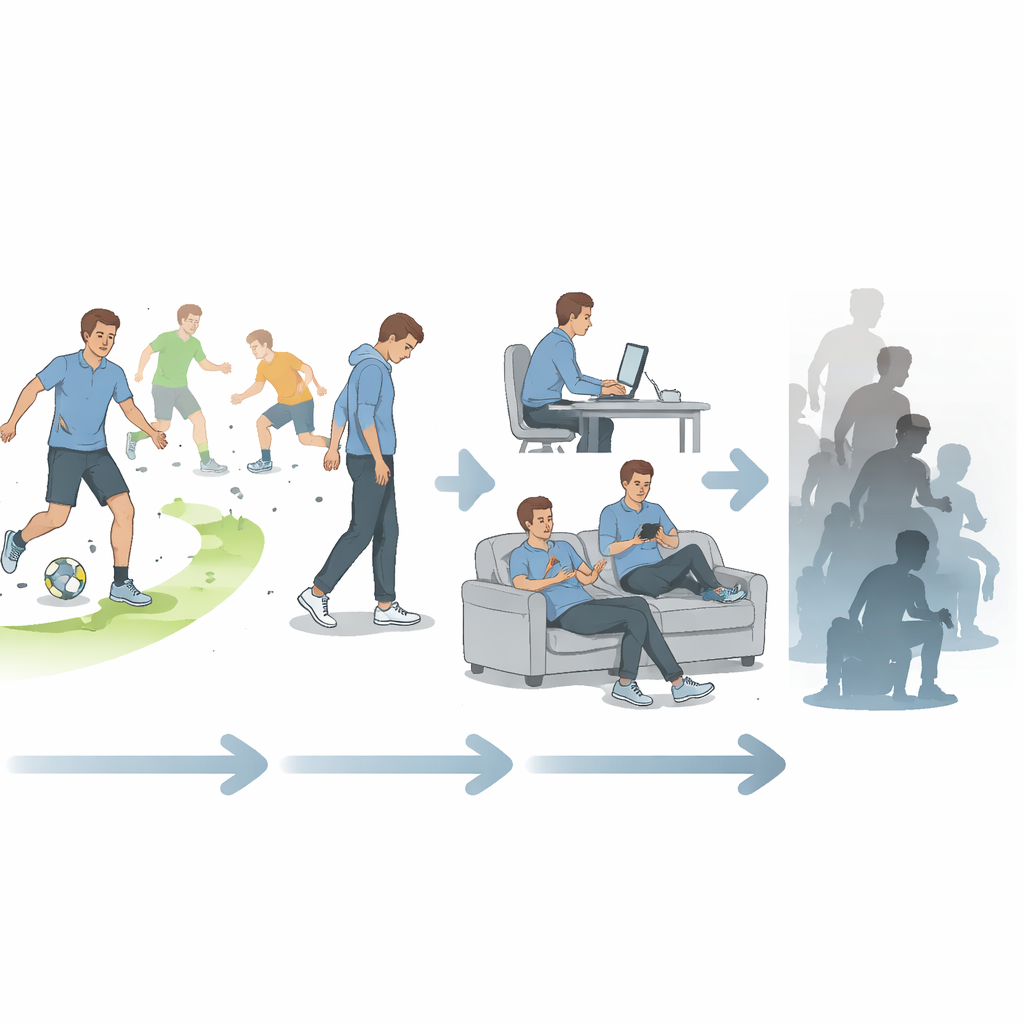
The study concludes that traits related to DCD are linked to doing less physical activity and, even more strongly, to spending more time sitting in adulthood. For a layperson, the takeaway is straightforward: people who have struggled with coordination since childhood may quietly drift into more sedentary lifestyles, not because they do not care about their health, but because movement has always felt harder and more frustrating. The authors argue that adult health assessments—especially in university settings—should ask about lifelong coordination difficulties and that support programs should focus not only on promoting exercise, but also on creatively cutting down sitting time. Tailored, encouraging environments may help these individuals break a subtle but powerful cycle of avoidance and inactivity.
Citation: Cavalcante-Neto, J.L., Silva, J.M.C., Thomas, G. et al. Developmental coordination disorder traits persistently affect physical activity and sedentary behavior in adults. Sci Rep 16, 10896 (2026). https://doi.org/10.1038/s41598-026-42487-y
Keywords: developmental coordination disorder, sedentary behavior, physical activity, university students, motor skills