Clear Sky Science · en
Influence of environmental conditions, operational procedures, and filter material on robotic gravimetric weighing of particulate matter filters
Why the Weight of Tiny Particles Matters
Air pollution is often talked about in terms of smoky skies or traffic fumes, but behind every pollution limit and health warning lies an invisible task: precisely weighing the dust trapped on filter papers. These microscopic particles, known as particulate matter, are collected on filters and weighed to decide whether the air meets legal standards. This study explores how well a robotic system can perform this delicate weighing job, and whether room conditions like temperature and humidity—or even the type of filter—quietly nudge the results.
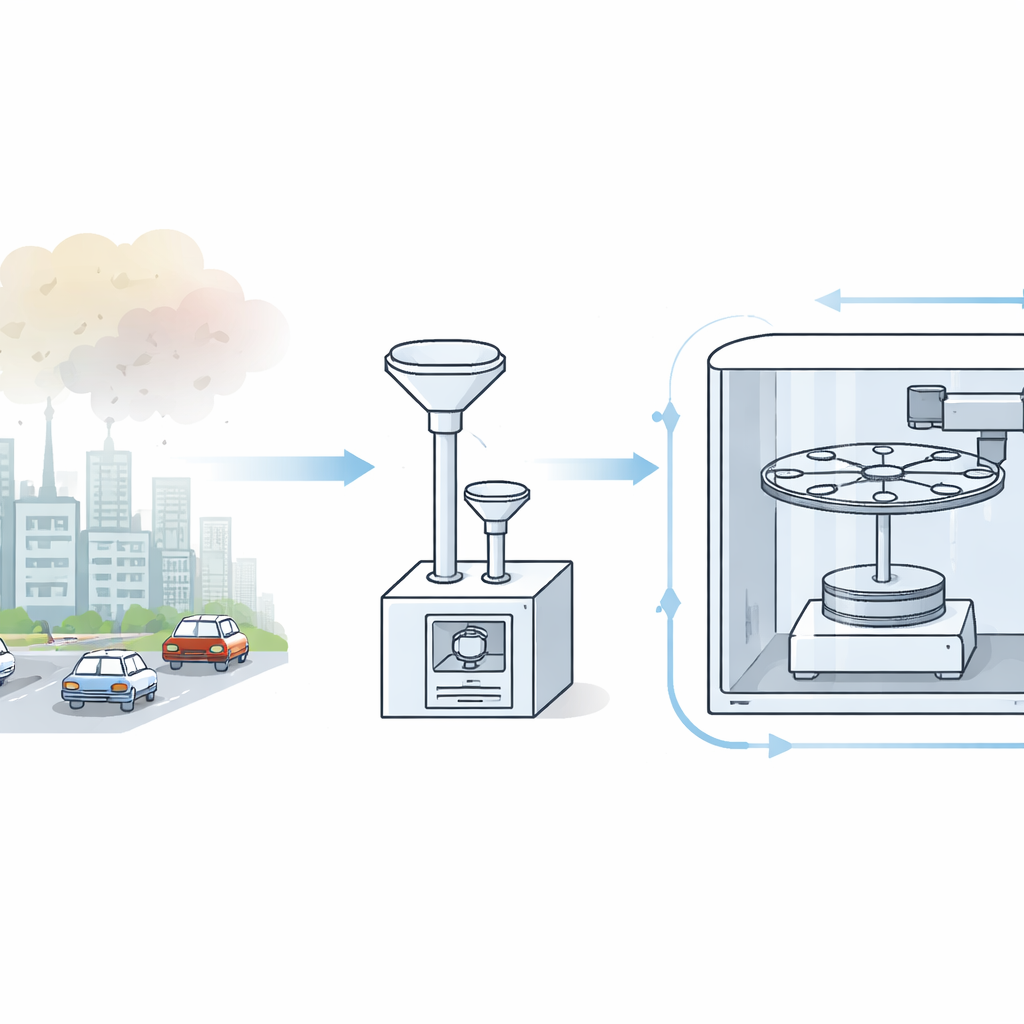
From Dirty Air to Measured Dust
Across Europe and worldwide, air quality rules rely on gravimetric methods, which means weighing filters before and after they collect airborne particles. The mass difference tells us how much pollution was in the air. For this to work, laboratories must keep filters in tightly controlled rooms for many hours so they do not gain or lose water. Even small swings in humidity can make filters heavier or lighter, and very dry air can build up static electricity that disturbs the balance. With new European Union directives tightening limits on fine particles, getting these measurements right has become more important than ever.
Putting a Robot to the Test
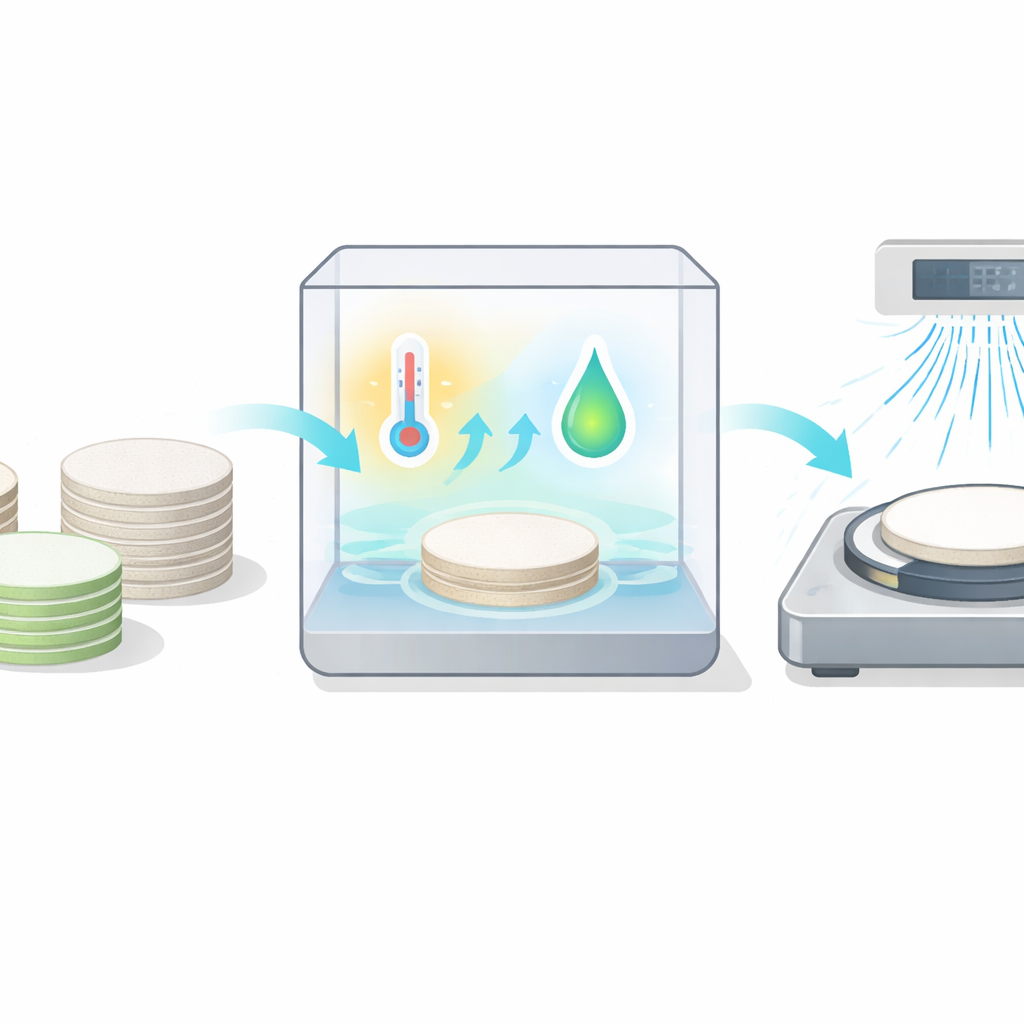
The researchers examined an automated Robotic Weighing System (RWS) that stores filters in an enclosed chamber with carefully managed temperature and humidity. They tested three common filter materials—glass fiber, quartz fiber, and PTFE (a plastic with a support ring)—some loaded with real urban pollution and some kept blank. Filters were first stabilized for two days at 21 °C and 45% relative humidity, then reweighed inside the robot under nine different combinations of temperature and humidity, including some that pushed beyond the narrow ranges laid down in standards. Extra sensors were placed in the chamber to double-check its internal climate, and an antistatic ionizer was used to neutralize electrical charges on the filters.
How Environment and Filter Type Shape Results
Overall, the robot turned out to be reassuringly steady. Statistical tests showed that, once filters were properly conditioned, shifting the chamber temperature and humidity within the tested ranges did not cause meaningful changes in measured mass. Glass and quartz filters showed very small variations, and blank filters of all types stayed especially stable. Humidity tended to matter more than temperature, and the particle-laden dust itself reacted more strongly to moist air than the filter materials did. PTFE filters behaved somewhat differently: while their absolute variability was higher, their response changed little as conditions shifted, reflecting their water-repellent nature. The study also highlighted that if PTFE filters are not treated with an antistatic device, static electricity can make their apparent weight jump erratically.
Watching the Robot Work Over Time
Beyond climate conditions, the team asked whether the robot’s own movements might subtly affect measurements. Inside the chamber, a rotating carousel carries dozens of filters past the balance. To test for "wear and tear" during a weighing run, the authors measured two carefully chosen reference filters again and again over three hours. The average mass barely changed, but very sensitive statistical tests did reveal a tiny drift over time, likely caused by gradual stabilization of the filters or small changes in the chamber’s climate-control hardware. When they compared the robotic system with a high-precision manual balance, the two methods agreed very closely, with differences staying within a few micrograms for glass and quartz filters and somewhat larger, but still acceptable, differences for PTFE.
What This Means for Cleaner Air
For non-specialists, the main message is that automated weighing robots can be trusted to deliver the precise measurements needed to judge whether our air meets tightening legal limits. Under well-controlled conditions, the robot’s results match those of expert technicians using manual balances, while also reducing human errors and speeding up the processing of thousands of filters in national monitoring networks. The study shows that standard temperature and humidity rules are effective, that glass and quartz filters are very stable, and that PTFE filters work reliably when static electricity is carefully managed. In short, properly designed robotic systems can quietly underpin cleaner-air policies by providing robust, repeatable measurements of the dust we cannot see but that strongly affects our health.
Citation: Chyzhykov, D., Widziewicz-Rzońca, K., Loska, K. et al. Influence of environmental conditions, operational procedures, and filter material on robotic gravimetric weighing of particulate matter filters. Sci Rep 16, 10891 (2026). https://doi.org/10.1038/s41598-026-42411-4
Keywords: air pollution, particulate matter, filter weighing, automation, humidity effects