Clear Sky Science · en
Comparative analysis of dose-response variability and severity in STZ-induced diabetes: female vs. male NSG mice
Why this mouse study matters for people with diabetes
Diabetes research often depends on mouse models that mimic high blood sugar and its complications. Yet many such experiments have historically used only male animals, even though women and men experience diabetes differently. This study asked a practical but important question: how much of a common diabetes-inducing drug is needed to create a reliable diabetes model in female mice, without causing unnecessary suffering, and how do females compare with males?
Finding the right drug dose for female mice
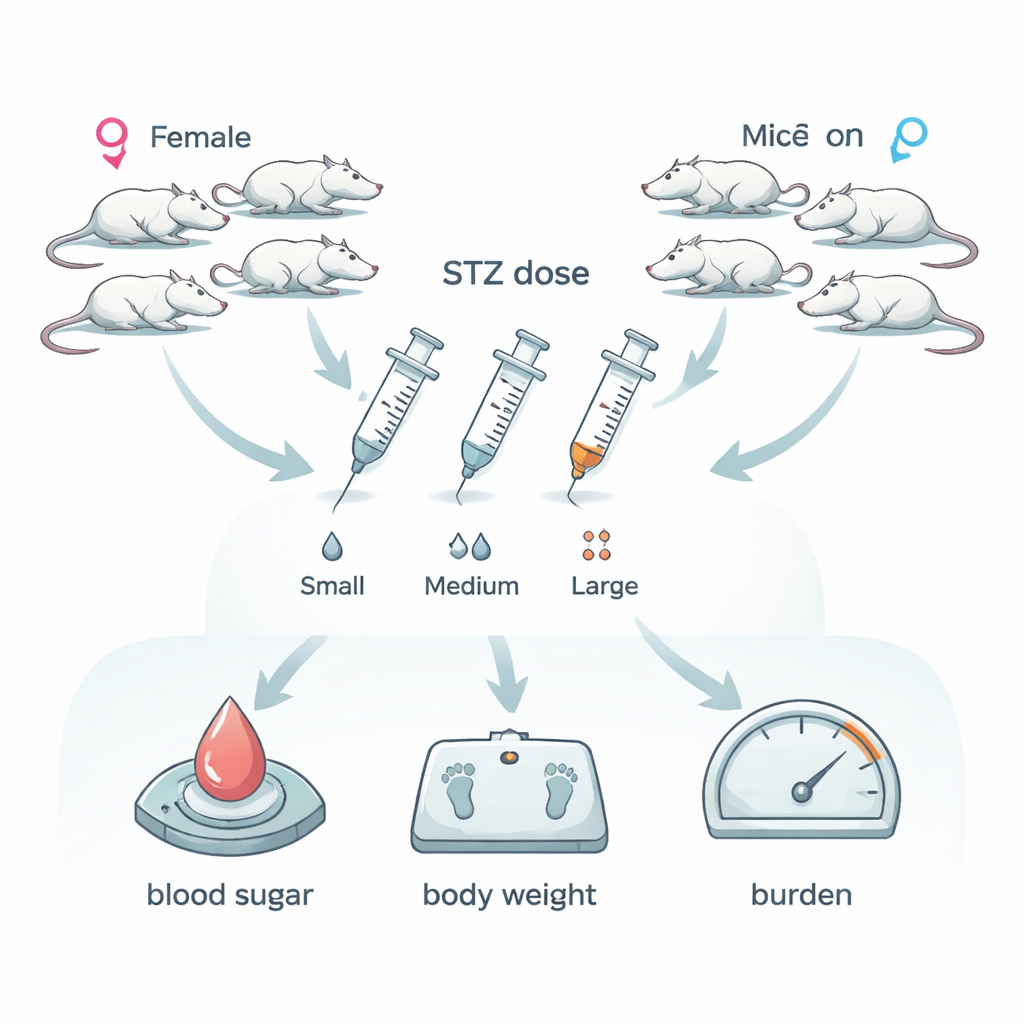
The researchers worked with a special strain of mouse, called NSG, widely used to test transplanted human insulin-producing cells. To trigger diabetes, they used streptozotocin (STZ), a compound that selectively damages the pancreas cells that make insulin. Female mice are known to be somewhat protected against this drug, likely because of the hormone estrogen, so the team carefully avoided treating animals at the point in their reproductive cycle when estrogen peaks. They then gave single STZ injections at five different dose levels and monitored blood sugar, body weight, and survival over ten days.
Too little, too much, and a dose that is “just right”
At the two lowest doses tested, many female mice did not develop clear diabetes: blood sugar rose only slightly or hovered near—but not consistently above—the study’s diagnostic threshold. At the two highest doses, diabetes appeared quickly and uniformly, but at a steep cost: animals lost more than 20 percent of their body weight within a few days, some showed organ damage, and several had to be euthanized early. The middle dose, 175 milligrams per kilogram of body weight, emerged as a “sweet spot.” It pushed blood sugar into a stable diabetic range in about nine out of ten females, yet weight loss and early deaths were far less severe than at higher doses.
Measuring animal burden, not just blood sugar
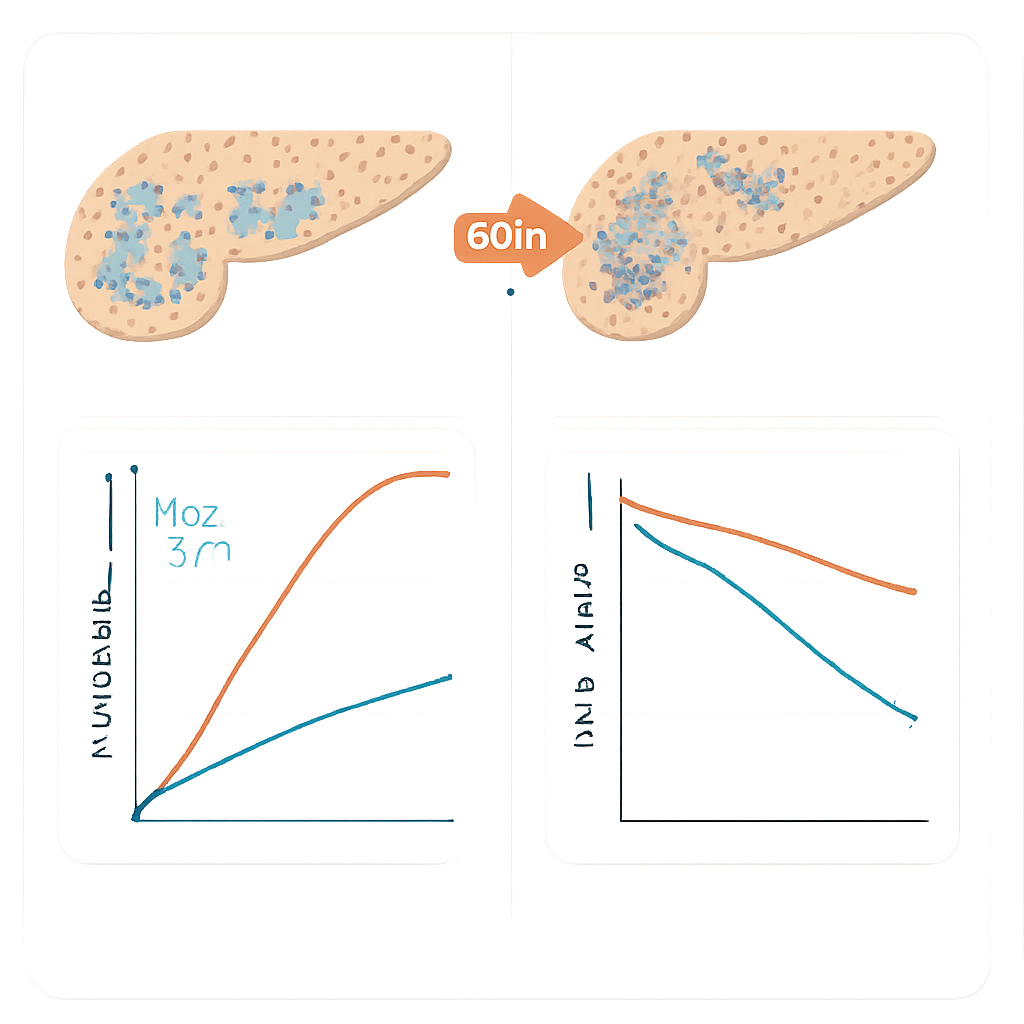
To go beyond simple readings of glucose and weight, the team used a quantitative scoring system called RELSA. This method combines changes in body weight and blood sugar into a single value that reflects how strongly an animal is affected by the procedure. As expected, higher STZ doses produced steeper RELSA curves, meaning more intense and rapidly increasing burden. Doses of 200 and 225 milligrams per kilogram caused a sharp and early spike in severity, while 175 milligrams per kilogram produced a slower, moderate rise. Microscopic examination of the pancreas matched these patterns: with increasing dose, more insulin-producing cells disappeared or showed only faint insulin staining.
Comparing female and male mice
The authors then combined these new data with their earlier work in male NSG mice. Using statistical models and machine learning, they compared how reliably different blood sugar cutoffs separated diabetic from non-diabetic animals of each sex. Females consistently needed about 25 milligrams per kilogram more STZ than males to reach similar diabetes rates. At the same nominal dose, their blood sugar and weight changes overlapped more with healthy animals, making them harder to classify as diabetic using a single universal threshold. Despite this reduced sensitivity, the maximum burden, as quantified by RELSA, was surprisingly similar between sexes at equivalent effective doses.
What this means for future diabetes research
For scientists modeling insulin-dependent diabetes in NSG mice, this study provides concrete guidance: a single dose of 175 milligrams of STZ per kilogram reliably induces diabetes in most female animals while avoiding the extreme weight loss and distress seen at higher doses. Importantly, it also shows that female mice, when dosed appropriately, are just as suitable and reproducible a model as males. That finding supports the inclusion of both sexes in preclinical diabetes experiments, helping future studies better reflect the realities of diabetes in women and men, while also refining protocols to reduce unnecessary animal suffering.
Citation: Talbot, S.R., Heider, M., Wirth, M. et al. Comparative analysis of dose-response variability and severity in STZ-induced diabetes: female vs. male NSG mice. Sci Rep 16, 8257 (2026). https://doi.org/10.1038/s41598-026-42408-z
Keywords: streptozotocin, NSG mice, sex differences, type 1 diabetes model, animal welfare