Clear Sky Science · en
High-efficiency cellulose acetate/GO/CaCO3 for solar photodegradation of methylene blue
Sunlight as a Helper for Cleaner Water
Industrial dyes that give vivid color to fabrics and consumer goods often end up in rivers and lakes, where they can be hard to remove and harmful to living things. This study explores a simple, sunlight-driven plastic-like film that can pull a common blue dye out of water and break it down, offering an affordable way to improve wastewater treatment, especially in sunny regions.
Why Colored Wastewater Is a Problem
Textile factories and other industries release large amounts of dye into wastewater. Many of these dyes, including methylene blue, are designed to resist fading, which also makes them stubborn pollutants that do not easily fall apart in the environment. Conventional treatment plants reduce some pollution but often struggle with these long-lasting colors, and advanced technologies can be expensive and energy-intensive. A low-cost material that cleans water using only sunlight would be attractive for both industry and communities facing water scarcity.
Designing a Smart Cleaning Film
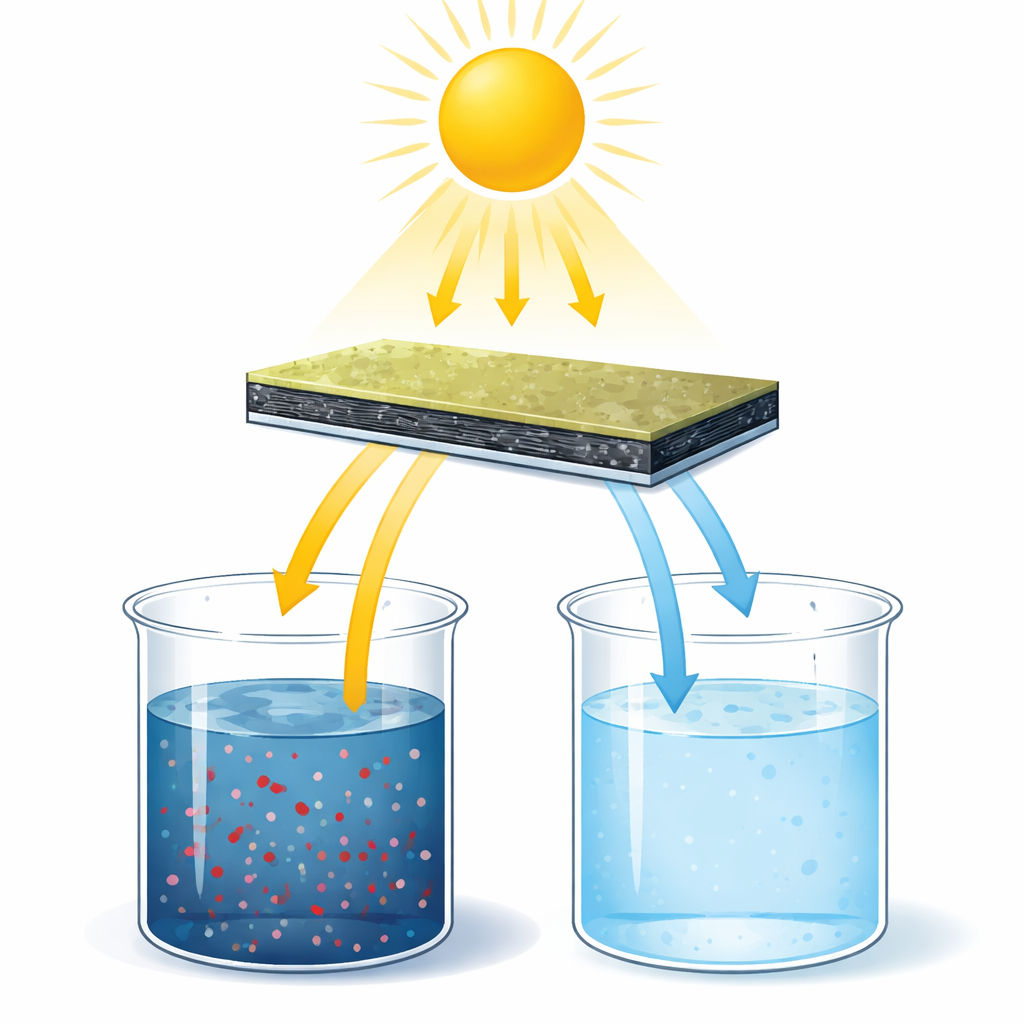
The researchers created a thin, flexible film by combining three ingredients: a common plastic-like form of plant-based cellulose, tiny particles of calcium carbonate (the main component of chalk), and sheet-like graphene oxide made from graphite. The cellulose provides a solid, moldable base; calcium carbonate introduces pores and charged sites that grab dye molecules; and graphene oxide brings a large surface area and light-responsive behavior. Mixed in a simple solvent, poured into a dish, and dried, these ingredients form a uniform layer with a thickness of about a tenth of a millimeter that can be handled like a piece of plastic.
Peering Inside the New Material
To see whether the ingredients were properly combined, the team used several standard lab tools that reveal structure and composition. X-ray–based methods confirmed that graphite had been turned into graphene oxide and that calcium carbonate crystals were well embedded inside the cellulose. Infrared measurements showed that chemical groups from all three components were present and later interacted with the dye. Electron microscope images revealed a porous, rough surface in the fresh film, indicating many tiny cavities where dye molecules could lodge. After the dye was treated, these pores appeared filled and the surface smoother, consistent with strong dye capture.
How Sunlight Speeds Up Dye Breakdown
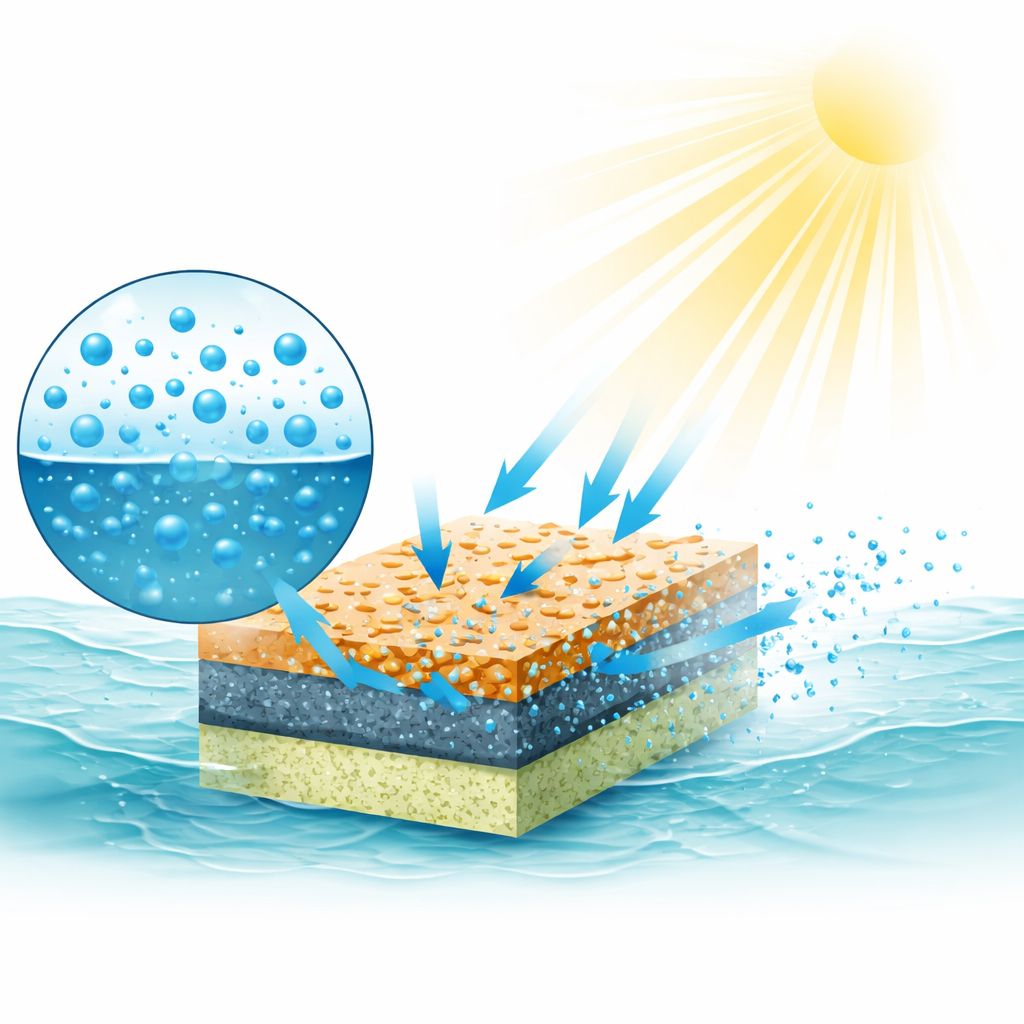
The film was tested by placing small pieces into water containing methylene blue, first in the dark and then under natural sunlight. In the dark, only about one seventh of the dye was removed over two hours, mainly by sticking to the surface. Under sunlight, however, more than ninety percent disappeared in the same time. The film’s structure allows it to first adsorb the dye, concentrating it at the surface, and then, when light shines, to generate highly reactive forms of oxygen and other short-lived species that attack the dye molecules. The study also showed that the process works well across a wide range of acidity levels and that the rate of removal follows a pattern typical of strong chemical attachment between the film and the dye.
What This Could Mean for Future Water Treatment
In plain terms, the authors have built a reusable sheet that acts like both a sponge and a tiny solar reactor: it soaks up a stubborn blue dye from water and then, powered by sunlight, breaks the dye into smaller, colorless pieces. Because the ingredients are inexpensive and partly derived from natural materials, and because the system operates under ordinary sunlight without extra energy input, this approach could be scaled to help clean colored wastewater in regions where advanced treatment is too costly, contributing to safer and more sustainable use of water resources.
Citation: Dacrory, S., Kamel, S. High-efficiency cellulose acetate/GO/CaCO3 for solar photodegradation of methylene blue. Sci Rep 16, 11108 (2026). https://doi.org/10.1038/s41598-026-42390-6
Keywords: wastewater treatment, dye removal, solar photocatalysis, graphene oxide film, cellulose acetate composite