Clear Sky Science · en
Tenoxicam-loaded bioglass/chitosan composites for bone tissue engineering: in vitro characterization, sustained drug release, and antimicrobial activity
Healing broken bones with smarter materials
When a bone is badly damaged, doctors often need more than metal plates and screws. They must calm pain and swelling, fight off lurking germs, and coax new bone to grow. This study explores a single, smart material that tries to do all of that at once: a tiny, bone-like scaffold that slowly releases an anti-inflammatory drug while bonding tightly to the skeleton and discouraging harmful bacteria.
A new kind of bone patch
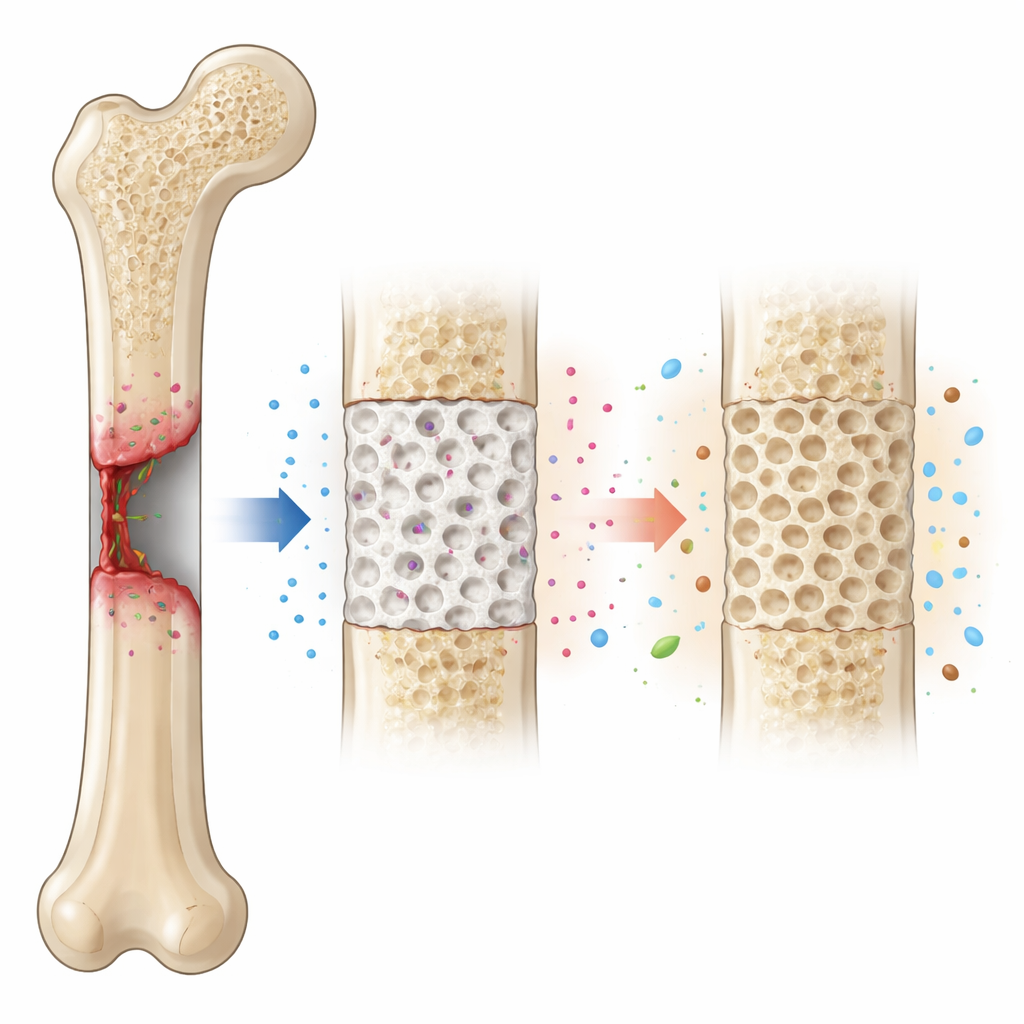
The researchers focused on a stubborn problem in orthopedics: large bone defects that are painful, inflamed, and vulnerable to infection. Standard pain pills and antibiotics travel through the whole body and may never reach high enough levels where they are needed most—the injured site. The team set out to build a local “bone patch” that could sit directly in the damaged area, support growing tissue, and deliver medicine steadily over weeks, all while being gentle to the body.
Blending glass, natural sugar, and pain relief
The material they designed combines three key ingredients. First is bioglass, a special type of glass already known to bond strongly with bone by forming a thin mineral layer similar to natural bone crystals. Second is chitosan, a biodegradable substance derived from crustacean shells that can form flexible, porous structures and has mild germ-fighting properties. Third is Tenoxicam, a common drug used to reduce pain and inflammation. Using a chemistry route called the sol–gel process, the team embedded different amounts of Tenoxicam (1, 2, and 3 percent by weight) into a mixture of bioglass and chitosan, then pressed the resulting powders into small discs.
Testing how the bone patch behaves in the body
To mimic what happens inside a person, the discs were soaked for more than a month in a liquid that closely imitates human blood plasma. Advanced tools were used to see how their surfaces changed. Spectroscopy and X-ray measurements showed that all of the samples quickly grew a coating of hydroxyapatite, the same mineral that makes up much of natural bone. This new layer became more ordered and abundant over time, especially in the sample with the highest drug loading. Electron microscope images revealed a highly porous surface filled with interconnected holes. Such porosity is crucial: it lets body fluids, nutrients, and bone-forming cells penetrate and anchor, helping the implant knit together with living tissue.
Slow, steady medicine and built-in defense against germs
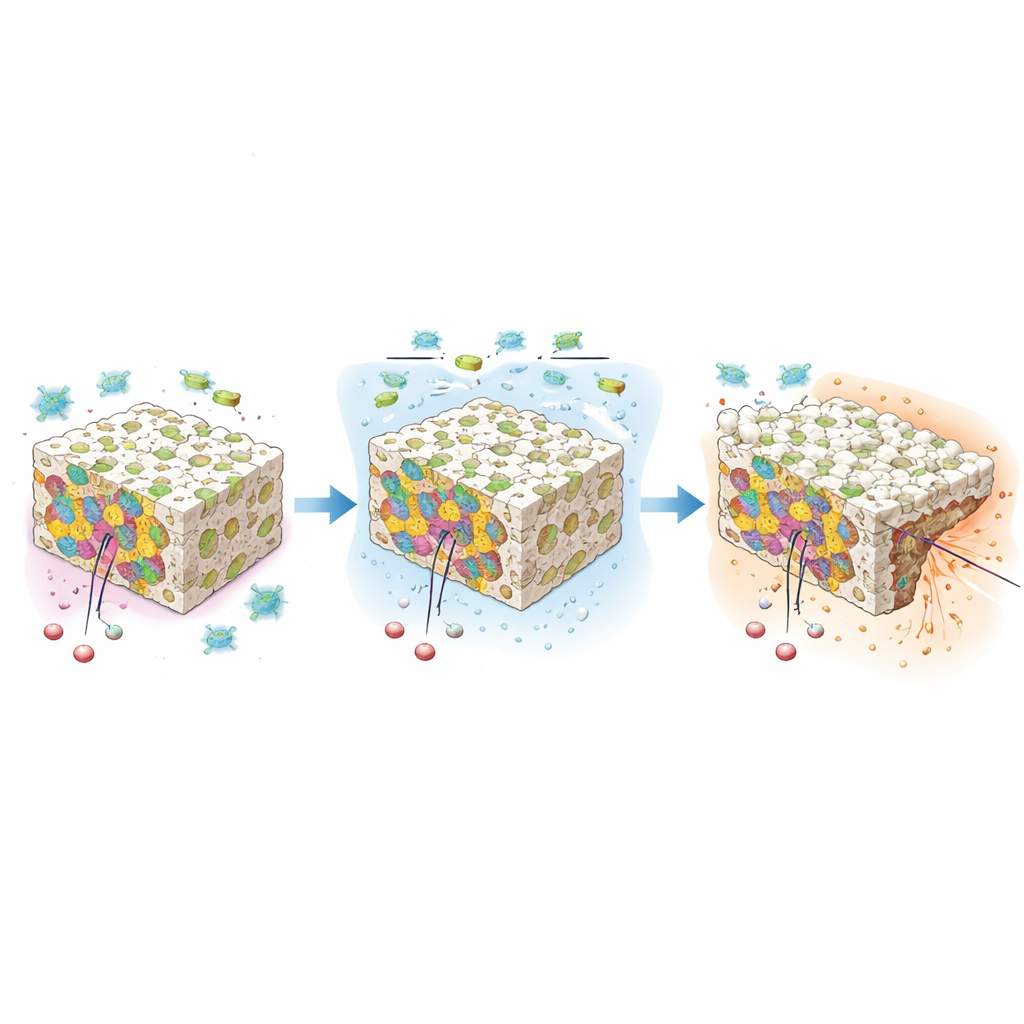
The scientists also tracked how Tenoxicam left the discs over 33 days. All three versions released the drug in three phases: a faster early burst, a middle period of steady output, and a slower tail. Overall, the release closely followed so-called zero-order behavior, meaning the drug came out at an almost constant rate—ideal for maintaining stable pain and inflammation control without big spikes or dips. The highest-loaded sample released the largest total amount while still remaining controlled. In parallel, the team pressed the materials into small pellets and placed them on bacteria plates. The composites produced clear “kill zones” against both Gram-positive and Gram-negative strains, including Staphylococcus aureus and Escherichia coli. The sample with the most Tenoxicam showed the strongest overall antibacterial effect.
What this could mean for future bone repair
Taken together, the results suggest that these Tenoxicam-loaded bioglass–chitosan composites can do three jobs at once: they bond to bone by growing a natural mineral layer, they provide a long-lasting local source of pain and inflammation relief, and they help suppress dangerous bacteria around the injury. While the work was done in laboratory tests rather than in patients, it points toward future bone implants that act not just as passive spacers, but as active partners in healing—supporting new bone growth while quietly delivering medicine exactly where it is needed most.
Citation: El-khooly, M.S., Elkelish, A., Abdel-Aal, A.A. et al. Tenoxicam-loaded bioglass/chitosan composites for bone tissue engineering: in vitro characterization, sustained drug release, and antimicrobial activity. Sci Rep 16, 8258 (2026). https://doi.org/10.1038/s41598-026-42389-z
Keywords: bone tissue engineering, drug-releasing scaffold, bioglass chitosan composite, tenoxicam delivery, antibacterial biomaterial