Clear Sky Science · en
Probiotic Enterococcus faecium (M74) as an alternative to antibiotics for controlling necrotic enteritis in broiler chickens
Why Healthy Chickens Matter to Your Dinner Plate
Chicken is one of the world’s most affordable sources of animal protein, but keeping billions of birds healthy has usually depended on routine antibiotics. That practice is now under pressure because overuse of antibiotics in animals can fuel drug‑resistant bacteria that threaten human medicine. This study asks a timely question: can a specific “friendly” microbe, used as a probiotic, protect meat chickens from a costly gut disease well enough to reduce reliance on antibiotics—while also keeping birds growing well and their organs healthy?
A Gut Disease That Hits Farmers’ Wallets
Modern meat chickens grow quickly in large flocks, conditions that make them vulnerable to a gut infection called necrotic enteritis. The main culprit is a bacterium, Clostridium perfringens, which releases toxins that strip away the lining of the intestine. Affected birds may grow poorly, suffer pain, or die, costing the poultry industry billions of dollars each year. Antibiotics have long been used to hold this disease in check, but rising concern over antibiotic resistance has pushed regulators, producers, and consumers to look for safer, more sustainable ways to keep flocks healthy.
Putting a Helpful Microbe to the Test
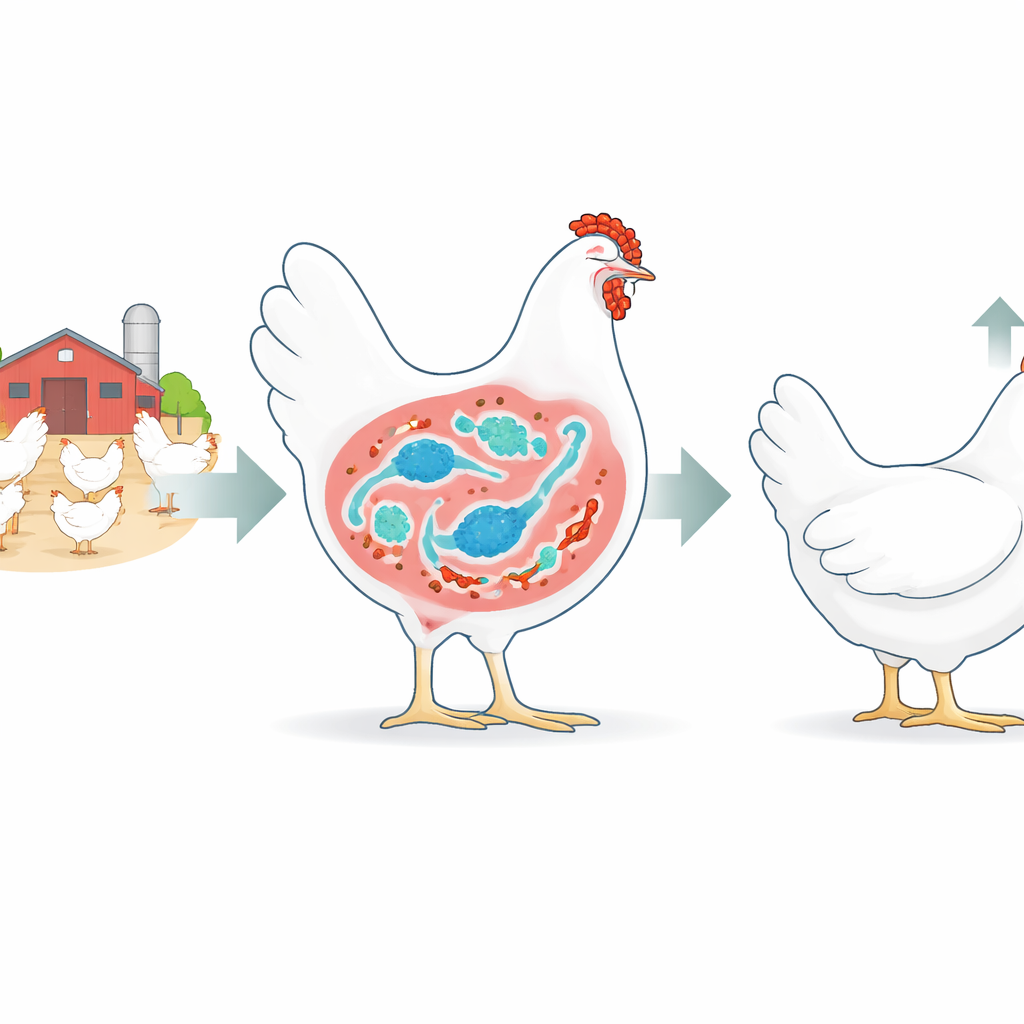
The researchers focused on one candidate probiotic, a strain called Enterococcus faecium M74, a type of lactic acid bacterium that naturally lives in animal intestines and is already approved as a feed additive in some countries. They raised 120 broiler chickens and divided them into four groups. One group stayed healthy and uninfected, another was infected with C. perfringens but did not receive the probiotic, and two groups either received the probiotic before infection (prophylactic use) or only after signs of disease appeared (therapeutic use). Over several weeks, the team tracked growth, blood health, liver and kidney function, immune markers, microscopic gut structure, and the numbers of harmful and helpful bacteria in the intestine.
Healthier Guts, Stronger Birds
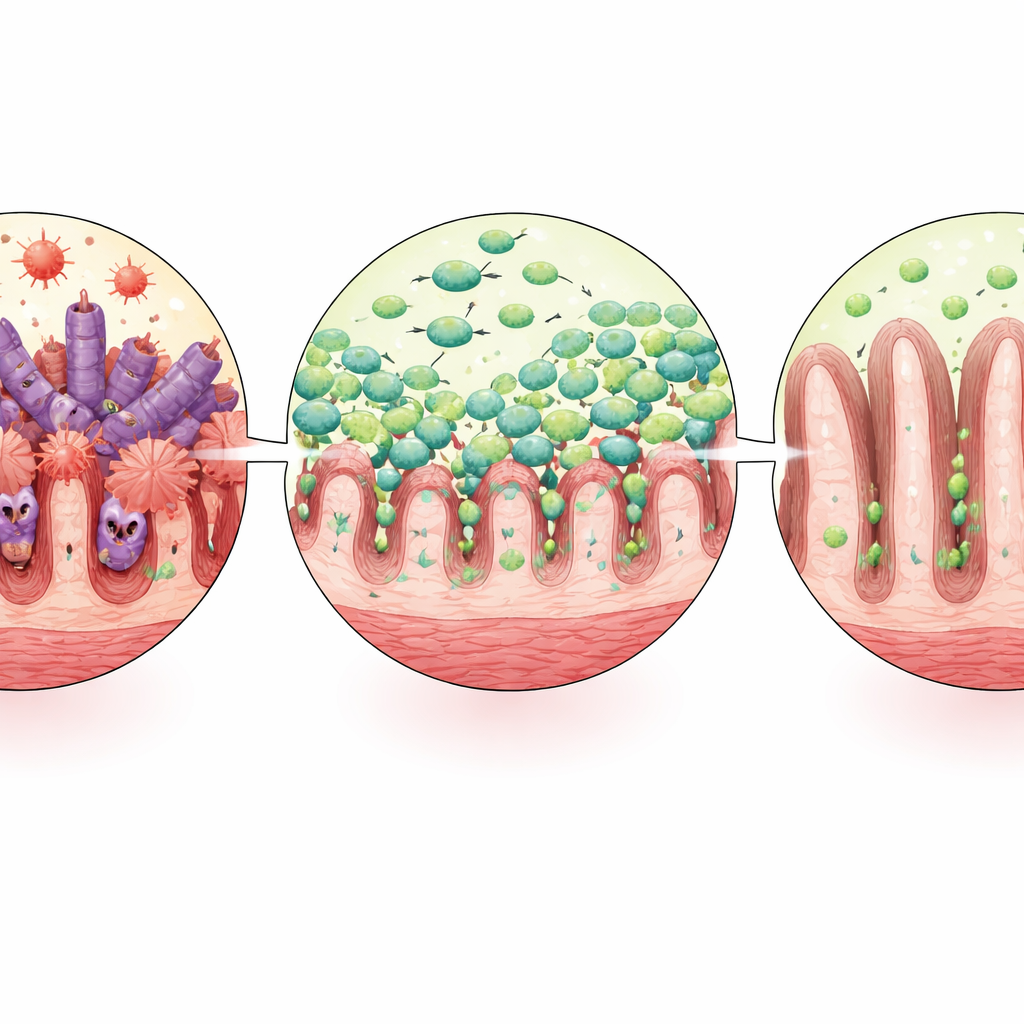
Birds given the probiotic—especially those that received it from the first day of life—fared far better than infected birds without it. Counts of the disease‑causing bacteria in the intestine dropped by nearly 90 percent, and other unwanted bacteria also declined. At the same time, the internal “finger‑like” projections that line the small intestine grew taller and more regular, increasing the surface area available to absorb nutrients. Under the microscope, probiotic‑fed birds showed far fewer signs of tissue injury, such as dead cells, erosion of the gut lining, or heavy inflammatory buildup. These birds grew faster, ended the trial about 30 percent heavier, and converted feed into body weight more efficiently, meaning less feed was needed for the same growth.
Broader Effects Beyond the Intestine
The benefits of the probiotic reached beyond the gut. Infected birds that did not get the probiotic showed changes in their blood and in enzymes that signal damage to the liver and kidneys—organs stressed by toxins and inflammation. Probiotic‑treated birds had these values shift back toward normal, suggesting that their organs were better protected. Their immune systems also appeared more alert and balanced: levels of defense proteins in the blood were higher, and key immune cells were more abundant. Taken together, these findings suggest that the probiotic helped create a healthier internal environment, where harmful bacteria struggled to gain a foothold and the birds’ own defenses and digestion worked more smoothly.
What This Means for Antibiotic Use
The study shows that giving chickens this particular probiotic from an early age can sharply reduce gut damage from necrotic enteritis, improve growth, and support vital organs and immunity under experimental conditions. While the probiotic did not completely replace the role of antibiotics and was tested in a controlled setting with one strain and one dose, it emerged as a promising tool to prevent disease rather than merely treat it after the fact. For farmers and consumers alike, the work points toward a future in which carefully chosen beneficial microbes help keep food animals healthy, limit the need for routine antibiotics, and support safer, more sustainable poultry production.
Citation: Mostafa, A.E.A., Ramadan, R. & Sittien, A. Probiotic Enterococcus faecium (M74) as an alternative to antibiotics for controlling necrotic enteritis in broiler chickens. Sci Rep 16, 9657 (2026). https://doi.org/10.1038/s41598-026-42376-4
Keywords: poultry probiotics, necrotic enteritis, broiler chicken health, antibiotic alternatives, gut microbiome