Clear Sky Science · en
Impact of different stocking densities on growth performance, welfare and physiology of Litopenaeus vannamei in RAS
Why Shrimp Crowding Matters to Your Dinner Plate
Farmed shrimp are among the world’s most popular seafoods, but the way they are raised can affect not only their health and welfare, but also the quality of the food on your plate. This study asks a simple but important question: how tightly can farmers pack shrimp into indoor water tanks before crowding begins to harm the animals—and can the shrimp bounce back if conditions improve? The answers matter for animal welfare, for responsible aquaculture in cooler regions such as Europe, and for consumers who increasingly care about where their seafood comes from.
Testing Life in Busy and Quiet Tanks
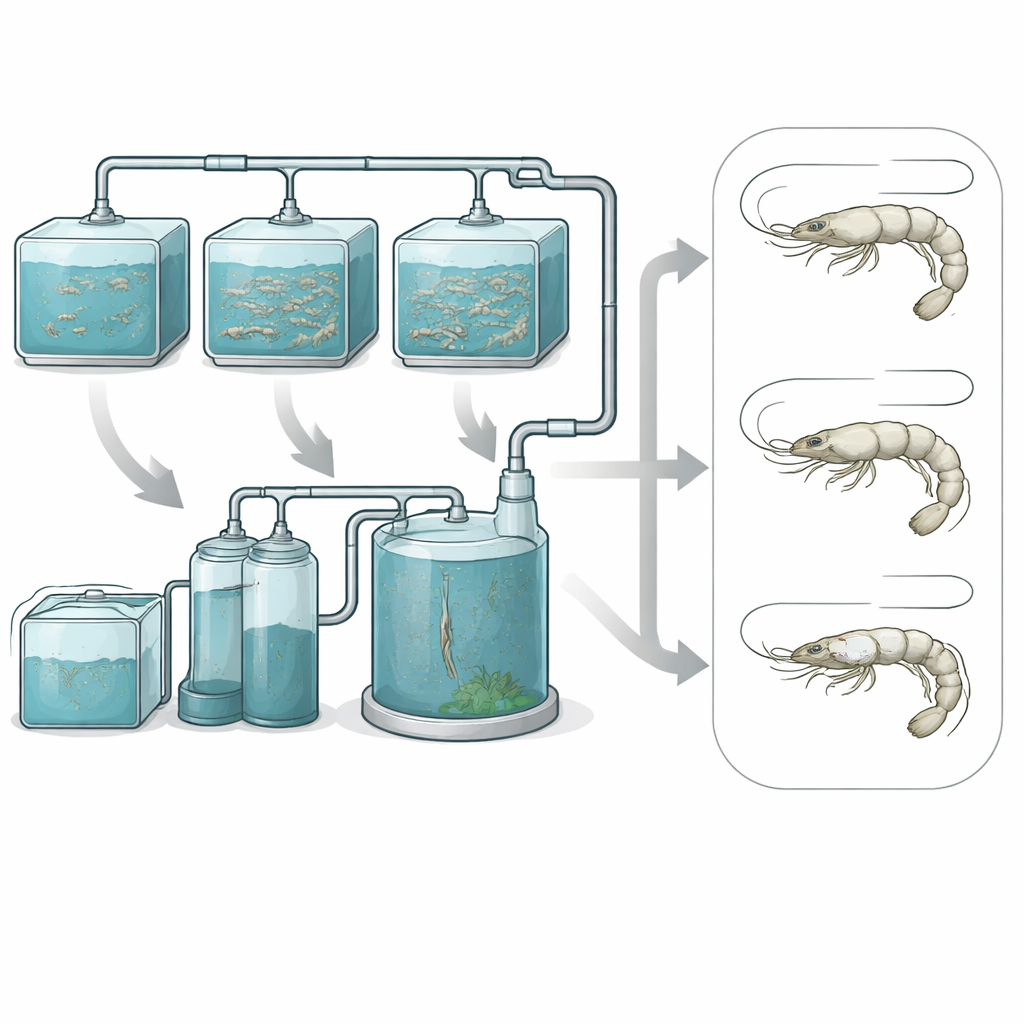
The researchers worked with Pacific white shrimp, the main species in global shrimp farming, raised in indoor recirculating aquaculture systems where water is filtered and reused. They set up twelve tanks at three different crowding levels: low, standard, and high, measured by the weight of shrimp per square meter of tank floor. For three weeks, shrimp lived under these conditions (the stress phase). Then all tanks were adjusted to a gentle, low density for another three weeks (the recovery phase). Throughout the experiment the team tracked survival, growth, visible body damage, unusual behaviors, blood-like fluid chemistry, enzyme activity, and the activity of several genes linked to stress and health.
What Happens When Shrimp Live Too Close Together
During the crowding period, shrimp in the roomiest tanks clearly fared best. They grew faster, reached higher body weights, and had the highest survival rates. Shrimp in the most crowded tanks grew slowly and suffered more deaths, even though water quality and feeding were carefully controlled. The crowded animals also showed more visible wear and tear: their long sensory antennae and tail fans (uropods) were more often shortened, frayed, or missing, suggesting frequent rubbing on hard surfaces and accidental damage from other shrimp. At the same time, cameras revealed more frequent abnormal swimming and loss of balance in the denser tanks—warning signs that the animals were under chronic strain.
Stress on the Inside: Subtle but Detectable
When the team looked inside the animals using blood chemistry, enzyme tests, and gene activity, they found a more nuanced picture. Classic blood markers such as sugar, lactate, and proteins did not change much across crowding levels, hinting that the shrimp were using internal reserves to keep basic functions steady. Enzymes and genes tied directly to immune defenses also stayed relatively stable, suggesting that the immune system was not dramatically suppressed by the densities tested. In contrast, genes associated with cellular stress and protection against harmful oxygen by-products—especially two “heat shock” genes and glutathione peroxidase—were more active in shrimp from the high-density tanks. This pattern points to mild oxidative and cellular stress even when outward signs were limited.
Bouncing Back When Given Space
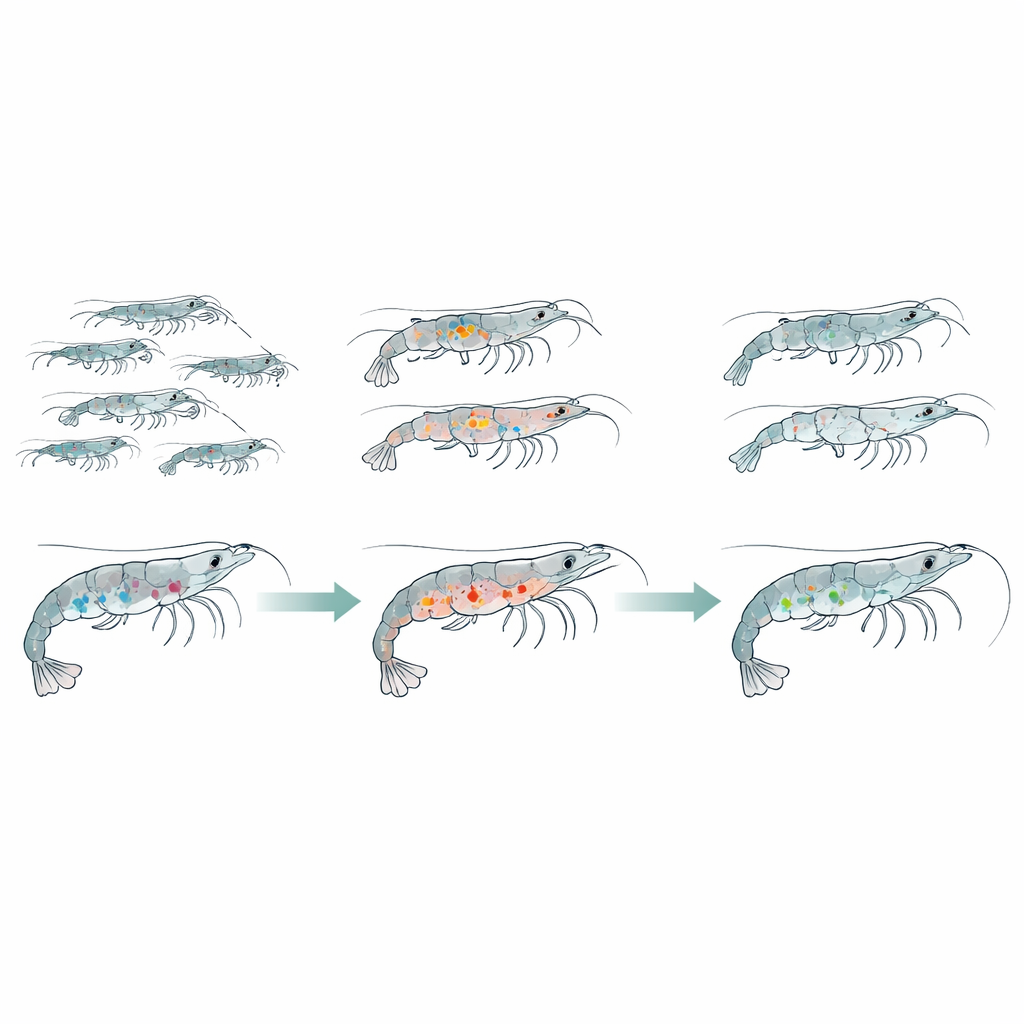
Once all tanks were switched to the same low-density conditions, the picture changed noticeably. Deaths essentially stopped across all groups, and shrimp from the previously crowded tanks began to grow faster than before, partially catching up in size—a pattern known as compensatory growth. Visible injuries on antennae and tail fans became less severe as the animals moulted and regenerated damaged parts, and abnormal behaviors declined. Inside the animals, the heightened stress-related gene activity seen under crowding eased back toward baseline levels, indicating that the internal strain was reversible when conditions improved.
What This Means for Better Shrimp Farming
For non-specialists, the main takeaway is that packing shrimp too tightly in indoor systems reliably leads to poorer growth, more deaths, and more visible injuries, even when water is clean and food is plentiful. However, the study also offers a hopeful message: when densities are reduced, shrimp can heal, recover their growth, and calm their internal stress responses within a few weeks. The authors suggest that simple visual checks—such as looking for damaged antennae, frayed tails, and abnormal swimming—could become practical tools for farmers and automated camera systems to spot crowding problems early. Balancing production goals with the space shrimp need to stay healthy can improve welfare, reduce economic losses, and help ensure that the shrimp reaching consumers are both high quality and more humanely raised.
Citation: Gamberoni, P., Bögner, M., Kreuz, E. et al. Impact of different stocking densities on growth performance, welfare and physiology of Litopenaeus vannamei in RAS. Sci Rep 16, 9087 (2026). https://doi.org/10.1038/s41598-026-42332-2
Keywords: shrimp welfare, stocking density, recirculating aquaculture, aquaculture stress, Litopenaeus vannamei