Clear Sky Science · en
Intertwining of the IGF system and animal welfare
Why pig housing and hidden hormones matter
When we buy pork labeled as coming from “better” or “eco” farms, we assume the animals really lived under kinder conditions. But current labels are mostly based on what humans think pigs need, not on what the animals’ bodies actually experience. This study asks whether a network of growth-related hormones in pigs’ blood can reveal how their housing affects their long‑term health and well‑being, potentially offering a more objective way to measure animal welfare.
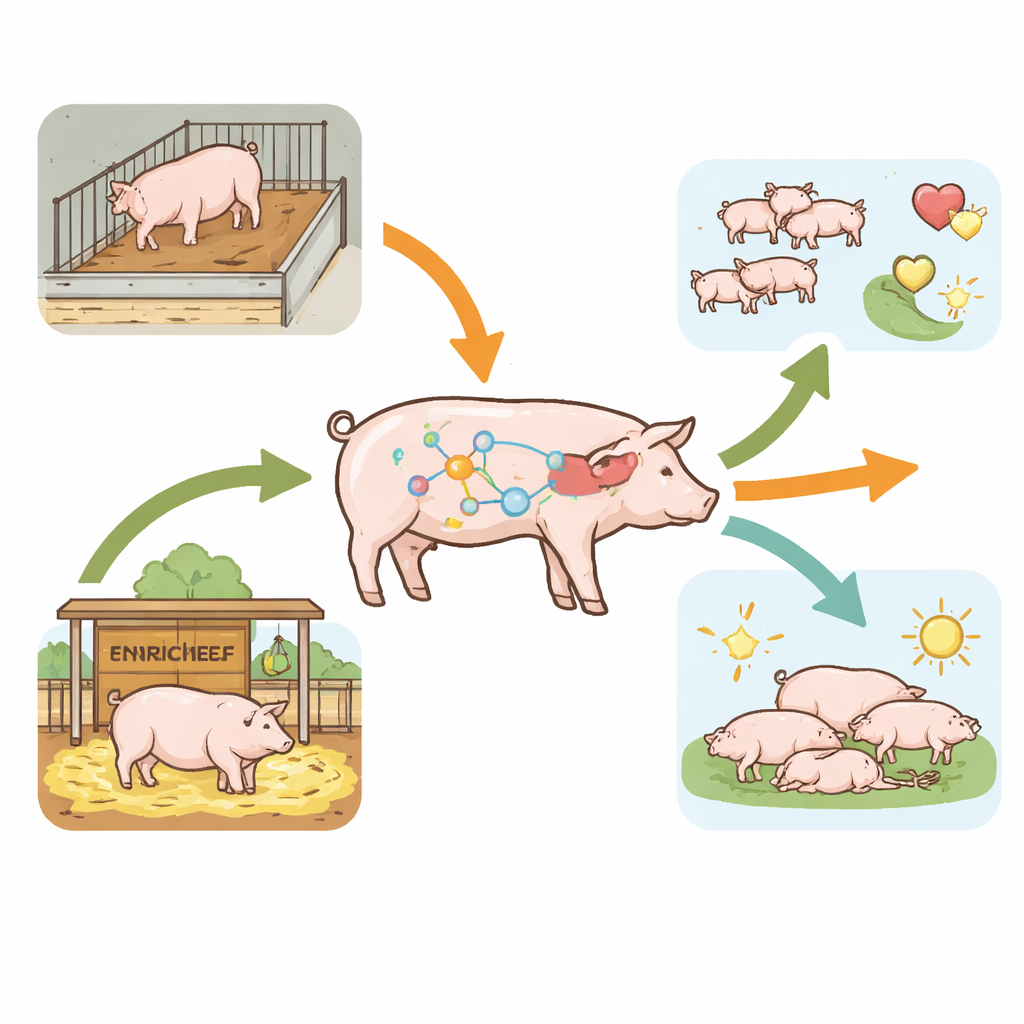
Two ways to keep a sow
The researchers compared mother pigs (sows) living in two kinds of government‑defined housing. One group lived in a conventional system with smaller indoor pens and limited space, representing the basic legal standard. The other group lived in an ecological system with more room, straw bedding, outdoor exercise areas, and extra enrichment items. Over up to three pregnancies per sow, the team carefully recorded litter size, piglet weights, and visible problems like stillbirths or weak legs, while also collecting blood and saliva from the mothers late in pregnancy and shortly after birth.
Beyond stress hormones: looking past cortisol
Stress is often measured using cortisol, a hormone that spikes during acute fear or discomfort. However, cortisol levels rise and fall quickly during the day and may return to near‑normal even when animals remain under chronic strain. In this study, cortisol in both blood and saliva showed no clear differences between conventional and ecological housing. Even though there were hints that conventionally housed pregnant sows might have slightly higher saliva cortisol, the variations were large, and the differences were not statistically convincing. This underlines that single cortisol readings are a poor guide to the kind of long‑term welfare that matters for labeling farms.
Listening to the body’s growth and repair network
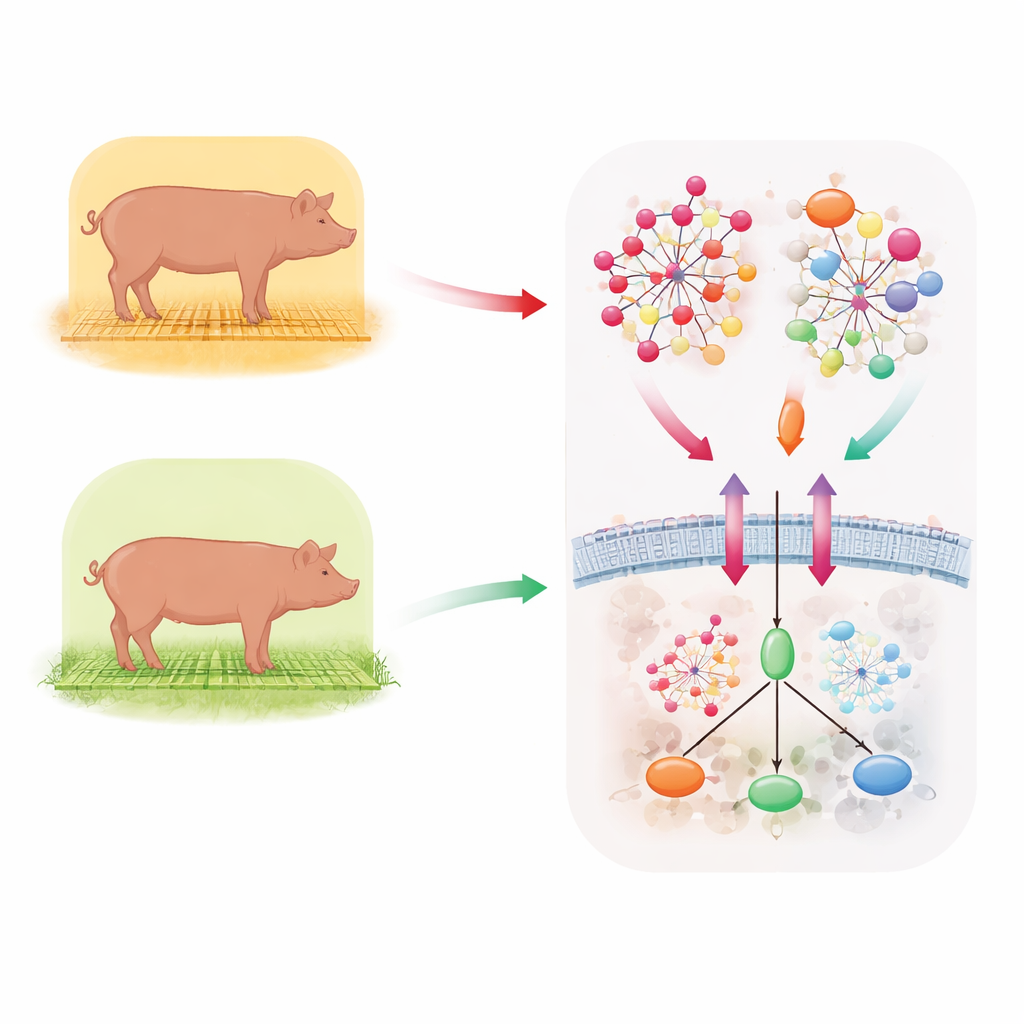
Instead of focusing on one stress hormone, the team turned to the insulin‑like growth factor (IGF) system, a web of growth factors, carrier proteins, and regulators that shapes growth, metabolism, and tissue repair. Using a sensitive cell‑based test, they measured how strongly each sow’s blood could activate a key signaling step inside cells. They also quantified individual components of the system, including two main growth factors and their binding partners. Under conventional housing, pregnant sows showed clearly higher IGF‑related activity in their blood than those in the ecological facility, along with higher levels of certain IGF components. After birth, levels shifted, and some differences between housing systems became smaller, suggesting that life stage and nursing play an important role in shaping this internal chemistry.
Subtle differences that patterns can detect
Not every single IGF‑related molecule changed in a neat, simple way, and some—like one modulating protein called STC1—varied widely between individuals. To see the bigger picture, the researchers used a statistical technique that looks for patterns across many measurements at once. When they combined several IGF‑system factors, including overall signaling activity, they could partly sort litters into groups that reflected their housing type, even though there was overlap. This suggests that the whole hormonal pattern, rather than any one value alone, carries information about how pigs are housed and how their bodies adapt to that environment.
What this means for animal welfare and farming
For everyday consumers, the key message is that the animals’ internal biology does respond to differences in housing, and that growth‑related hormone networks may tell us more about long‑term welfare than traditional stress markers like cortisol. The study does not claim that one system is simply “good” and the other “bad,” nor does it offer a ready‑made blood test for welfare. Instead, it shows that the IGF system is a promising foundation for future welfare biomarkers. In the long run, combining several such biological indicators with behavioral and health observations could lead to labeling schemes that reflect how animals truly experience their lives, rather than how humans imagine they do.
Citation: Galow, AM., Ohde, D., Eggert, A. et al. Intertwining of the IGF system and animal welfare. Sci Rep 16, 8259 (2026). https://doi.org/10.1038/s41598-026-42315-3
Keywords: animal welfare, pig housing, stress biology, growth factors, farm biomarkers