Clear Sky Science · en
Sleep awake detection from leg-worn wearables using deep sensor fusion
Why better sleep tracking matters
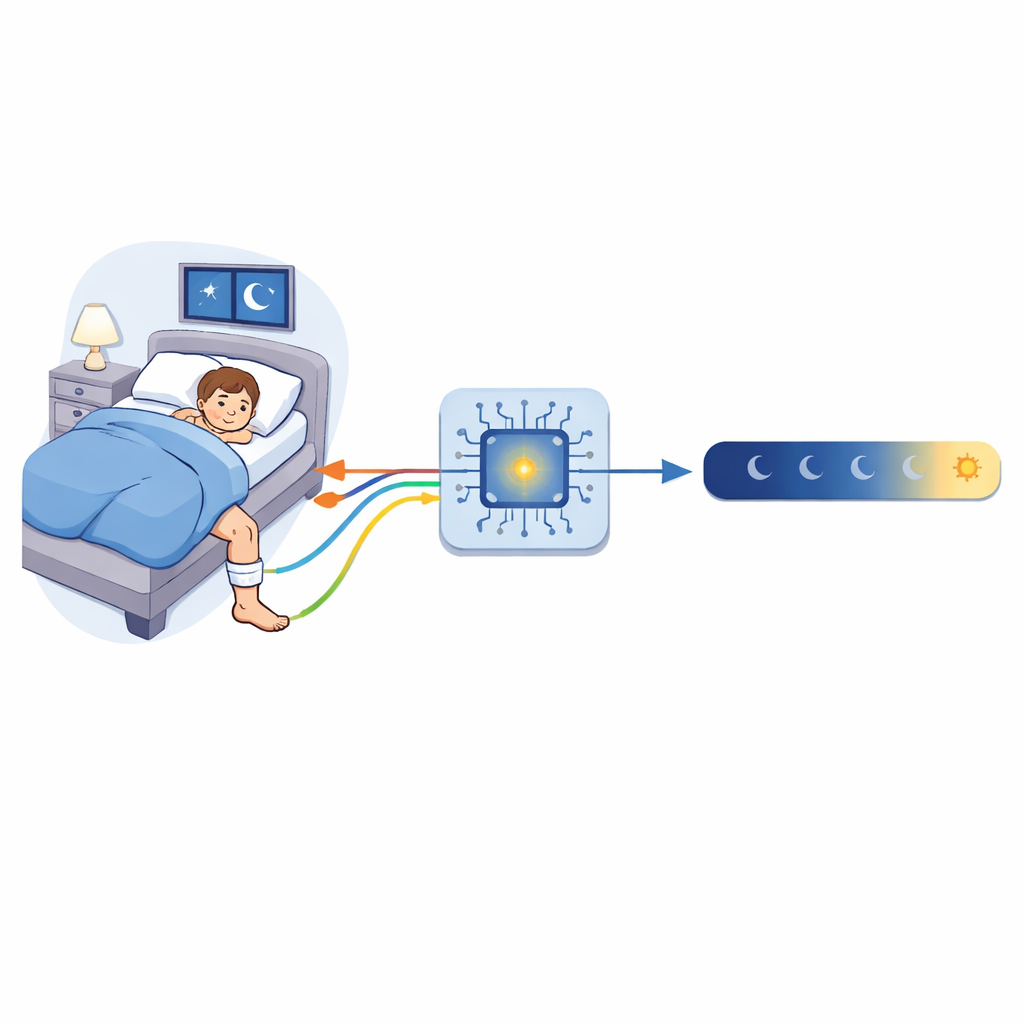
Many families know the struggle of bedtime battles, restless nights, and groggy mornings—especially when a child has attention deficit hyperactivity disorder (ADHD). Poor sleep can worsen inattention, hyperactivity, and mood, yet the tools doctors use to measure sleep are often either too complex for everyday use or too crude to catch the details. This study explores a new way to monitor children’s sleep at home using a soft band worn on the leg and advanced computer techniques to interpret its signals.
From sleep lab wires to simple leg bands
The current gold standard for measuring sleep, called a sleep study, requires a night in a lab hooked up to many wires that track brain waves, breathing, and movement. While powerful, this setup is expensive, inconvenient, and may not reflect how a child actually sleeps at home. On the other hand, popular wrist gadgets mostly sense motion and can miss subtle changes in breathing, heart rhythm, or leg movements that fragment sleep. This gap is particularly important for children with ADHD, who often have restless legs, frequent brief awakenings, and delayed bedtimes that standard trackers do not capture well.
A closer look at the legs
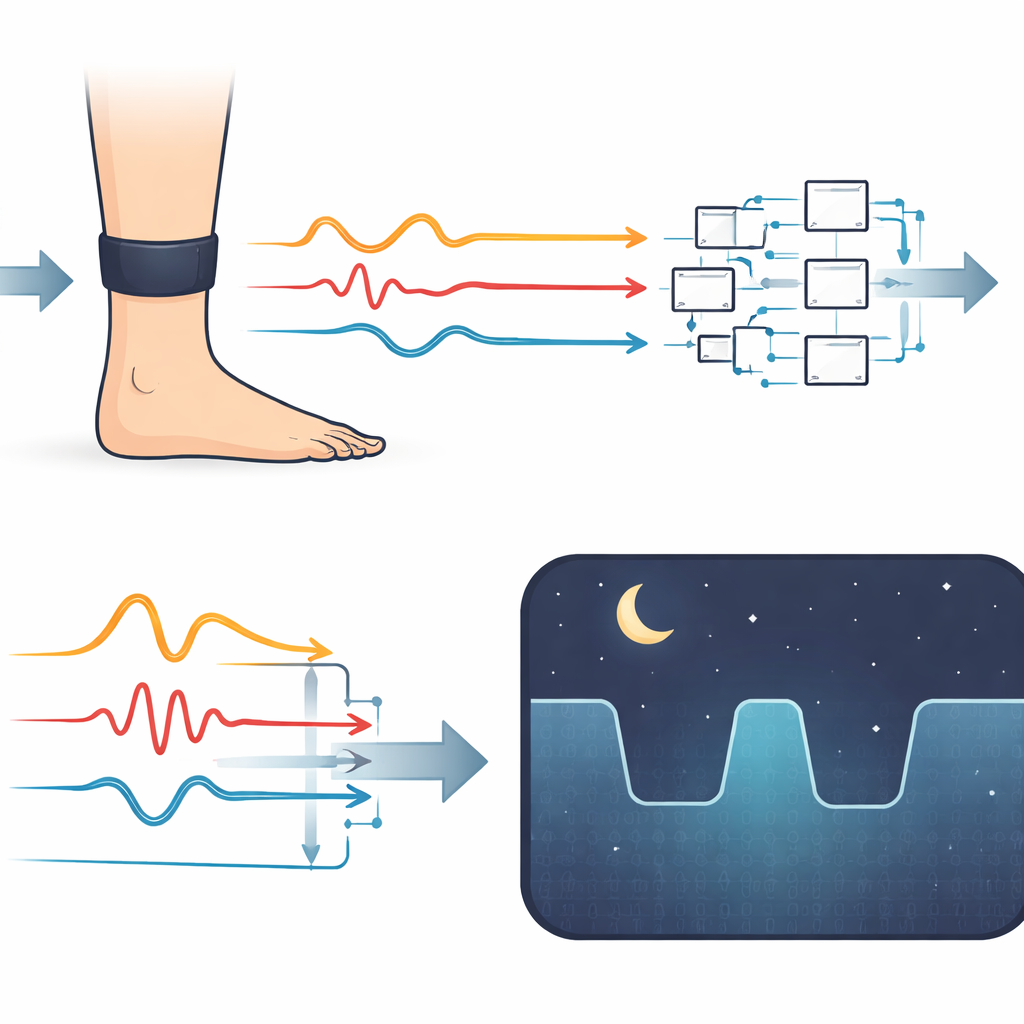
The research team built on earlier work with a device called RestEaze, a comfortable leg-worn band that quietly records several kinds of signals all night. Tiny sensors inside measure how the leg moves in three dimensions, how it twists and turns, how warm the skin is, and changes in blood flow that reflect heart activity. In this study, 14 children being evaluated for ADHD wore RestEaze on both legs during overnight sleep studies that also recorded brain waves. Expert scorers labeled each minute as asleep or awake using the brain recordings, giving the researchers a trusted reference to compare against the leg band’s data.
Teaching computers to read the night
Instead of handcrafting simple summaries of the signals, the team trained deep learning models—special algorithms that can discover useful patterns directly from raw data. They tested two ways of combining information from the four sensors. In the “early-fusion” approach, all signals were blended together first and then fed into a single model. In the “late-fusion” approach, each sensor type was processed in its own pathway before the results were merged for a final decision. The late-fusion model, which effectively lets motion, pulse, and temperature each “speak” before voting, proved to be the most accurate and consistent across children.
Making sense of restless nights
The best-performing model could distinguish sleep from wake with high reliability, even though sleep periods were about five times more common than wake periods in the data. From its minute-by-minute decisions, the researchers calculated familiar clinical measures such as how long the child slept in total, how long it took to fall asleep, how much time they spent awake after first drifting off, and how efficient their sleep was overall. Initially, the model tended to break the night into too many tiny awakenings. To fix this, the team added a simple smoothing step that looked at a minute’s neighbors in time and corrected implausible isolated wake or sleep blips. This adjustment brought the model’s estimates much closer to the lab results without hiding meaningful periods of restlessness.
What the findings mean for families
In everyday terms, the study shows that a small, leg-worn band combined with modern pattern-recognition methods can track when a child is asleep or awake almost as well as a full sleep study, at least in this group of children with ADHD. Motion sensors on the leg carried most of the weight, while pulse and temperature added helpful context. Although the research involved a modest number of participants and focused on one clinical group, it points toward a future where children can be monitored comfortably at home over many nights. That kind of long-term view could help clinicians and parents detect sleep problems earlier, understand how treatments are working, and tailor care to each child’s unique sleep patterns.
Citation: Anwar, Y., Bansal, K., Kucukosmanoglu, M. et al. Sleep awake detection from leg-worn wearables using deep sensor fusion. Sci Rep 16, 9930 (2026). https://doi.org/10.1038/s41598-026-42310-8
Keywords: sleep monitoring, ADHD, wearable sensors, deep learning, leg movement