Clear Sky Science · en
Microbiome signatures of mangroves and salt marsh halophyte rhizosphere soil sediments: a metagenomic approach
Hidden Life Beneath Coastal Roots
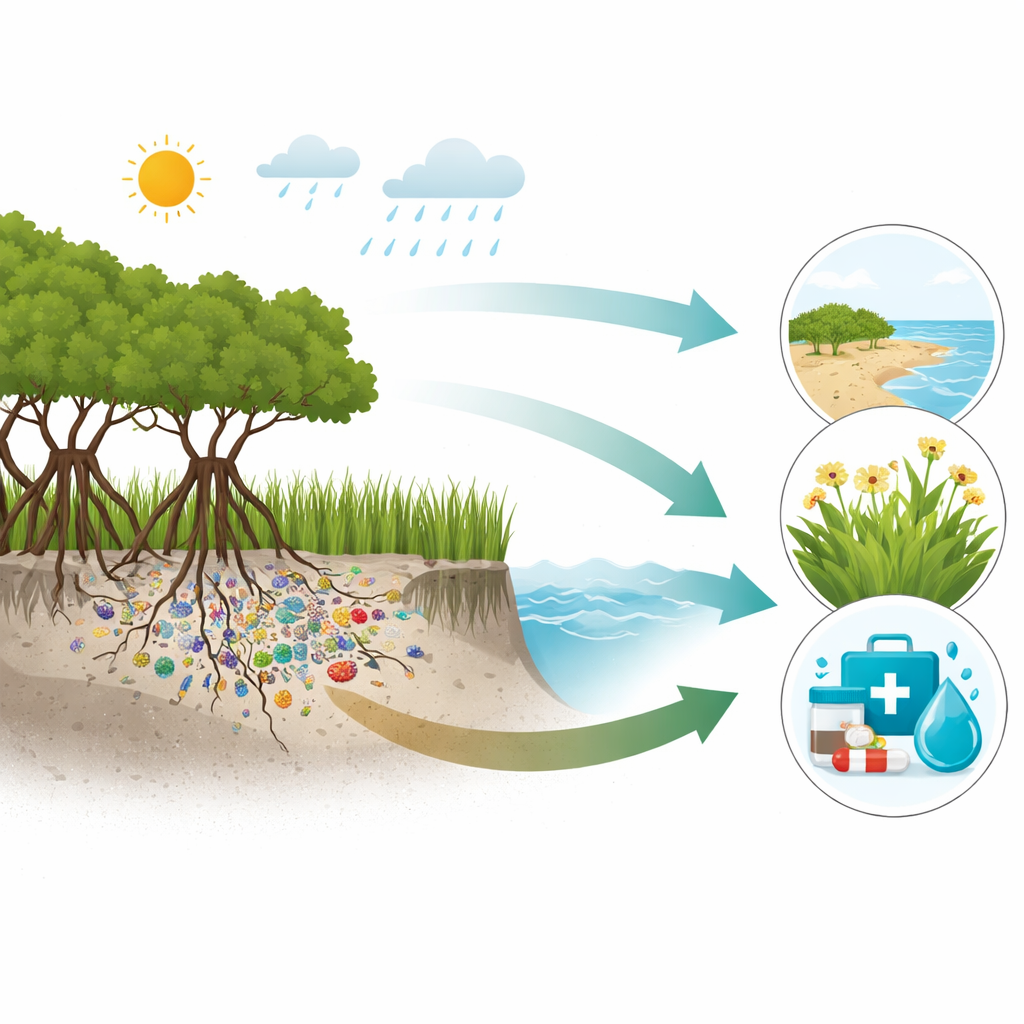
Mangrove forests and salt marshes protect shorelines, shelter wildlife, and support coastal fisheries, yet much of their power comes from microscopic partners hidden in the soil around their roots. This study peeks into that unseen world in a mangrove forest in southern India, showing how different coastal plants host distinct communities of bacteria and other microbes. These tiny residents can influence everything from how well plants tolerate salt and pollution to whether dangerous pathogens linger in the mud—issues that matter for conservation, public health, and future medicines.
A Coastal Forest Full of Special Plants
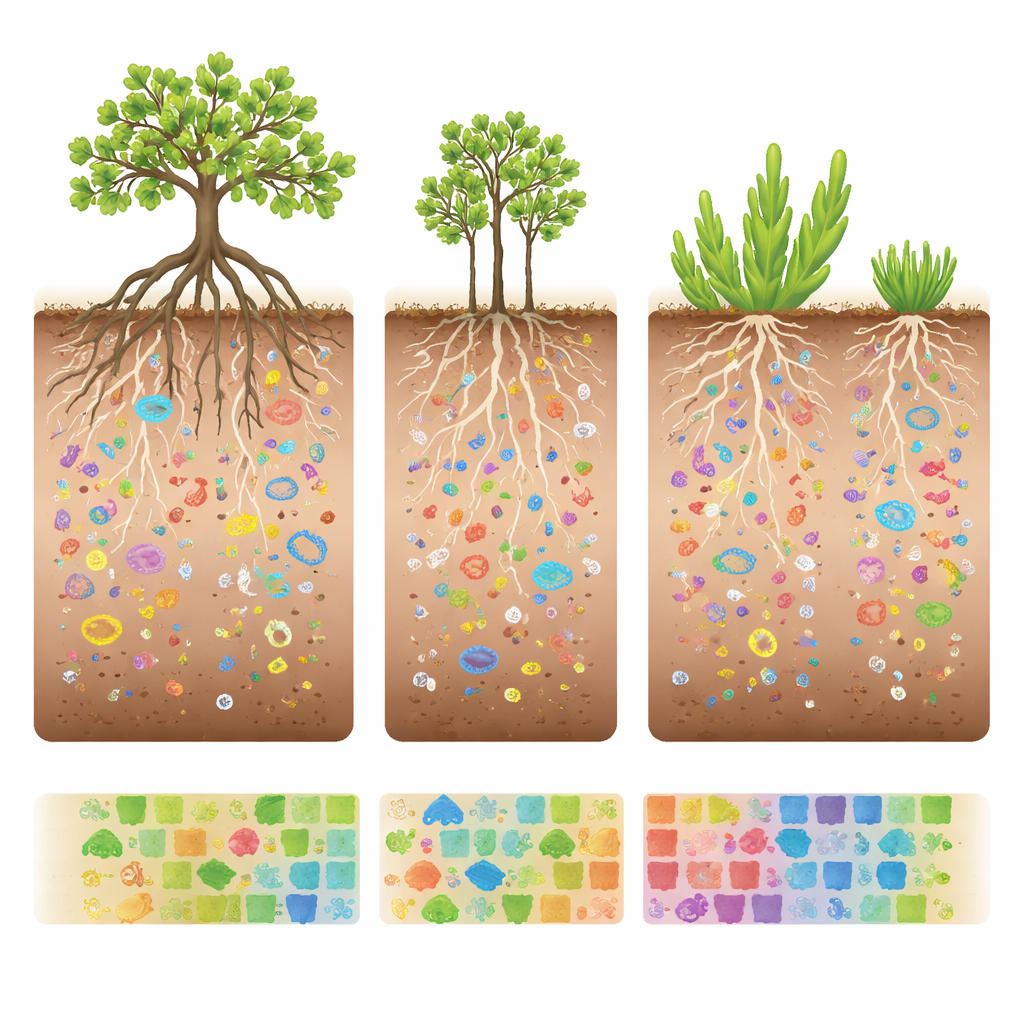
The researchers focused on a protected mangrove area called Karankadu in Tamil Nadu, India, where several tree and shrub species crowd along salty tidal channels. They sampled the thin zone of soil clinging to roots—the rhizosphere—of three mangrove trees (Avicennia marina, Ceriops tagal, and Rhizophora apiculata) and three salt-loving low plants, or halophytes (Suaeda maritima, Suaeda monoica, and Sesuvium portulacastrum). These plants are not just shoreline guardians; many are used in traditional medicine and can thrive in high salt, heavy-metal contamination, or harsh weather. The team wanted to know which microbes associate with each plant and how this living “halo” around roots might support plant health and ecosystem stability.
Reading Microbial Barcodes
Because most soil microbes cannot be grown easily in the lab, the scientists used a DNA-based method to profile them. They extracted genetic material from root-zone sediments and sequenced a marker region of the 16S rRNA gene, a kind of barcode for bacteria and some other microbes. Advanced software grouped millions of DNA reads into taxonomic units and estimated how many kinds of organisms were present, how evenly they were distributed, and which lineages were shared or unique across the six plant species. This metagenomic approach provided an unbiased snapshot of the entire community, including elusive or unculturable microbes that would otherwise go unnoticed.
Who Lives Where in the Mud
Across all samples, bacteria overwhelmingly dominated, with smaller contributions from archaea and eukaryotes such as fungi and microalgae. Several major bacterial groups—especially Proteobacteria, Actinobacteria, and Firmicutes—were abundant in every plant’s rhizosphere, echoing patterns seen in mangroves worldwide. Yet the balance among these groups shifted from plant to plant. Rhizophora apiculata’s root zone stood out as the richest and most diverse, hosting the greatest variety of species, while Avicennia marina harbored the fewest. Some genera, such as Vibrio, Planococcus, and Bacillus, were particularly common in certain samples, hinting that each plant type helps shape a characteristic microbial “signature” in its surrounding soil.
Friends, Foes, and Future Tools
The microbial census revealed a double-edged community. On one side, the mud hosted well-known human and plant pathogens, including strains of Escherichia coli, Staphylococcus aureus, Klebsiella pneumoniae, and several Pseudomonas species that can cause crop diseases. On the other side, it contained many beneficial or promising microbes. These included probiotic bacteria such as Lactobacillus and Bifidobacterium, species that degrade oil and other pollutants, and strains known to produce compounds with anticancer or other bioactive properties. Heatmaps, evolutionary trees, and overlap diagrams showed that some of these helpful and harmful microbes are widespread, while others are tightly linked to particular plant hosts, suggesting a fine-tuned interplay between roots and their microscopic partners.
What This Means for Coasts and People
For non-specialists, the take-home message is that mangrove and salt marsh plants do not stand alone; their strength depends on bustling communities of microbes that crowd around their roots. This study provides the first detailed baseline map of those communities in the Karankadu mangroves, showing which plants harbor the most diverse microbiomes and where potential pathogens or useful bacteria are concentrated. By treating the rhizosphere as both a warning system and a toolbox—flagging environmental stress and offering candidates for bioremediation or new medicines—future work can use these findings to better protect coastal ecosystems, manage health risks, and harness nature’s own microscopic chemists.
Citation: Sujeeth, N.K., Dharani Bommi, K.B., Manojkumar, S. et al. Microbiome signatures of mangroves and salt marsh halophyte rhizosphere soil sediments: a metagenomic approach. Sci Rep 16, 8895 (2026). https://doi.org/10.1038/s41598-026-42270-z
Keywords: mangrove microbiome, rhizosphere bacteria, salt marsh halophytes, metagenomic profiling, coastal ecosystems