Clear Sky Science · en
Discovery of natural apigenin analogues as lysine-specific demethylase 1 inhibitors against tumoral testicular germ cells
Why this research matters for men’s health
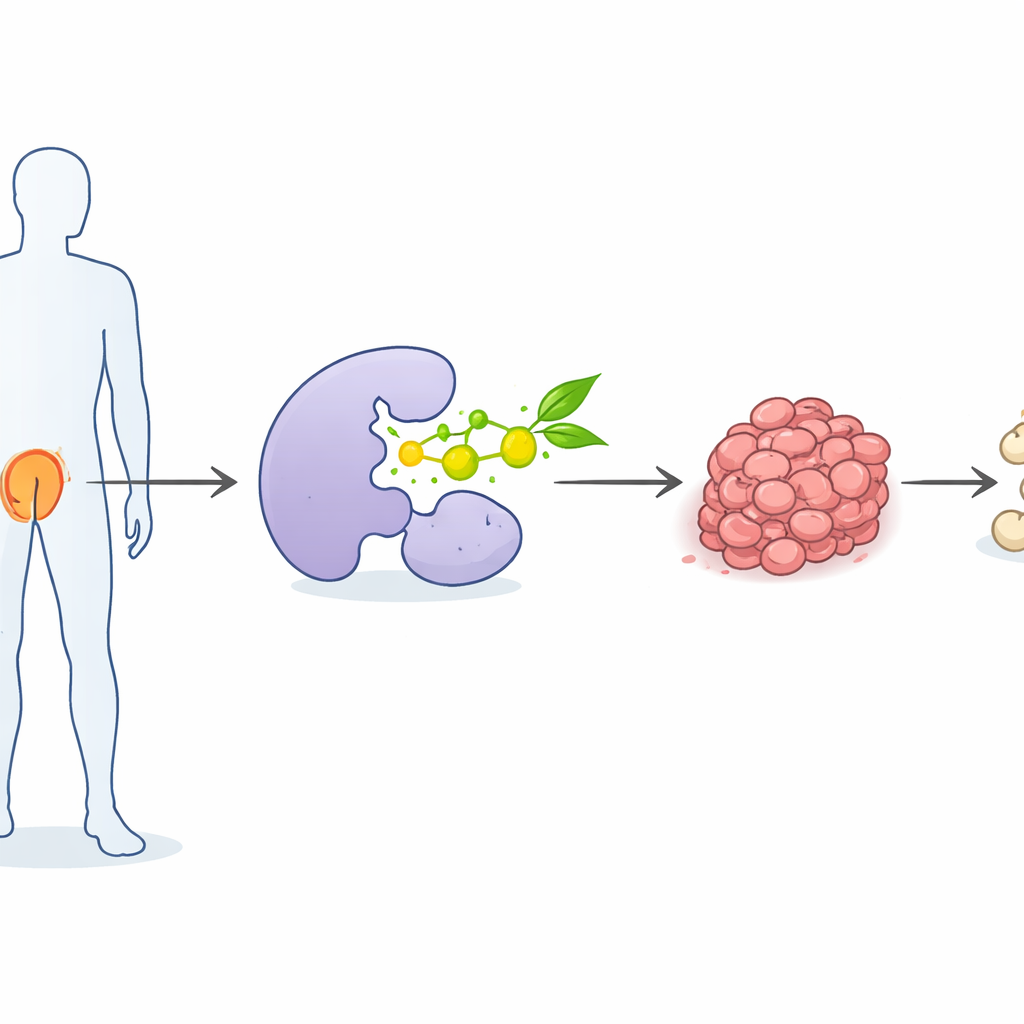
Testicular germ cell tumors are the most common cancers of the testicles in young men, and while many patients can be cured, current treatments often threaten fertility and bring harsh side effects. This study explores whether a natural compound related to a plant pigment called apigenin, found in fruits and vegetables, could be turned into a more precise drug that slows the growth of testicular tumor cells while sparing healthy testicular tissue.
A natural idea from everyday plants
Apigenin is a yellow plant pigment present in foods such as parsley, celery, and chamomile. Chemists have long known it can influence how cells behave, but its usefulness against testicular germ cell tumors had not been explored. The authors began by assembling a small library of apigenin-like molecules that occur in nature. They focused on a protein called LSD1, an enzyme that helps control which genes are switched on or off by subtly modifying DNA-packaging proteins. Because LSD1 is present at abnormally high levels in several cancers, including testicular germ cell tumors, blocking this enzyme is an appealing strategy for slowing tumor growth.
Finding the most effective plant-based blocker
The researchers systematically tested sixteen natural apigenin analogues to see how strongly each one could block LSD1 in a test tube. Many of the compounds showed some effect, but one stood out: a variant called 8,3’-diprenylapigenin was the most potent inhibitor, working at low micromolar concentrations. By comparing the chemical features of all the apigenin analogues, the team mapped out which small structural tweaks made the enzyme-blocking activity stronger or weaker. They found that a particular chemical handle, known as the 7-hydroxy group, was especially important for gripping LSD1, and that adding bulky “prenyl” side chains at specific positions dramatically boosted potency.
How the new compound targets tumor cells
Next, the team moved from enzyme tests to living cells. They exposed human testicular germ cell tumor lines, called NCCIT and NTERA-2, to 8,3’-diprenylapigenin. The compound sharply reduced the cells’ ability to multiply, again at relatively low concentrations. In contrast, when the same doses were applied to two normal testicular cell lines, TM3 and TM4, the healthy cells were barely affected. This selectivity suggests that tumor cells, which depend heavily on overactive LSD1, are much more vulnerable to its inhibition than normal cells, an encouraging sign for potential future therapies.
Peeking inside the cell’s stress response
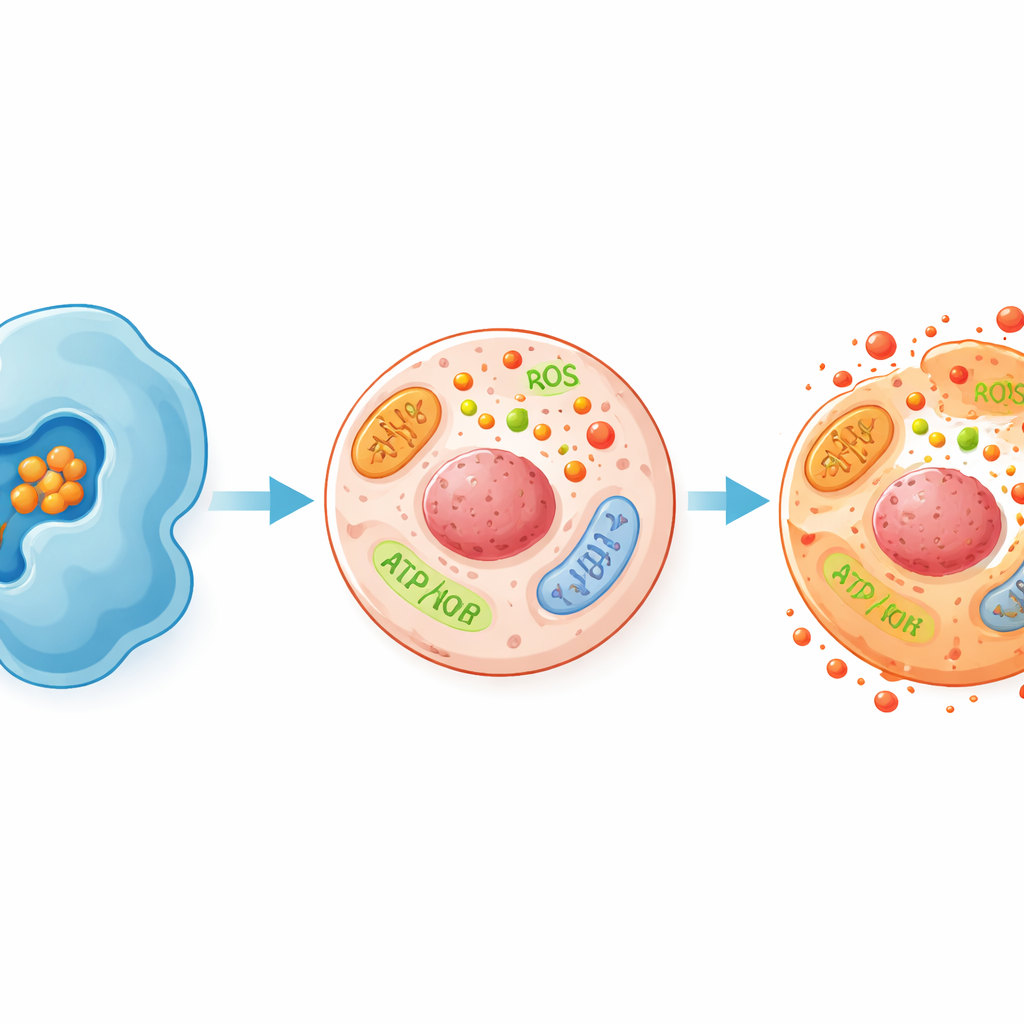
To understand what happens inside tumor cells when LSD1 is blocked by 8,3’-diprenylapigenin, the scientists measured several markers of cellular stress. They found that treated NTERA-2 cells produced more reactive oxygen species—highly reactive molecules that can damage proteins, fats, and DNA. At the same time, the activity of catalase, a protective enzyme that normally helps break down harmful oxidants, went down. The cells’ energy currency, ATP, also dropped, pointing to impaired energy production. Other readouts of damage, including leakage of the enzyme LDH from cells, increased activity of the antioxidant enzyme SOD, and higher levels of the lipid damage marker MDA, all rose in a dose- and time-dependent manner. Together, these changes paint a picture of tumor cells pushed into oxidative stress they cannot manage, ultimately leading to their death.
From molecular fit to possible future medicine
Computer simulations helped explain why 8,3’-diprenylapigenin works so well. Docking and dynamics studies showed the compound nestling snugly into a pocket on LSD1, forming stabilizing hydrogen bonds and hydrophobic contacts, yet binding in a way that is reversible. This reversibility is important because some earlier, irreversible LSD1 blockers have caused blood and immune side effects in trials. Here, 8,3’-diprenylapigenin inhibited LSD1 strongly and selectively, without significantly affecting closely related enzymes MAO-A and MAO-B, which reduces the risk of unwanted actions in the brain and other tissues.
What this could mean for patients
In simple terms, this work identifies a plant-derived molecule that can zero in on a cancer-linked enzyme in testicular tumor cells, shut down their growth, and trigger a controlled form of self-destruction, all while leaving normal testicular cells largely unharmed in lab tests. Although much more research is needed—including animal studies and safety testing in humans—8,3’-diprenylapigenin provides a promising starting “skeleton” for designing gentler, more targeted treatments for testicular germ cell tumors that may better protect fertility and overall health.
Citation: Sun, LW., Zhang, M., Li, CF. et al. Discovery of natural apigenin analogues as lysine-specific demethylase 1 inhibitors against tumoral testicular germ cells. Sci Rep 16, 8917 (2026). https://doi.org/10.1038/s41598-026-42263-y
Keywords: testicular cancer, LSD1 inhibitors, apigenin, oxidative stress, targeted therapy