Clear Sky Science · en
Sustainable methylene blue dye removal via bio-derived micro/micron-sized porous particles Zygophyllum coccineum and Calotropis procera: A machine learning-assisted study
Why turning plants into tiny particles can help clean water
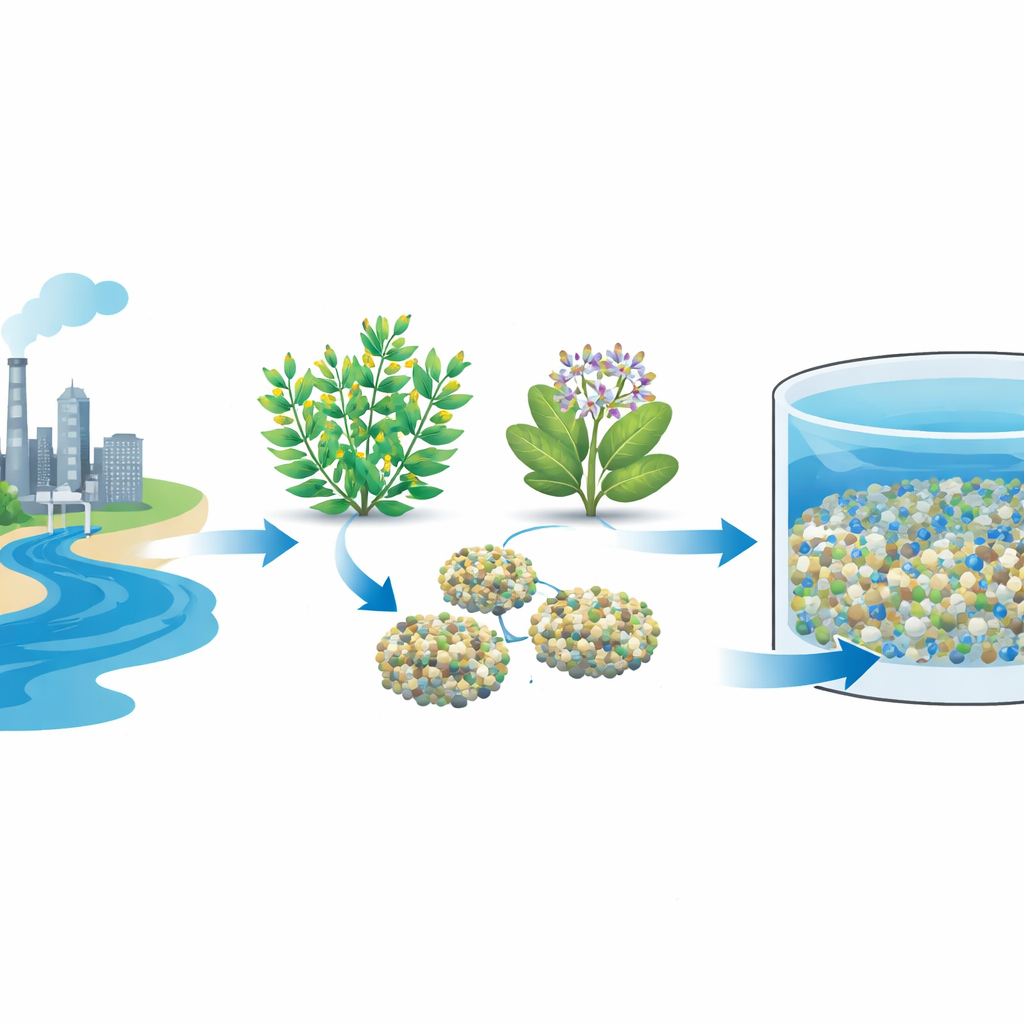
Colorful dyes make our clothes bright, but when they end up in rivers and lakes they can block sunlight, harm wildlife, and pose health risks to people. This study explores an inventive, low-cost way to strip a common blue dye from water using powdered desert plants. It asks a simple but practical question: is it worth spending extra energy to grind plant material down into ultra-small porous particles if that helps clean water much more efficiently?
Desert plants as a hidden clean-up tool
The researchers focused on two hardy species that thrive in hot, salty, and nutrient-poor soils: Zygophyllum coccineum and Calotropis procera. These plants grow abundantly on marginal lands and are already known to contain natural compounds that interact with metals and organic molecules. By using their above-ground parts as raw material, the team turned what is essentially wild plant biomass into simple filter media, or biosorbents, that can latch onto methylene blue, a widely used industrial dye with known toxic and potentially cancer-causing effects.
From plant stems to porous particles
The plant shoots were washed, dried, and first ground into ordinary micro-scale powder. Part of this powder was then subjected to high-energy ball milling, a mechanical process that breaks particles down further and opens up their internal structure. This produced micron-sized porous particles with far more surface area and larger, more accessible pores. Using a suite of material analysis tools—microscopes, thermal tests, and measurements of surface area and pore volume—the team showed that these tiny porous particles, especially those made from Calotropis procera, had rougher surfaces, more cavities, and higher stability than their coarser counterparts.
How well the tiny particles trap dye
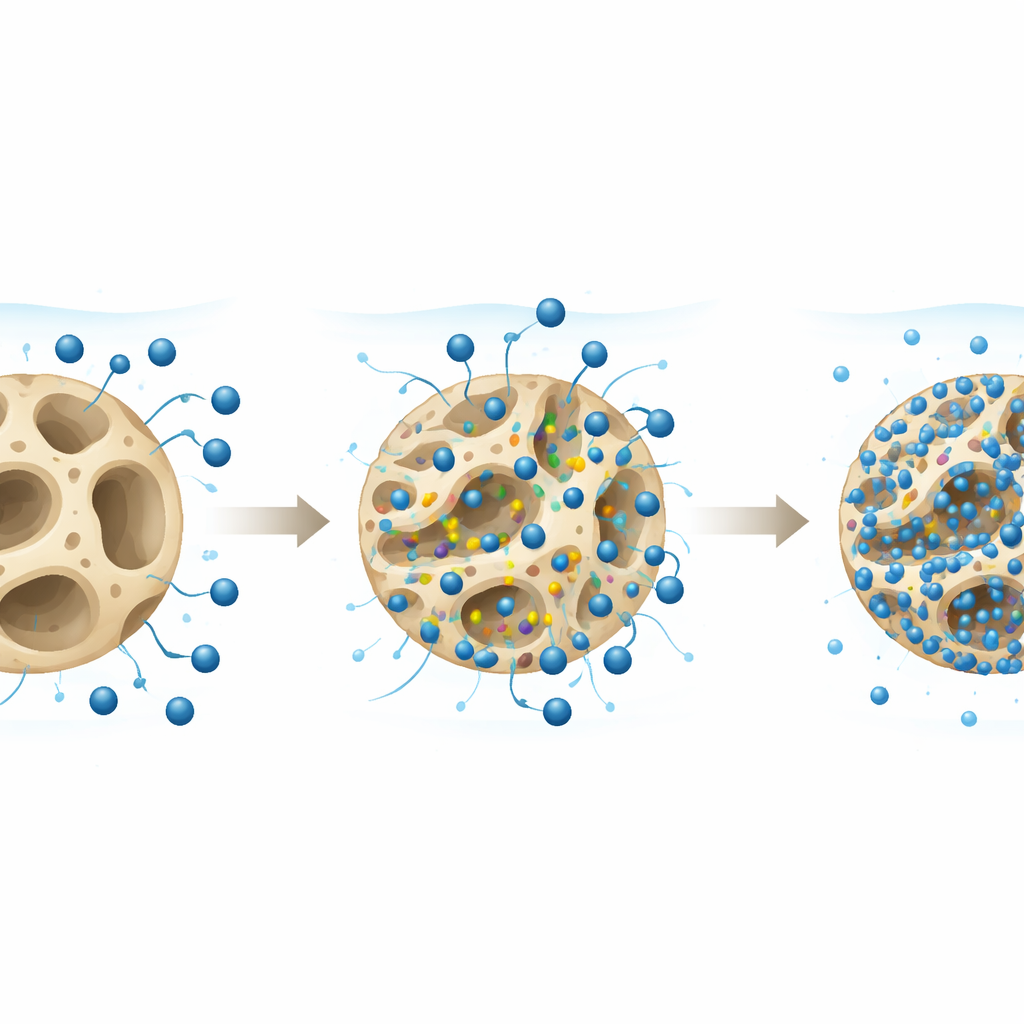
To test performance, the researchers mixed the four types of powders (micro- and micron-sized forms of each plant) with water spiked with methylene blue under controlled conditions. They varied contact time, amount of plant powder, pH, and initial dye concentration. Across all trials, the micron-sized porous particles consistently removed more dye and reached equilibrium faster. Micron-sized Calotropis stood out, stripping up to about 99.5% of the dye at room temperature with a modest dose of material. The plant powders carry natural chemical groups—such as hydroxyl, carboxyl, and aromatic rings—that attract the positively charged dye molecules through a mix of electrostatic attraction, hydrogen bonding, and stacking-like interactions. Because the micron-sized particles have more exposed surface and pores, more of these groups are available, boosting the trapping capacity.
Letting algorithms guide the experiments
Beyond traditional lab tests, the team trained a machine-learning model known as XGBoost to predict how much dye would be removed under different conditions. They fed the algorithm data on contact time, powder dose, starting dye level, and pH, along with the measured removal percentages. The model learned these relationships so well that its predictions were very close to the actual results, especially for the high-performing micron-sized Calotropis. The analysis highlighted which knobs matter most in real-world operation: the amount of plant material used and the pH of the water had the strongest influence on dye removal, while time and starting concentration played important but secondary roles.
Balancing extra effort with cleaner water
Grinding plant biomass down to micron-sized porous particles does require additional energy and equipment compared with using simple plant powder. This study shows that, at least for methylene blue removal, the trade-off can be worthwhile: the finer, more porous material captures more dye, works faster, and remains thermally stable. Combined with machine-learning tools that reduce trial-and-error when choosing operating conditions, this approach offers a blueprint for low-cost, plant-based filters that could be scaled up in wastewater treatment. For a layperson, the takeaway is clear: resilient desert plants, carefully processed into tiny porous grains, can help turn bright blue polluted water back toward clear, while using renewable materials and smart data-driven design.
Citation: Fakry, H., Salama, E., Taha, A. et al. Sustainable methylene blue dye removal via bio-derived micro/micron-sized porous particles Zygophyllum coccineum and Calotropis procera: A machine learning-assisted study. Sci Rep 16, 10984 (2026). https://doi.org/10.1038/s41598-026-42218-3
Keywords: wastewater treatment, methylene blue, biosorbent, Calotropis procera, machine learning