Clear Sky Science · en
GV1001 reduces pathological 4R tau and functional deficits in models relevant to progressive supranuclear palsy
Why this matters for people and families
Progressive supranuclear palsy (PSP) is a rare but devastating brain disorder that robs people of balance, movement, and clear thinking within just a few years. There are currently no medicines that can slow how quickly it gets worse. This study explores a small drug molecule called GV1001, originally developed for cancer, and shows that it can ease movement problems and reduce key disease-related changes in brain cells in laboratory models of PSP. The work hints at a new way to tackle a group of illnesses driven by a harmful form of the protein tau.
The brain’s traffic helper gone wrong
Many brain diseases involve tau, a protein that normally helps stabilize the internal “tracks” along which materials travel inside nerve cells. In PSP, one particular form called 4R tau builds up in certain deep brain regions, especially in the midbrain, where it disrupts cell structure, damages connections, and ultimately leads to cell death. People develop stiffness, falls, eye movement problems, and thinking difficulties, often declining rapidly over five to eight years. Unlike Alzheimer’s disease, PSP is dominated by this 4R tau form, making it an important target for treatments designed specifically for movement-related tau disorders.
A cancer drug candidate finds a new role
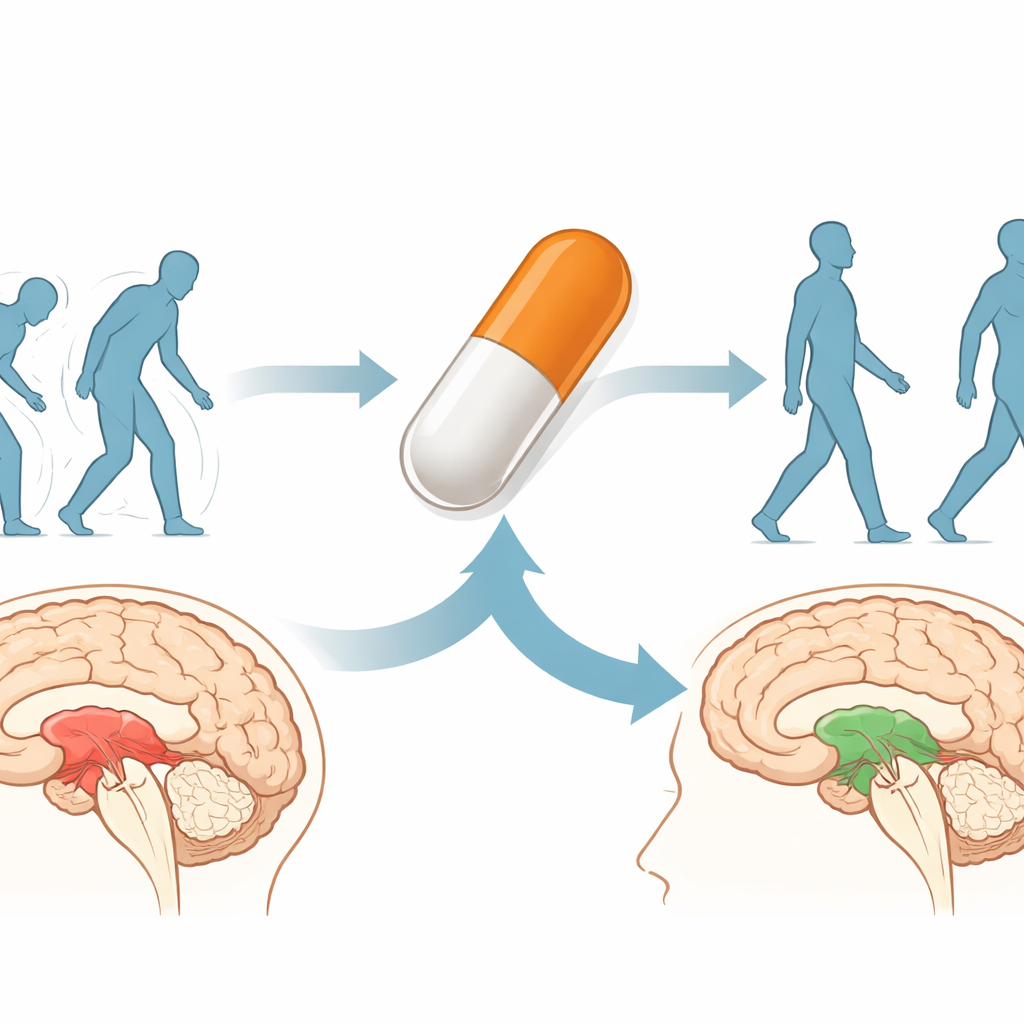
GV1001 is a short peptide derived from human telomerase, an enzyme active in many cancers. It has already been tested for several tumors and, more recently, in conditions like enlarged prostate and Alzheimer’s disease, with a generally good safety record. Earlier work showed that GV1001 can protect brain cells from oxidative damage, support energy-producing mitochondria, and calm inflammatory responses in the brain. The current study asks whether these broad protective actions, plus any new effects, might make GV1001 useful for disorders where 4R tau is the main culprit, such as PSP.
Testing movement, memory, and brain changes in mice
The researchers used a specially engineered mouse that produces a human-like 4R tau prone to clumping, leading over time to problems with movement and memory. Starting at seven months of age, these mice received GV1001 under the skin three times a week for about five months. Compared with untreated animals, GV1001-treated mice stayed longer on a rotating rod, walked farther and faster in an open arena, and showed better recognition of new objects, suggesting improved motor skills and memory. When the investigators examined the brains, they found less tau clumping and fewer chemical tags associated with “overactive” tau in multiple regions, including the cortex, hippocampus, and substantia nigra, all areas important for movement and cognition.
Looking inside brain cells and calming brain inflammation
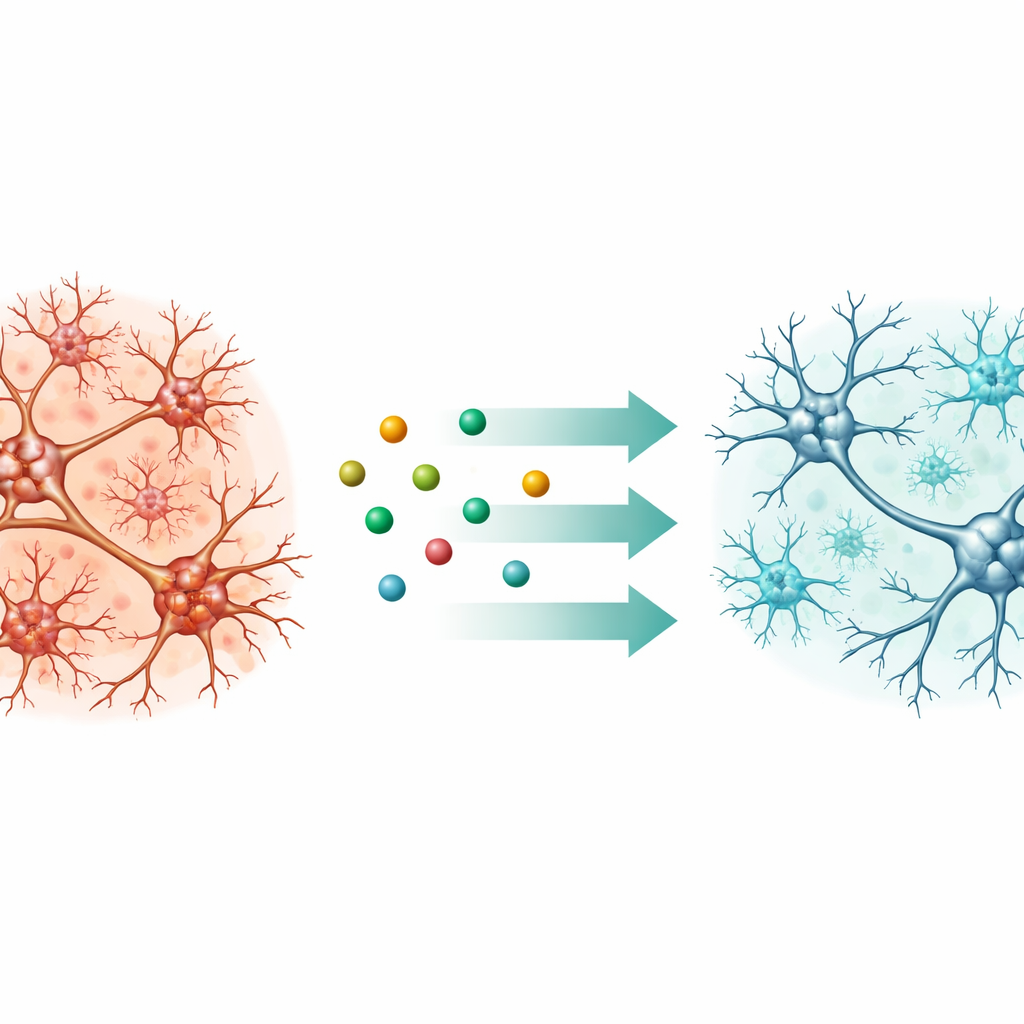
Beyond tau itself, PSP and related diseases feature loss of synapses—the contact points between nerve cells—and overactivation of support cells called astrocytes and microglia, which drive chronic inflammation. In the treated mice, levels of key synaptic proteins rebounded toward normal, hinting that GV1001 helps preserve neural connections. Markers of activated astrocytes and microglia dropped, both in mouse brains and in human cell lines stimulated to mimic inflammation. The drug also reduced levels of TSPO, a protein used in brain scans to track inflammation, raising the possibility that future imaging could monitor GV1001’s impact in patients.
Directly targeting the harmful 4R tau form
To test whether GV1001 affects 4R tau more specifically, the team created a cell-based model of PSP by differentiating human-derived nerve-like cells and exposing them to annonacin, a plant-derived toxin that damages mitochondria and boosts 4R tau. As expected, annonacin sharply increased the amount of 4R tau without changing total tau. When GV1001 was added after this damage had begun, the excess 4R tau levels and the ratio of 4R tau to total tau fell back toward normal, while overall tau stayed largely unchanged. Similar selective reductions in 4R tau were seen in the brains of treated mice. These findings suggest that GV1001 does more than protect cells in general—it appears to dial down the very tau form most closely tied to PSP.
What this could mean for future treatments
Taken together, the results show that GV1001 can improve movement and memory, reduce toxic tau changes, preserve synapses, and dampen brain inflammation in models that mimic key aspects of PSP and other 4R tau–driven diseases. Early clinical testing in people with PSP has already hinted at slower symptom worsening and good tolerability, although much larger and longer studies are needed. For patients and families, this work offers cautious optimism that a drug originally designed for cancer might be repurposed to slow the course of a fast-moving brain disease by targeting its core protein abnormality.
Citation: Jang, KB., Kang, D.M., Lee, MH. et al. GV1001 reduces pathological 4R tau and functional deficits in models relevant to progressive supranuclear palsy. Sci Rep 16, 8638 (2026). https://doi.org/10.1038/s41598-026-42195-7
Keywords: progressive supranuclear palsy, tau protein, 4R tauopathy, neuroinflammation, GV1001