Clear Sky Science · en
Redefining water scarcity through the integrated water strategic resilience index amid climate and conflict pressures
Why Water Shortages Are About More Than Just Drought
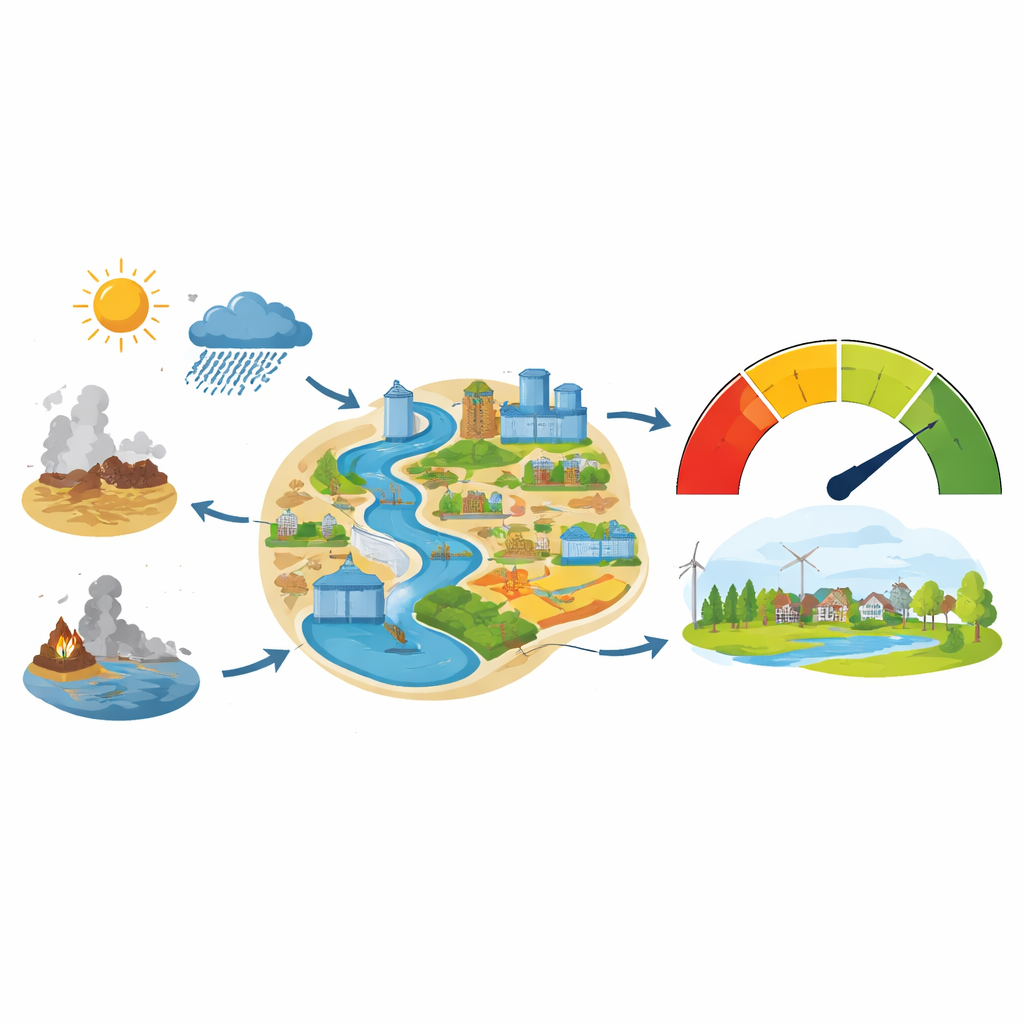
Across the world, water shortages are often blamed on nature: too little rain, hotter summers, shrinking rivers. This study argues that is only half the story. Whether taps run or crops survive also depends on politics, money, technology, and even war. The authors introduce a new way to measure how well a country can cope with water stress, revealing why some very dry nations are surprisingly secure while others with rivers and rainfall still struggle.
Looking Beyond the Old Way of Measuring Thirst
For decades, scientists judged water scarcity mainly by how much freshwater was available per person. Those simple indicators helped raise awareness but ignored crucial pieces of the puzzle: how water is managed, who controls it, and how societies respond to crises. As climate change brings more droughts, heatwaves, and sudden floods, and as conflicts increasingly damage pipes, dams, and treatment plants, these narrow measures fail to explain why some regions weather shocks while others fall into crisis.
A New Scorecard for Water under Pressure
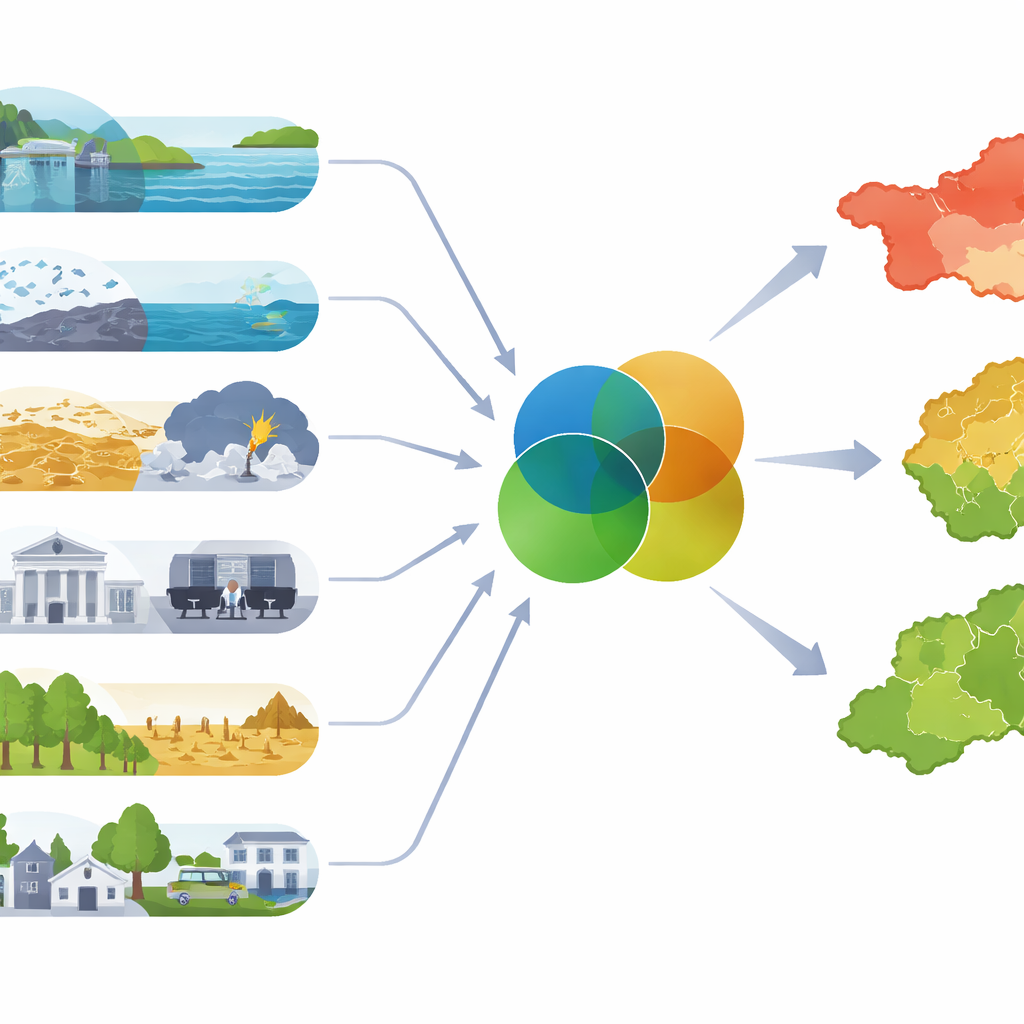
The authors propose the Integrated Water Strategic Resilience Index, or IWSRI, a combined score that treats water security as the outcome of many interacting systems. It blends six ingredients: how much renewable water a country has, how clean that water is, how strong its laws and public institutions are, how exposed and prepared it is for climate change, how stressed its ecosystems are, and how resilient its economy and society can be in hard times. Each ingredient is scaled to a common range and then averaged, with adjustable weights so local experts can emphasize what matters most in their region.
Climate, Conflict, and the Politics of Water
The study focuses on the Middle East and North Africa, one of the driest and most politically tense regions on Earth. Here, water scarcity is not just a matter of desert climate; it is tightly tied to war, weak governments, and uneven development. The authors show that countries gripped by conflict—such as Yemen, Syria, and Libya—score very low on the new index. Their pipes, treatment plants, and power grids are damaged, institutions are fragile, and people struggle to access safe water even when rainfall or rivers might, on paper, seem sufficient. In contrast, wealthy but arid states around the Persian Gulf, along with Israel and Turkey, achieve high resilience by investing heavily in desalination, wastewater reuse, dams, and long‑term planning.
What the Heatmaps Reveal about Winners and Worriers
By turning the index into maps, the study highlights sharp contrasts across neighboring states. Israel, Qatar, the United Arab Emirates, and Turkey appear in the "strong" category: they combine infrastructure, technology, and relatively stable governance to buffer themselves against both dry climate and regional tensions. Countries like Egypt, Iran, Algeria, Morocco, Tunisia, and Saudi Arabia land in the middle: they have made progress on policy and infrastructure but still face growing populations, overused rivers and aquifers, and regional disputes over shared water. Removing individual ingredients from the index—such as climate readiness or ecological health—hardly changes the rankings, suggesting that core strengths lie in infrastructure quality, sound rules, and the ability to adapt quickly.
Rethinking Water Shortage as a Human Story
The authors also emphasize that water scarcity is socially and politically shaped. Decisions about who gets water first—cities, farms, factories, or marginalized communities—often matter as much as rainfall totals. Narratives that present shortage as purely natural can hide poor planning or unfair allocation. By including governance, conflict, and social resilience in a single measure, the IWSRI reframes water security as something societies can choose to improve through cooperation, investment, and more inclusive policies.
What This Means for Our Future
In plain terms, the article concludes that running out of water is not destiny. Countries with little rain can still achieve high water resilience if they plan ahead, share fairly, and build robust systems; countries with rivers and lakes can fall into crisis if conflict and mismanagement are left unchecked. The Integrated Water Strategic Resilience Index offers governments, researchers, and citizens a tool to see where their strengths and weaknesses lie, guiding smarter investment and diplomacy. Used carefully and updated with better data, it can help shift the conversation from fear of shortage toward building societies that can live securely with a changing climate.
Citation: Verre, F., Kumar, K., Berndtsson, R. et al. Redefining water scarcity through the integrated water strategic resilience index amid climate and conflict pressures. Sci Rep 16, 9088 (2026). https://doi.org/10.1038/s41598-026-42170-2
Keywords: water scarcity, climate resilience, water governance, conflict and resources, Middle East and North Africa