Clear Sky Science · en
Nonlinear association of residual cholesterol to high-density lipoprotein cholesterol ratio with diabetes mellitus: a retrospective cohort study
Why blood fats matter for future diabetes
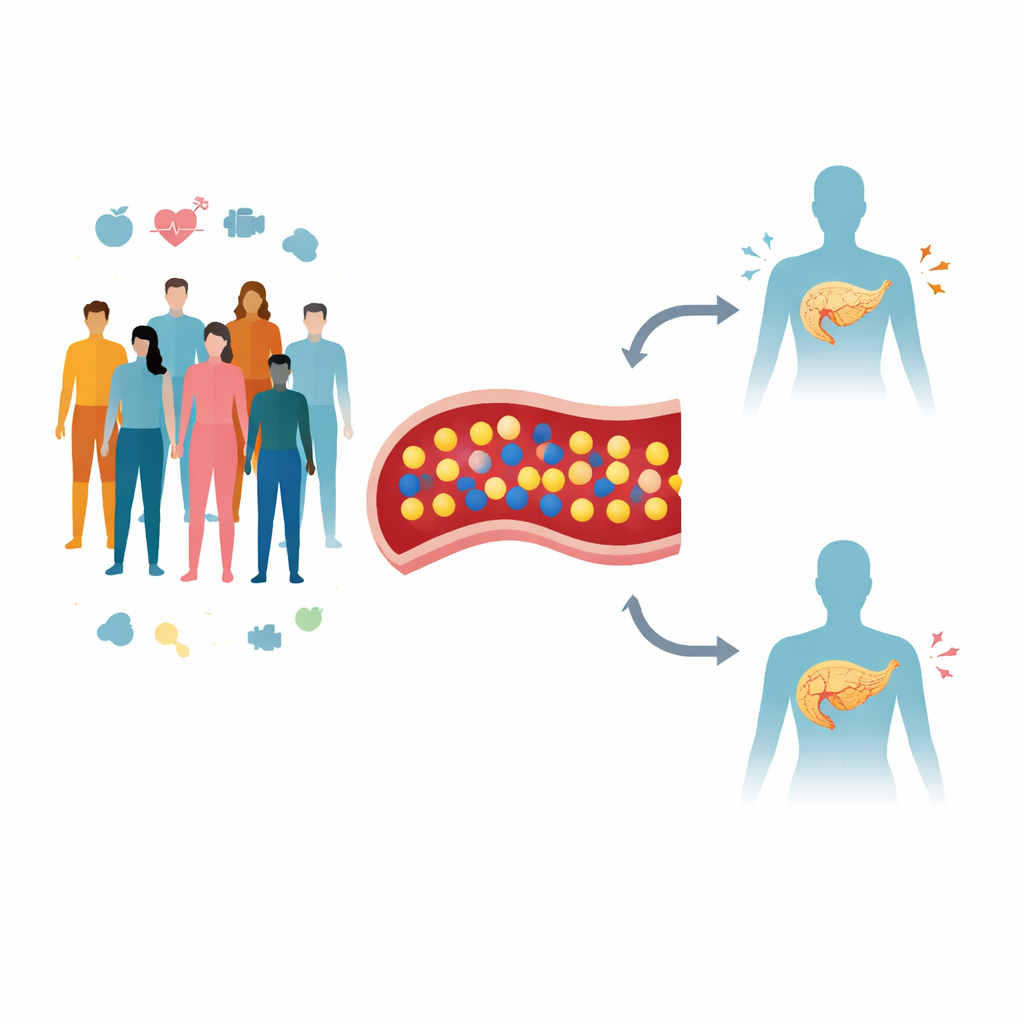
Most people know that blood sugar is central to diabetes, but fewer realize that blood fats can quietly shape who develops the disease years later. This study looked at a simple ratio between two kinds of cholesterol-like particles in the blood and asked: can this number warn us, long before symptoms appear, who is more likely to get diabetes? Using health records from thousands of adults, the researchers uncovered a surprising, curved relationship that may change how we think about early warning signs and prevention.
A closer look at a hidden cholesterol balance
Not all blood fats are the same. The study focused on “residual cholesterol,” particles rich in triglycerides that tend to clog vessels and irritate tissues, and high-density lipoprotein cholesterol, often called the “good” kind because it helps clear fats and has anti-inflammatory effects. Instead of looking at each one alone, the researchers examined their ratio—how much potentially harmful residue there is compared with the protective form. This balance, called the RC to HDL ratio, captures in a single number the tug-of-war between damaging and protective forces in the bloodstream.
Following thousands of people over time
The team used an open health-screening database from a hospital in Japan, including more than 15,000 adults who did not have diabetes when they first came for checkups. These participants had their height, weight, waist size, blood pressure, liver markers, and a full panel of blood fats measured after an overnight fast, along with blood sugar and long-term sugar control. None were using medications at the start, and those with existing diabetes or serious liver conditions were excluded. The group was then tracked for an average of about six years to see who would go on to develop diabetes, based on follow-up blood tests or self-reported diagnoses.
How risk rises as the ratio climbs
When the researchers compared people across four levels of the RC to HDL ratio, a clear pattern emerged. In the lowest group, less than 1 in 100 people developed diabetes during follow-up. In the highest group, roughly 6 in 100 did—more than eight times as many new cases. After carefully accounting for age, sex, body mass index, blood pressure, fatty liver, lifestyle factors such as smoking and exercise, and several blood markers, the ratio still mattered. For each full unit increase in the RC to HDL ratio, the risk of developing diabetes was more than five times higher. The relationship held even among people with normal weight, younger adults, and those without high blood pressure, suggesting the ratio adds information beyond traditional risk factors.
A surprising “turning point” in the curve
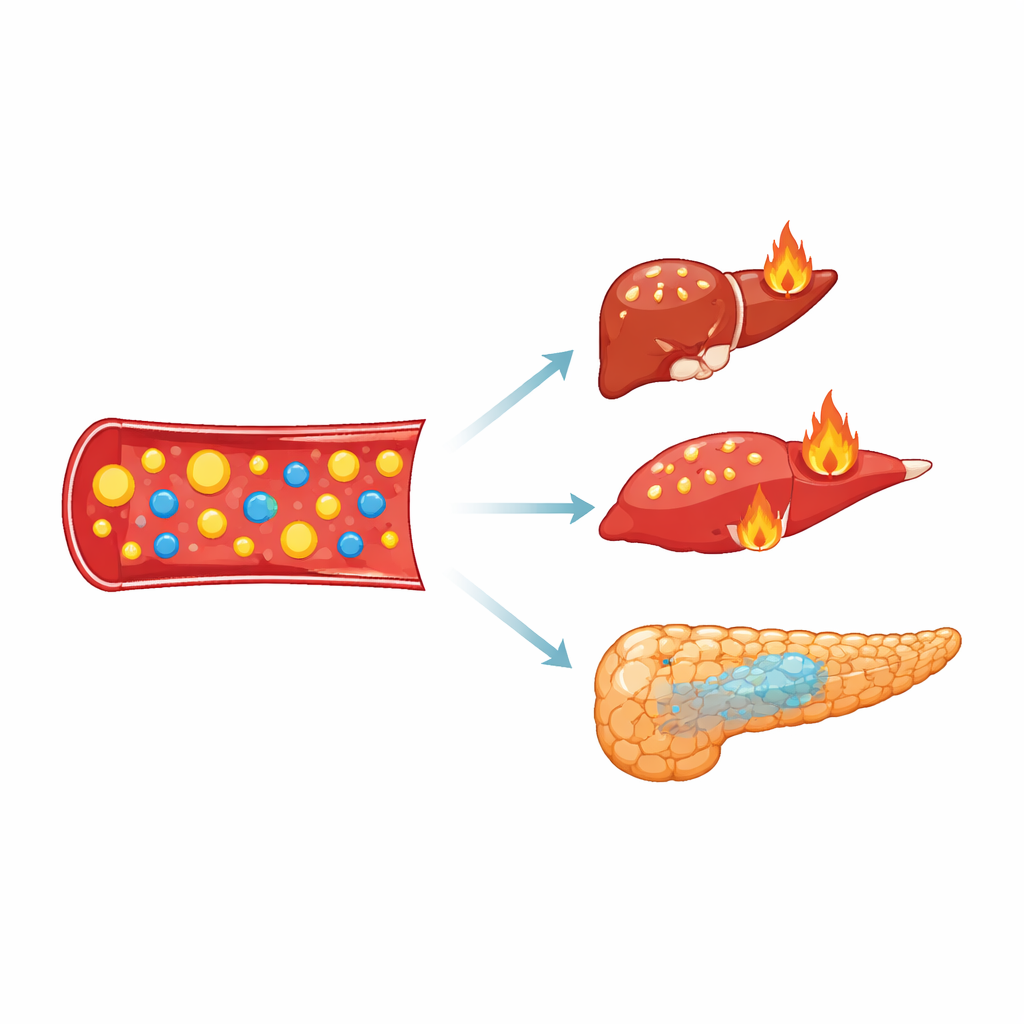
Rather than assuming that risk rises in a straight line, the investigators used statistical tools designed to detect bends and thresholds in the data. They found that the RC to HDL ratio and diabetes risk formed a nonlinear curve with a distinct turning point at about 0.41. Below this value, small increases in the ratio were linked to a very sharp jump in risk, as if the body were crossing from a safer zone into more dangerous territory. Above this threshold, further increases in the ratio still tended to raise risk, but much more slowly, suggesting that damage from excess fat and weakened protective particles may begin to plateau once the system is already strained.
What this means for prevention and everyday health
To a non-specialist, the key message is that the balance between “leftover” cholesterol particles and protective cholesterol may signal trouble long before blood sugar crosses into the diabetic range. This relatively simple ratio, which can be calculated from routine blood tests, behaved as an early warning light in a large group of adults. If future work confirms these findings in other countries and age groups, doctors could use this measure to flag people at higher risk—even if they are not yet overweight—and recommend earlier lifestyle changes or tailored treatment to rebalance blood fats. In short, watching this hidden cholesterol balance may open a new window for preventing diabetes before it starts.
Citation: Yin, G., Sha, W. Nonlinear association of residual cholesterol to high-density lipoprotein cholesterol ratio with diabetes mellitus: a retrospective cohort study. Sci Rep 16, 8872 (2026). https://doi.org/10.1038/s41598-026-42134-6
Keywords: diabetes risk, blood lipids, cholesterol balance, preventive screening, metabolic health