Clear Sky Science · en
Quantitative assessment of alkali and carbon nanotube reinforcement effects on the tensile reliability of sustainable sisal fiber bio-based epoxy composites
Stronger Materials from Plants
Modern cars, buildings, and gadgets all need materials that are strong but lightweight and environmentally responsible. This study explores how to turn a humble plant fiber, sisal, into a high‑performance building block by combining it with a bio‑based plastic and tiny carbon tubes. The goal is to make greener materials that can safely carry loads while cutting weight and reducing our dependence on fossil‑fuel‑based plastics.
Why Plant Fibers Need Help
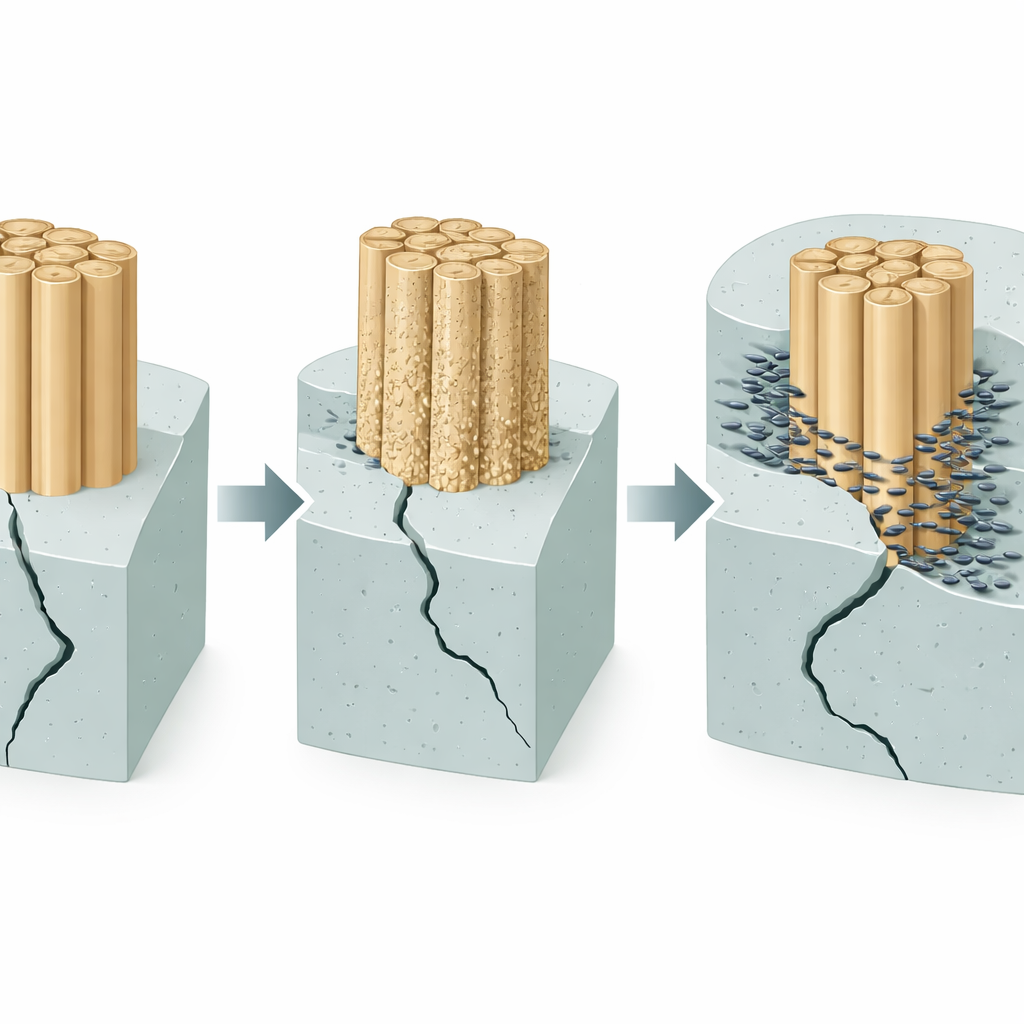
Sisal fibers, taken from the leaves of the agave plant, are attractive because they are light, strong for their weight, renewable, and widely available. But when they are mixed with common plastics, the two do not naturally stick together well. The plant fibers like water, while the plastic resin tends to repel it. This mismatch leaves tiny gaps at the contact surface, so when you pull on the material, the fibers slide out instead of sharing the load, causing the composite to fail earlier than it should.
Cleaning and Roughening the Fibers
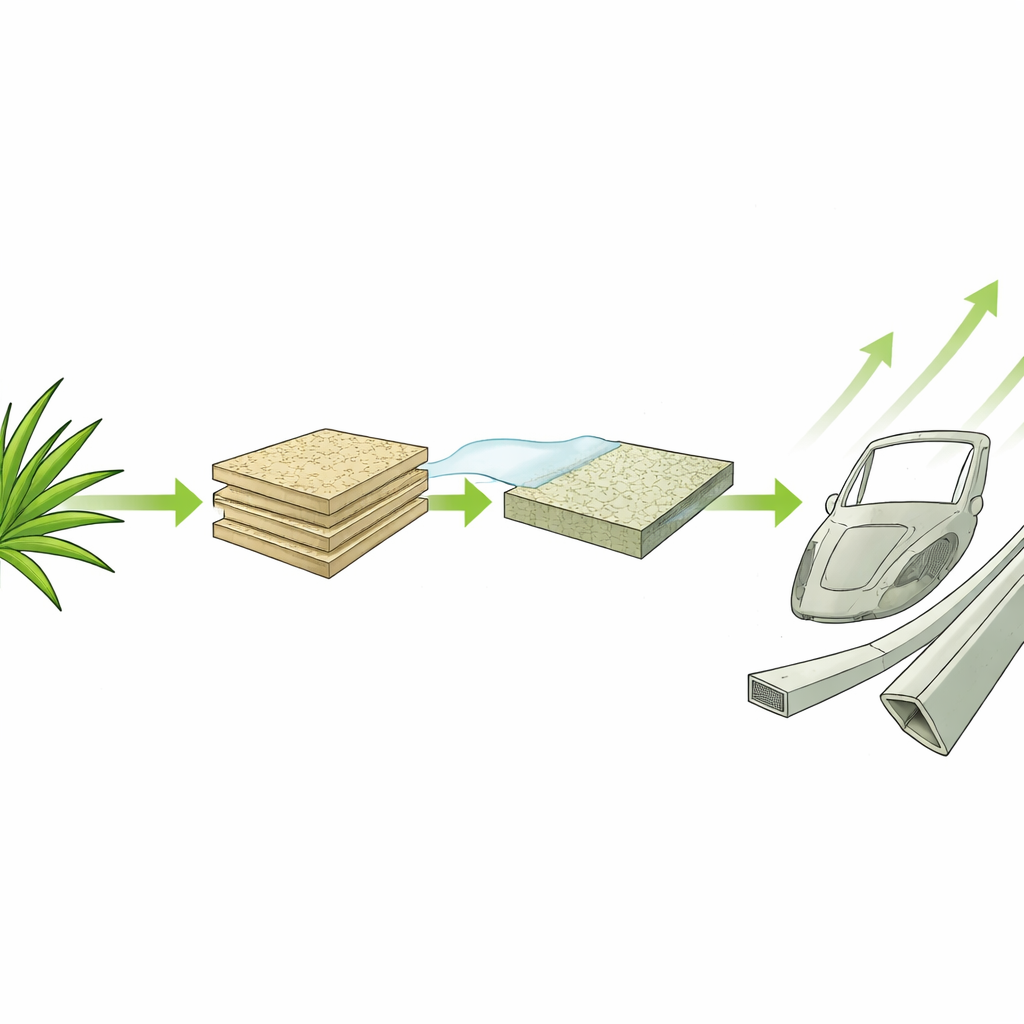
To tackle this problem, the researchers first focused on the fibers themselves. Woven sisal mats were soaked in mild sodium hydroxide solutions, which strip away natural waxes and some of the glue‑like components on the surface. This cleaning and gentle etching makes the fiber surface rougher and more open, allowing the resin to grip it better. Tensile tests—simple pulling tests on bar‑shaped samples—showed that this treatment alone raised the breaking strength from about 71 to 103 megapascals, and stiffness by roughly 44 percent, without making the material more brittle. In everyday terms, the plant‑based composite became considerably stronger and stiffer simply by preparing the fibers more carefully.
Adding Nano‑Scale Reinforcement
In the second step, the team improved the plastic part of the composite. They mixed in extremely small multi‑walled carbon nanotubes—hollow cylinders of carbon thousands of times longer than they are wide—at very low amounts (less than half a percent by weight). Using mechanical stirring and ultrasound, they spread these nanotubes through the bio‑based epoxy resin before it was combined with the treated sisal mats. When the mixture cured into solid panels, the nanotubes acted like tiny bridges inside the resin, helping it resist the growth of microscopic cracks. The best results came at just 0.25 percent nanotubes, where the tensile strength climbed to about 129 megapascals and the stiffness to 8.1 gigapascals—roughly 82 percent stronger and 69 percent stiffer than the original untreated composite.
Finding the Sweet Spot and Proving Reliability
More nanotubes did not mean endlessly better performance. At 0.35 percent, the strength dropped slightly, which the authors link to clumping of nanotubes into tiny bundles that act as weak spots. By comparing experiments with simple mathematical models, they showed that fiber treatment produces a nearly straight‑line improvement, while nanotube addition follows a curve with diminishing returns. They also examined how scattered the test results were, using a statistical tool called Weibull analysis. Both the treated fibers and the optimally dosed nanotubes made the composite not only stronger on average, but also more consistent from sample to sample—an important point for real‑world safety. Under the microscope, fracture surfaces changed from long, clean fiber pull‑out in the untreated material to tightly bonded fibers and cracked paths that twist and branch in the optimized composite.
What This Means for Greener Engineering
For a non‑specialist, the key message is simple: by carefully cleaning plant fibers and adding a pinch of nano‑reinforcement, it is possible to turn a relatively weak, variable material into a strong, predictable one that can rival more traditional synthetic composites. This two‑step recipe boosts strength and stiffness using renewable fibers and only tiny amounts of advanced filler, supporting designs that are lighter, use less material, and have a smaller environmental footprint. Such optimized bio‑composites could help future vehicles, infrastructure, and consumer products become both more efficient and more sustainable.
Citation: Joshi, K., Hiremath, P., Hiremath, S. et al. Quantitative assessment of alkali and carbon nanotube reinforcement effects on the tensile reliability of sustainable sisal fiber bio-based epoxy composites. Sci Rep 16, 8931 (2026). https://doi.org/10.1038/s41598-026-42131-9
Keywords: sisal fiber composites, bio-based epoxy, carbon nanotubes, natural fiber reinforcement, sustainable materials