Clear Sky Science · en
Hydrodistillation time-dependent variations in the volatile oil characteristics of fresh and dried Salvia species
Why the timing of a simple herb matters
Many people sip sage tea or use sage essential oil for its soothing scent and potential health benefits. But the way that oil is produced—how the leaves are prepared and how long they are distilled—quietly changes what ends up in the bottle. This study looks at two familiar Mediterranean sages and shows that both drying the leaves and the length of distillation can tilt the balance between different aromatic ingredients, with practical implications for farmers, distillers, and anyone who values consistent herbal products.
Two kinds of sage, two ways to treat the leaves
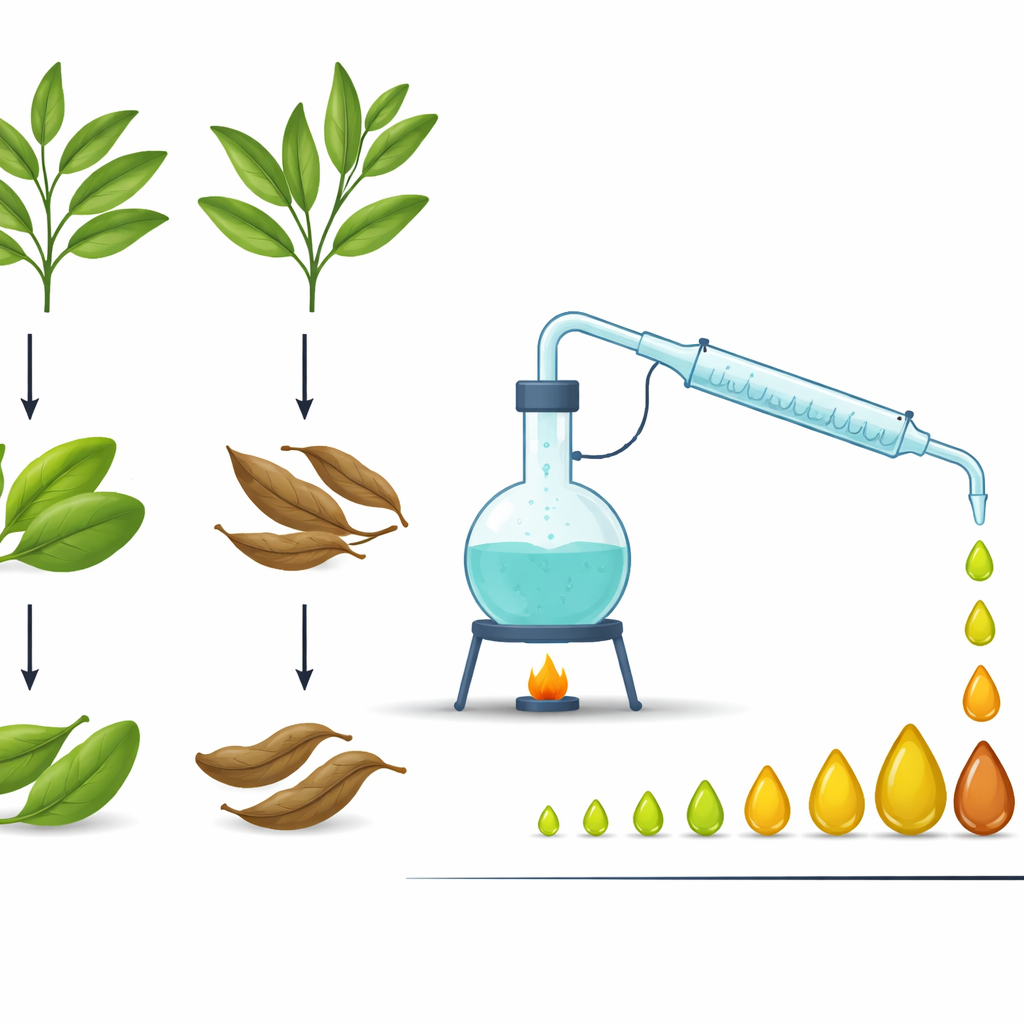
The work focuses on common sage (Salvia officinalis) and Anatolian or Greek sage (Salvia fruticosa), both widely used as teas, flavorings and traditional remedies. Their scent and potential biological effects come from volatile oils—aromatic mixtures that can fight microbes, act as antioxidants and influence mood. The researcher compared oils from fresh leaves and from leaves gently dried at low temperature. Both types were then distilled in water using a classic hydrodistillation setup, a glass apparatus that captures rising vapors and condenses them back into liquid oil.
Watching oil yield over the hours
To see how time changes things, the leaves were distilled for one, two, three, four, or five hours, and the amount of oil at each point was measured. In common sage, the longer the distillation, the more oil came out, especially from dried leaves. Dried common sage yielded roughly three to four times more oil per unit weight than fresh leaves, and about 90% of the recoverable oil from dried material was obtained in the first three hours. After that, extra time produced only small gains, suggesting diminishing returns beyond roughly three hours for dried leaves under these conditions. In Anatolian sage, both fresh and dried leaves also showed rising yields at first, but the increase flattened earlier. Dried Anatolian sage reached its maximum oil yield by three hours and did not increase further, while fresh leaves leveled off by around four hours. When the numbers were adjusted back to the plant’s original fresh weight, fresh Anatolian sage actually looked more favorable than the dried form, emphasizing that drying does not always mean “more oil” in practical terms.
How the scent mix shifts with time
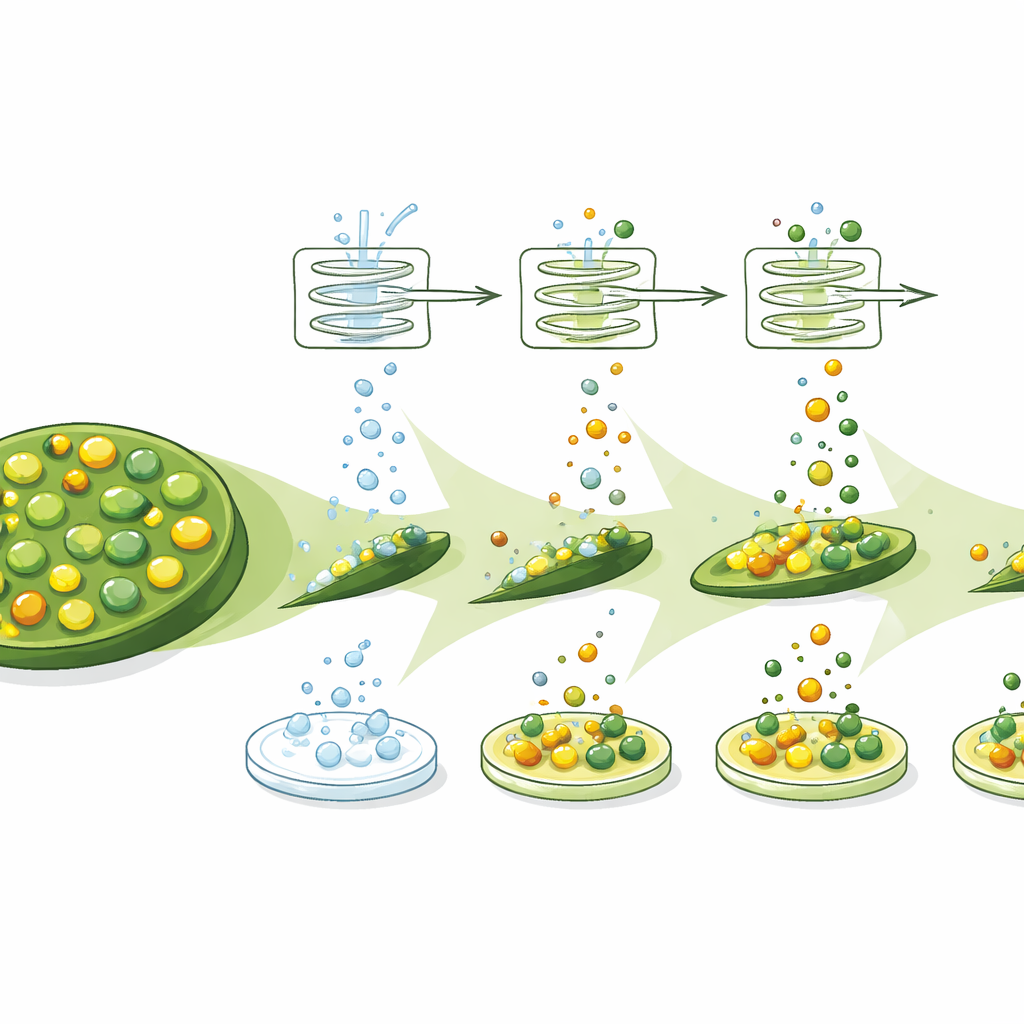
Beyond how much oil is recovered, the study asked what is in that oil at different times. Using gas chromatography and mass spectrometry, the researcher identified dozens of individual components in each sample: 41 in fresh and 32 in dried common sage, and roughly 50 in both fresh and dried Anatolian sage. In both species, one compound called α-thujone dominated early fractions, reaching its highest relative share in the first hour and then gradually declining as distillation continued. Another important ingredient, 1,8-cineole—often associated with the crisp, eucalyptus-like note in many herbs—followed a similar downward trend over time. Meanwhile, heavier molecules such as certain sesquiterpenes and diterpenoids became more prominent in later fractions, reflecting their slower escape from the leaf and the still.
Fresh versus dried: different balances in the bottle
When the many molecules were grouped into broad families, clear patterns emerged. In both sages, oxygenated monoterpenes—light, often strongly scented compounds—were the largest group overall, especially early in the run. As time went on, their share shrank, while heavier families like sesquiterpenes and diterpenoids grew. Drying also shifted the balance. In common sage, dried leaves tended to favor a profile richer in certain lighter compounds such as α-pinene, limonene and camphor, while fresh leaves distilled for longer began to lean more toward heavier components like viridiflorol and caryophyllene. In Anatolian sage, dried material produced higher levels of α-pinene than fresh leaves, but also showed a gradual rise in heavier constituents with longer distillation. Chemometric analysis, which treats the mixture like a multidimensional fingerprint, confirmed that both leaf condition and distillation time systematically pull the oil profile along a continuum from “lighter” to “heavier” compositions.
What this means for growers, makers, and users
For anyone working with sage oils, this study offers a practical message: there is no single ideal distillation time, only better choices for particular goals. Shorter runs on fresh or gently dried leaves favor oils rich in bright, quickly released components like α-thujone and 1,8-cineole, which shape much of the familiar sage aroma. Extending distillation increases total yield and brings in more slowly emerging, heavier molecules, but it also dilutes some of those early, lighter notes and can eventually risk heat-related changes. Around three hours appears to be a sensible compromise for dried common sage under the tested conditions, while fresh Anatolian sage may even be preferable to dried if one cares about oil recovered per original plant mass. More broadly, the work shows that something as simple as whether leaves are fresh or dried, and how long they sit in the still, can meaningfully reshape what we smell—and potentially what we feel—when we open a bottle of sage oil.
Citation: Soltanbeigi, E. Hydrodistillation time-dependent variations in the volatile oil characteristics of fresh and dried Salvia species. Sci Rep 16, 9645 (2026). https://doi.org/10.1038/s41598-026-42109-7
Keywords: sage essential oil, hydrodistillation, Salvia officinalis, Salvia fruticosa, drying and extraction time