Clear Sky Science · en
Sustainable development of copper matrix hybrid composites using waste stainless steel chips: a physical and tribological investigation
Turning Factory Scrap into Useful Metal
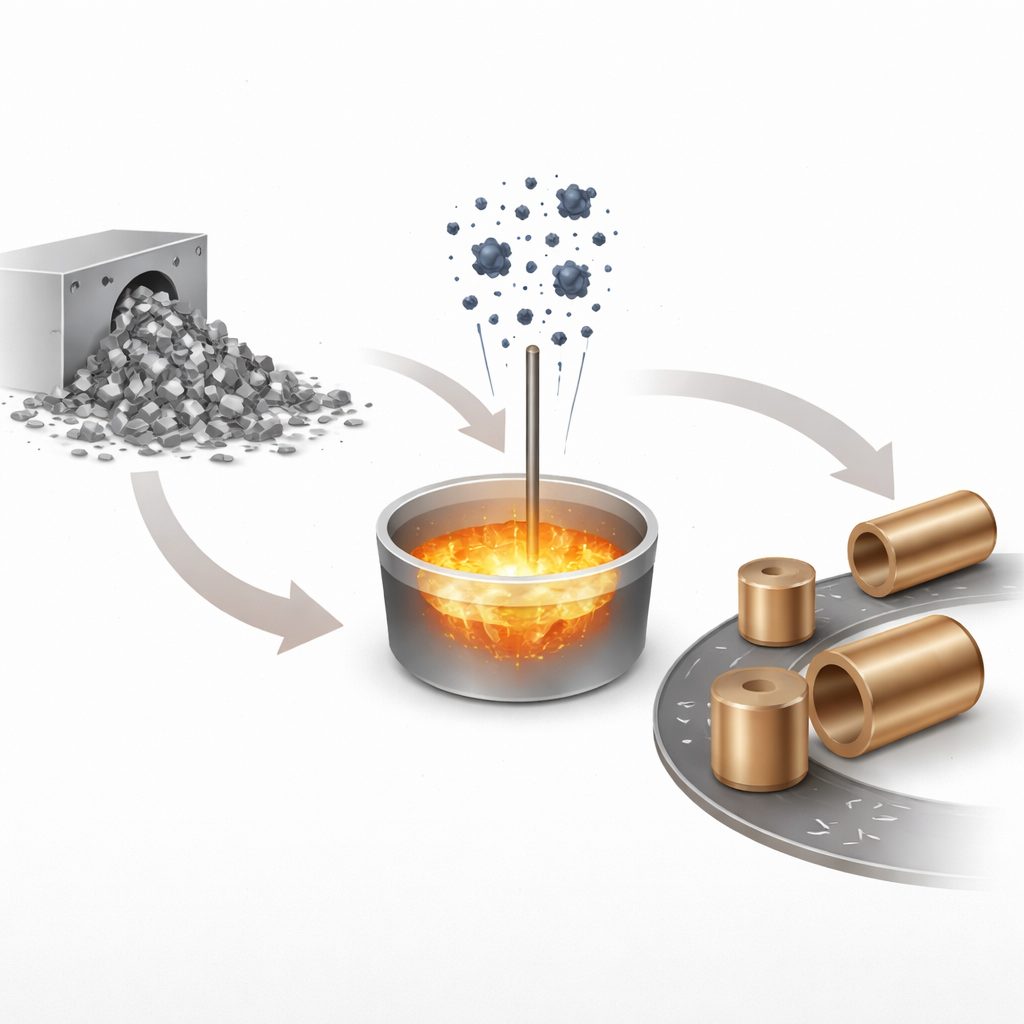
Every day, machine shops around the world shave, cut, and drill stainless steel, producing mountains of bright, curly metal chips that usually end up as low-value scrap. This study explores a smarter path: using those waste chips as ingredients in new copper-based materials that are tougher, last longer under friction, and still keep much of copper’s excellent ability to conduct heat and electricity. For anyone interested in greener manufacturing, this work shows how yesterday’s leftovers can become tomorrow’s high-performance parts.
Why Copper Needs a Helping Hand
Copper is the metal of choice for carrying electricity and heat, so it shows up in everything from power systems to car parts. Yet copper has a weakness: it is relatively soft and wears down quickly when rubbing against other surfaces. Engineers often strengthen copper by mixing in hard particles, creating so‑called metal matrix composites. Past research used ceramic powders such as carbides and oxides to boost hardness and wear resistance, but these additives are mined and processed specifically for that purpose. In contrast, stainless steel machining chips are already available as a by-product in huge volumes. They are hard, corrosion-resistant, and metallic—all traits that could help copper survive harsh sliding conditions if they can be blended in effectively.
Building a New Hybrid Metal from Waste
The researchers set out to turn waste stainless steel chips into a key ingredient of a new copper “hybrid” composite. They melted commercial copper and, using a technique called stir casting, mixed in three types of solid additions: waste stainless steel chips, very hard tungsten carbide particles, and chromium. Four versions of the composite were made, each with the same amounts of tungsten carbide and chromium but with rising levels of stainless steel chips—from 1 to 4 percent by weight. Microscopic imaging showed that the added particles were fairly well spread through the copper, and that the stainless steel pieces became more densely packed as their fraction increased. This careful control allowed the team to isolate the specific influence of the waste chips on the material’s behavior.
Lighter, Harder, and More Resistant to Wear
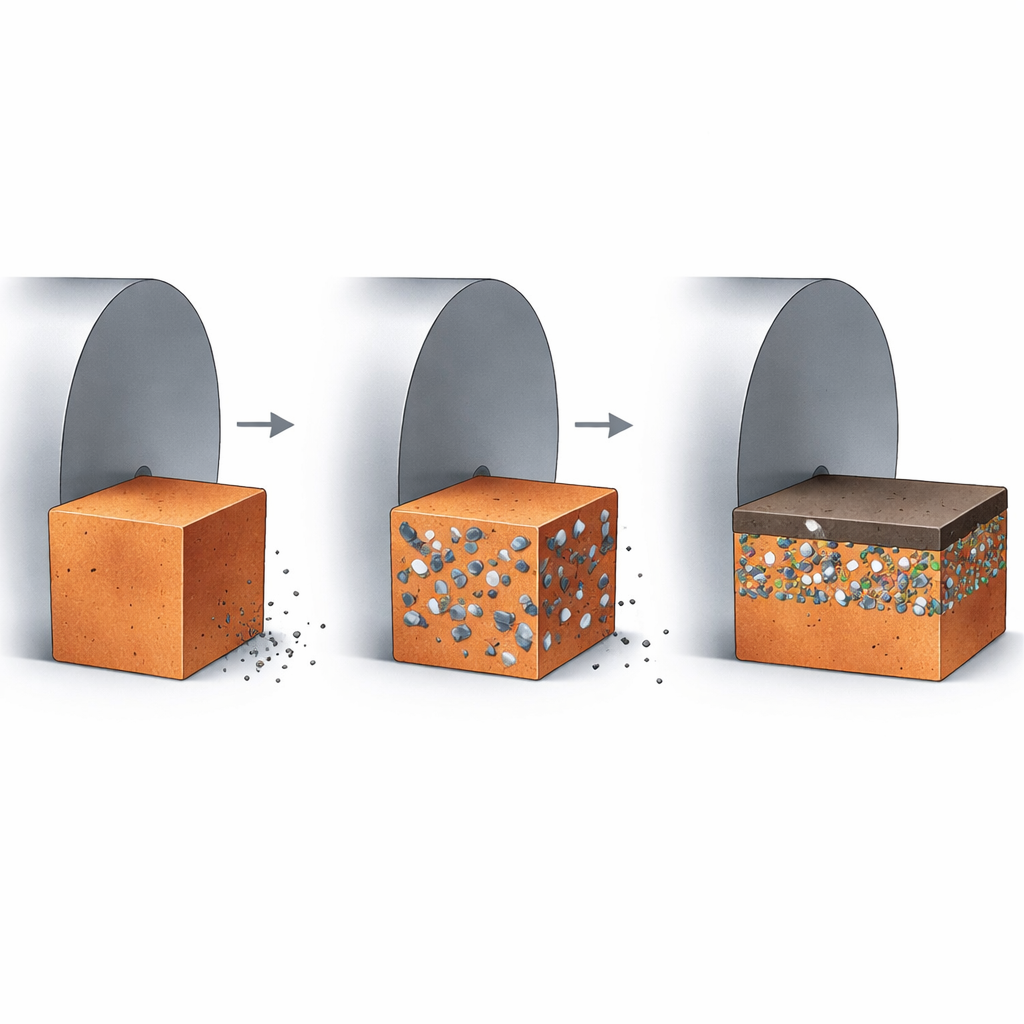
Physical tests revealed several important trends. As more stainless steel chips were added, the overall density of the composite dropped slightly compared with pure copper, partly because stainless steel and chromium are lighter than copper in this mixture and because tiny voids formed around clustered particles. At the same time, hardness rose steadily: the hardest version, with 4 percent stainless steel chips, was more than 40 percent harder than plain cast copper. When the samples were pressed against a hardened steel disk in a pin-on-disk machine and slid for long distances without lubrication, all of the hybrid materials lost less mass than pure copper. The hardest composite suffered the least wear, consistent with the idea that harder surfaces resist being ploughed and cut. Interestingly, the composites showed somewhat higher friction, likely because the hard particles and protective surface films they helped form created a stronger mechanical interlock with the steel counterface.
Seeing Wear at the Microscopic Scale
To understand what was happening at the sliding surfaces, the team used electron microscopes and atomic force microscopes to inspect the worn tracks. Plain copper showed rough, heavily damaged surfaces with deep grooves and signs of adhesive smearing, where material transfers and tears away. In contrast, the composites—especially those with more stainless steel chips—had smoother tracks with finer scratches and fewer severe scars, signaling a shift from destructive adhesive wear to more controlled mild abrasion and oxidation. Surface roughness measurements backed this up: the average height variations dropped from nearly 200 nanometers for pure copper to about 34 nanometers for the highest chip content. Statistical measures of the surface shape showed that the composite tracks tended to have shallow plateaus and valleys that can trap debris and support the load more evenly, promoting stable sliding.
What This Means for Greener Machines
Taken together, the results show that adding waste stainless steel chips, alongside tungsten carbide and chromium, can turn soft copper into a lighter, harder material that resists wear far better under dry sliding. The hybrid material still benefits from copper’s ability to conduct heat and electricity, but now stands up more robustly in components such as electrical contacts, bushings, and bearings. Equally important, the approach embodies circular-economy thinking: instead of treating stainless steel chips as trash, they become a valuable ingredient that improves performance while reducing demand for newly mined reinforcement powders. In this way, the study points toward mechanical parts that are both more durable in service and more responsible in their use of resources.
Citation: Singh, M.K., Ji, G., Kumar, V. et al. Sustainable development of copper matrix hybrid composites using waste stainless steel chips: a physical and tribological investigation. Sci Rep 16, 8649 (2026). https://doi.org/10.1038/s41598-026-42090-1
Keywords: copper composites, stainless steel waste, wear resistance, tribology, sustainable materials