Clear Sky Science · en
Electromagnetic field stimulation modulates working memory and cortical alpha oscillations in healthy adults
Why tiny fields around our heads matter
Modern life surrounds us with invisible electromagnetic fields—from smartphones and power lines to medical devices. Scientists have long wondered whether carefully shaped versions of these fields could nudge the brain’s electrical activity in useful ways. This study asks a very down-to-earth question: can gentle, precisely patterned fields change how well healthy young adults hold numbers in mind for a few seconds, and do those changes show up in the brain’s natural rhythms?
Two kinds of memory put to the test
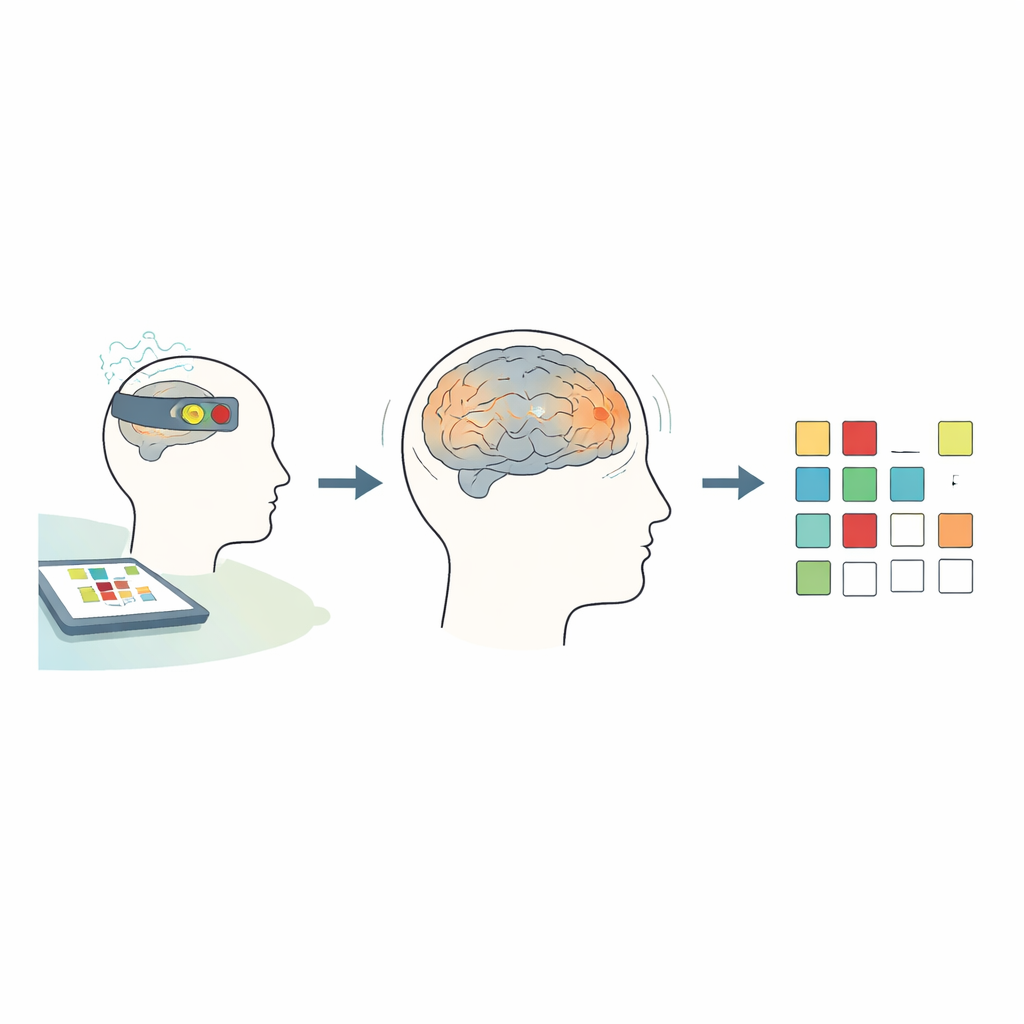
To explore this, researchers focused on two related but distinct mental skills. One, called short-term recall, is like repeating a phone number exactly as you just heard it. The other, working memory, is more like hearing that number and then saying it backwards—a small mental juggling act that leans heavily on concentration and control. Ninety-eight healthy volunteers took standard clinical tests that measure these skills by having them repeat, reverse, and reorder strings of digits, along with doing simple mental arithmetic. These scores were translated into age-adjusted values so that small differences in performance could be picked up reliably.
Gentle fields, different patterns
Before taking the tests, participants sat for 30 minutes with small coils held against their heads by a headband while their brain activity was recorded using an EEG cap. Some received no field at all (a sham condition), while others were exposed to one of three low-strength electromagnetic patterns. One pattern, called Theta-Burst, delivered brief bursts of rapid pulses grouped in a slower rhythm. A second pattern, Theta-Gamma, mimicked how deeper brain structures are thought to nest fast and slow rhythms together during memory tasks. The third simply pulsed at a steady gamma-like rate of 40 cycles per second. The fields were applied over different combinations of frontal and temporal brain regions to see whether placement mattered.
When brain rhythms shift and memory slips
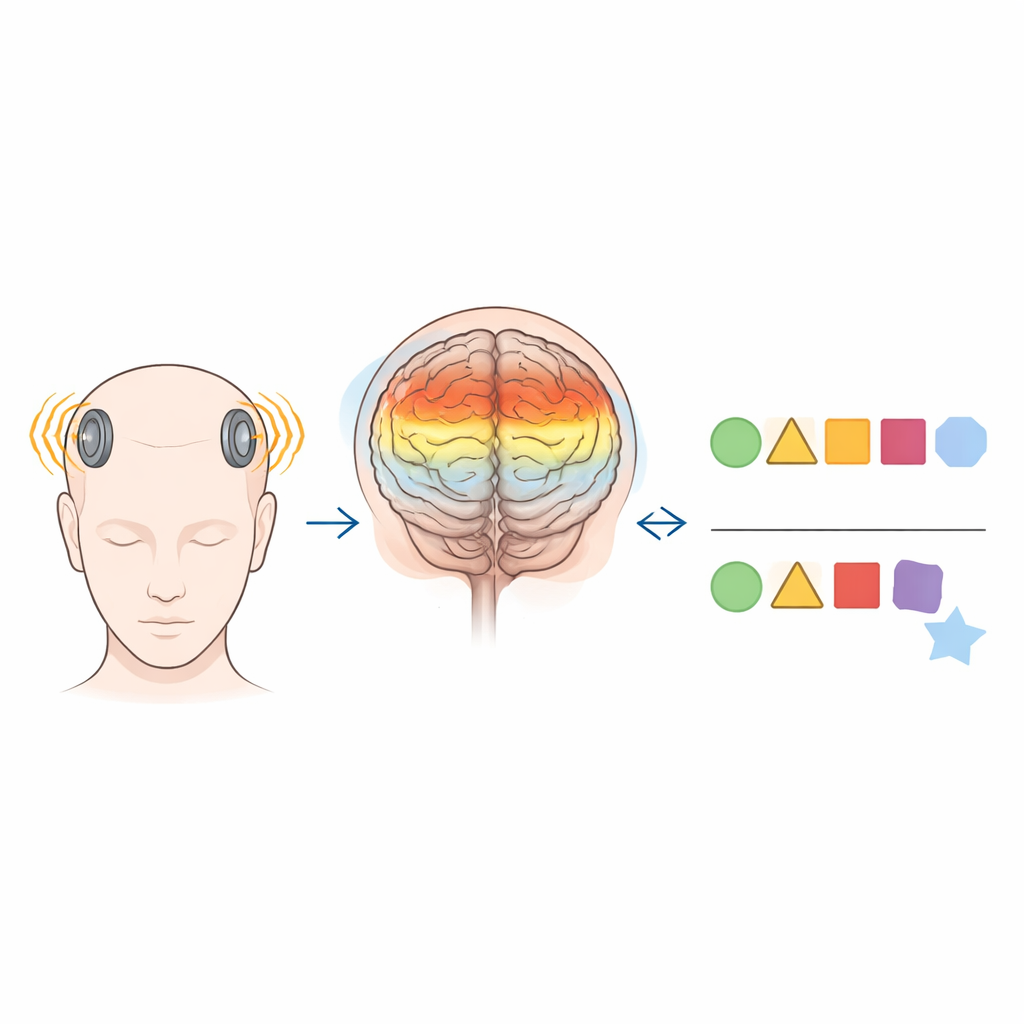
The most striking changes came from the Theta-Burst pattern. Compared with people in the sham group, those who received Theta-Burst stimulation did worse on the most demanding memory task: repeating strings of digits backward. This suggests a specific hit to the brain’s ability to actively manipulate information, not just to hold it. At the same time, their brain recordings showed stronger activity in a particular rhythm range—called high alpha—in frontal areas involved in attention and self-control. Rather than signaling sharper focus, an upswing in this rhythm is often linked to the brain turning down processing in a region. In this case, the increased alpha power over frontal areas fit neatly with the observed drop in working memory performance.
Pattern-specific effects, not a blunt tool
The other field patterns told a different story. The Theta-Gamma pattern led to a modest but notable reduction in the simpler task of repeating digits in order, which mostly taps basic storage rather than mental manipulation. Yet this change did not come with clear shifts in the EEG rhythms the team measured, hinting that its effects may be more subtle or spread out. The steady 40 Hz pattern showed little impact on either behavior or brain rhythms in this group of healthy adults. Across all conditions, more complex combined scores that lumped several subtests together often looked normal, suggesting that broad summary measures can hide focused, pattern-specific changes in particular skills.
What this means for brain tuning
In everyday language, the study shows that weak, carefully timed magnetic fields can selectively interfere with how we hold and work with information in mind, and that at least one pattern does so by boosting a brain rhythm linked to "turning down" frontal regions that support mental control. It also makes clear that not all patterns are equal: the brain seems sensitive to the exact timing and shape of the fields. While this work does not use everyday devices or suggest that routine exposures are harmful, it does strengthen the idea that, with the right settings, electromagnetic fields could someday be tuned like a drug—either to temporarily dial down certain mental functions, as demonstrated here, or potentially to enhance or normalize them in people with memory and attention problems.
Citation: Branigan, K.S., Saroka, K.S., Corradini, P.L. et al. Electromagnetic field stimulation modulates working memory and cortical alpha oscillations in healthy adults. Sci Rep 16, 8660 (2026). https://doi.org/10.1038/s41598-026-42063-4
Keywords: electromagnetic brain stimulation, working memory, alpha brain waves, noninvasive neuromodulation, cognitive performance