Clear Sky Science · en
Evaluation of standard, black-box, and bayesian RSM-SVR models in the semi-arid area of south-eastern Iran for predicting soil chemical properties
Why salty soils matter for farmers
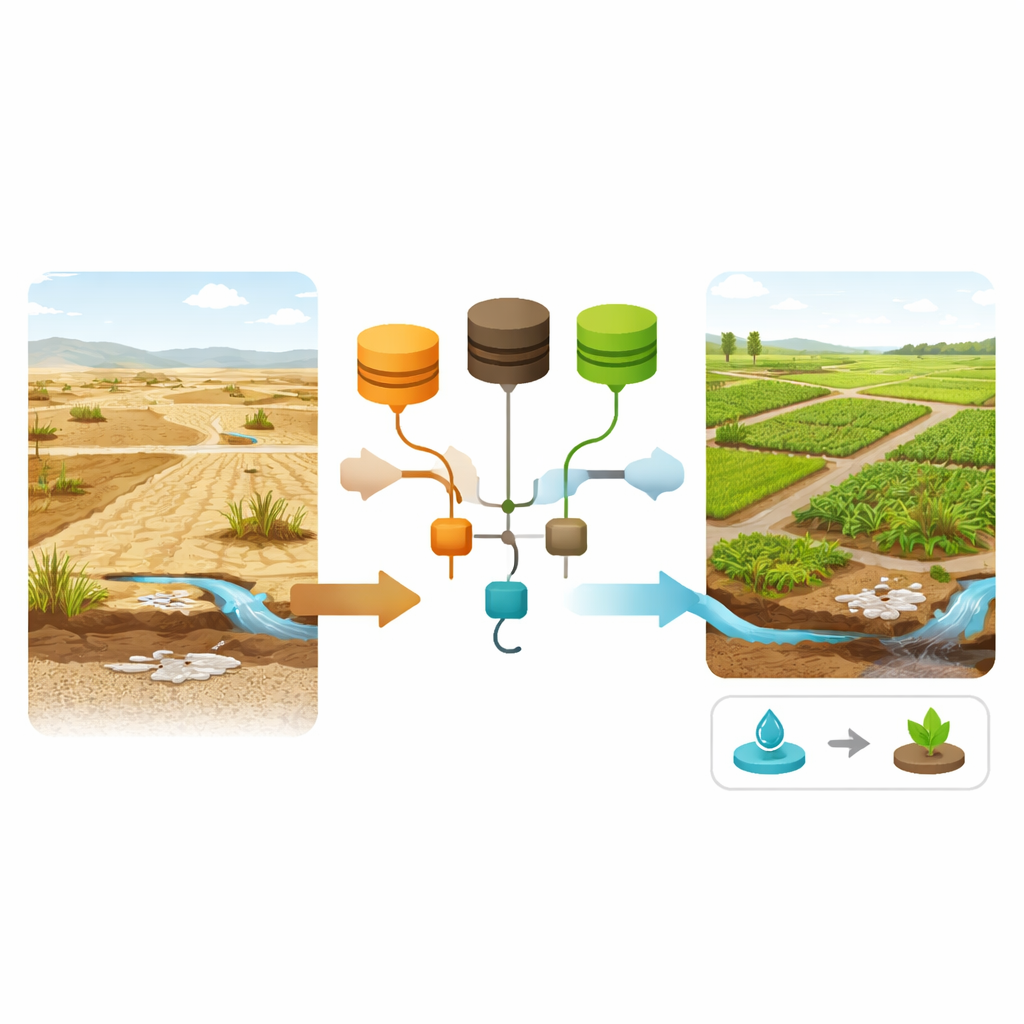
In many dry parts of the world, crops struggle not just from lack of water but because the soil itself is tired and salty. In southeastern Iran’s semi‑arid plains, farmers face soils that don’t hold nutrients well and contain too much sodium, which can cause the ground to harden and plants to fail. This study asks a practical question: can we use smart computer models to quickly estimate key soil properties from a few simple measurements, so that farmers and planners can manage land more efficiently and affordably?
A harsh landscape with fragile soils
The research takes place in Sistan and Baluchestan, a vast, wind‑blown region on Iran’s eastern border. The climate is hot and dry, rainfall is sparse, and dust storms regularly strip away topsoil. Most of the 60,000‑hectare study area is covered by sandy loam and sand—soil types that drain water quickly, store little organic matter, and are prone to building up salts. By collecting 258 carefully prepared soil samples, the team confirmed serious problems: on average, more than half the sites exceeded the usual sodium hazard threshold, and nearly three‑quarters had a low capacity to hold nutrients. These conditions make farming risky and expensive, especially for smallholders with few resources.
Three yardsticks for soil health
To judge how damaged or healthy a soil is, the study focuses on three chemical yardsticks. Exchangeable Sodium Percentage (ESP) measures how much of the soil’s “parking spaces” for nutrients are occupied by sodium instead of more helpful elements like calcium and magnesium. Sodium Adsorption Ratio (SAR) compares the amount of sodium in soil water to calcium and magnesium, signalling the risk that sodium will build up and damage soil structure. Cation Exchange Capacity (CEC) describes how many of those nutrient parking spaces exist in the first place, and therefore how well a soil can hold onto fertilizers instead of letting them wash away. Traditionally, measuring these properties requires time‑consuming and costly laboratory work—hard to apply routinely across large, remote areas.
Letting algorithms learn from simple tests
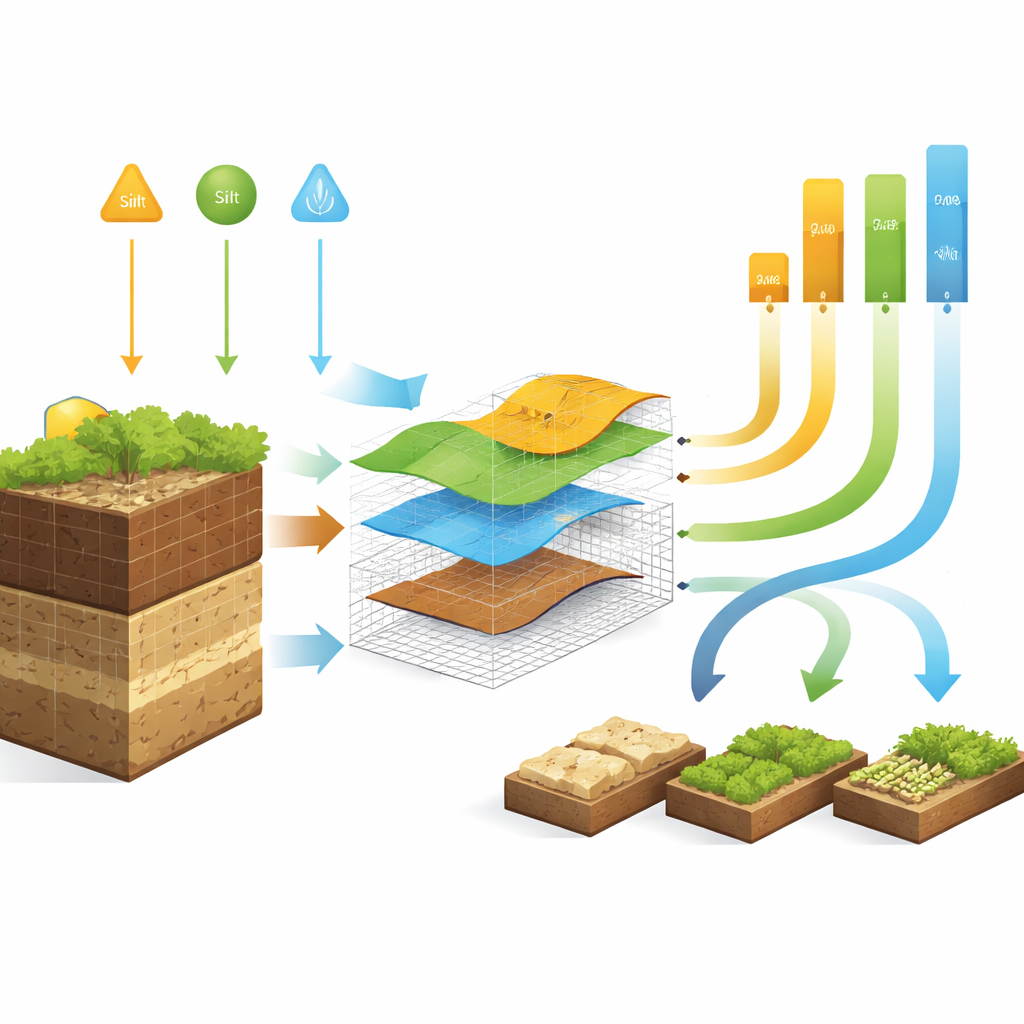
Instead of fully lab‑based testing, the researchers trained computer models to predict ESP, SAR, and CEC from easier measurements such as soil texture (sand, silt, clay), acidity (pH), electrical conductivity, lime content, and organic matter. They built three “hybrid” approaches that blend an older statistical tool called Response Surface Methodology—which captures curved trends and interactions between variables—with a modern machine‑learning method, Support Vector Regression, known for handling complex, non‑linear patterns. The three flavors were: a Standard version, which feeds response‑surface features directly into the learning algorithm; a Black‑Box version, which standardizes these features and adds a careful test of which inputs matter most; and a Bayesian version, which gently shrinks uncertain parameters toward safer values using probability ideas.
What controls salty and nutrient‑poor soils
By comparing predictions with actual lab results, the team found that soil texture and salinity‑related measures strongly shape chemical behavior. Sand content emerged as the main driver of nutrient‑holding capacity: the sandier the soil, the lower the CEC, confirming that coarse grains are poor at retaining fertilizers. In contrast, silt content and electrical conductivity were the strongest influences on the sodium‑related indicators ESP and SAR. These two sodium measures were almost perfectly linked, meaning that once one is known, the other is largely determined. The models did well overall but struggled to capture the very worst cases—extremely salty and degraded soils—where data were scarce and conditions highly variable, a common challenge in environmental modeling.
Which modeling approach worked best
The Black‑Box hybrid model delivered the most accurate predictions for ESP and CEC, cutting errors by about 40% and 28%, respectively, compared with the Standard method. For SAR, the Bayesian version performed slightly better, offering improved reliability where sodium risks are high. All three methods worked with a relatively small dataset of 258 samples, thanks to the way the response‑surface step enriches the information fed into the learning algorithm. Still, the authors note that more data from extreme sites and other regions, as well as comparisons with additional machine‑learning methods, would help refine and test the models further.
Turning predictions into better farming decisions
For non‑specialists, the practical payoff is clear: with only a modest set of routine soil tests, these models allow rapid, low‑cost estimates of key chemical properties over large areas. That means farmers and land managers can more easily identify where sodium is high, where nutrient storage is weak, and where specific actions—such as adding gypsum to flush out sodium, boosting organic matter, adjusting irrigation water, or choosing more tolerant crops—will yield the most benefit. While the methods are not perfect, especially for the most damaged soils, they represent a significant step toward data‑driven, precision management of fragile drylands, helping to protect scarce water and soil resources in some of the world’s most vulnerable farming regions.
Citation: Ahangar, A.G., Piri, J. Evaluation of standard, black-box, and bayesian RSM-SVR models in the semi-arid area of south-eastern Iran for predicting soil chemical properties. Sci Rep 16, 11183 (2026). https://doi.org/10.1038/s41598-026-42058-1
Keywords: soil salinity, precision agriculture, machine learning, semi-arid soils, soil fertility