Clear Sky Science · en
Camel milk extracellular vesicles as a promising antibiotic alternative: gastrointestinal stability, antimicrobial, and immunoregulatory activities
Milk With a Hidden Bonus
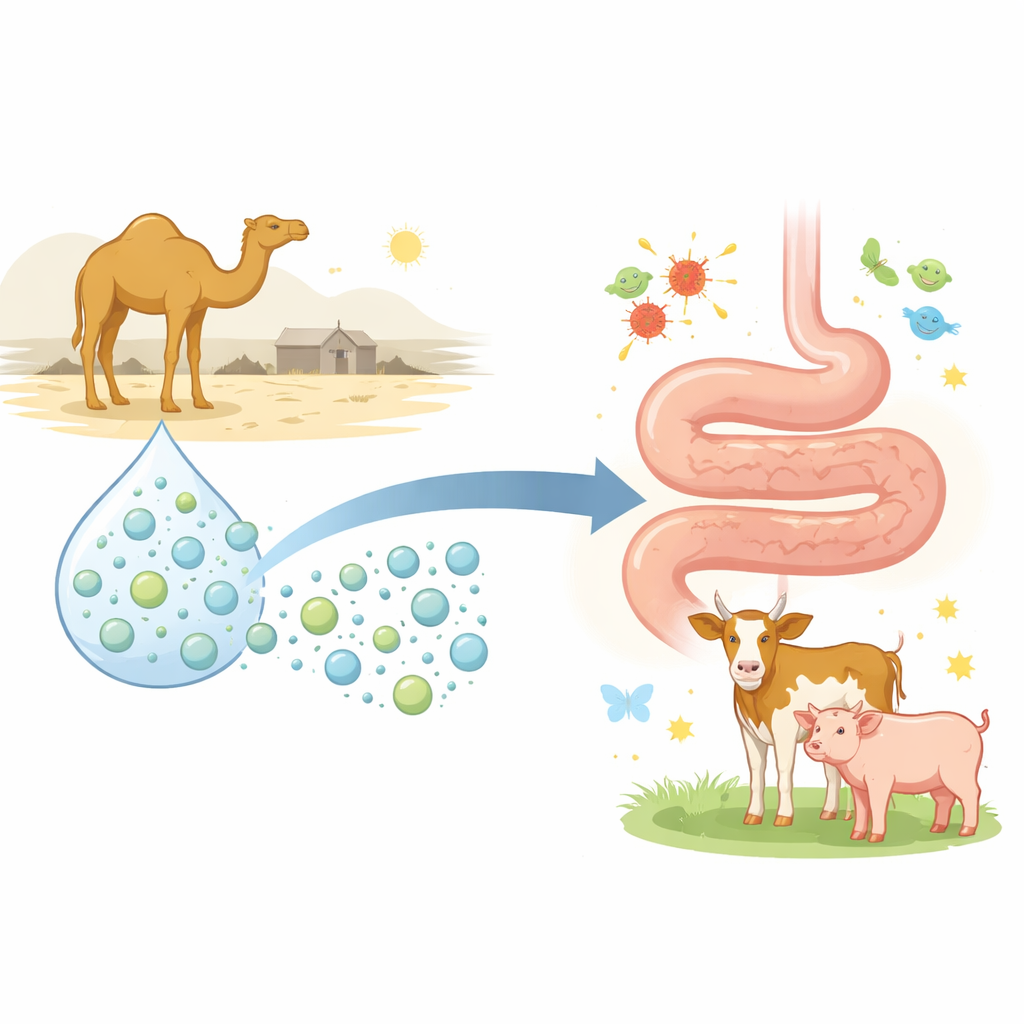
Camel milk has long been valued in desert cultures, but scientists are now discovering that it may also help solve a very modern problem: our heavy dependence on antibiotics in animal farming. This study looks at tiny natural particles in camel milk and asks whether they could help keep livestock healthy by fighting germs, calming inflammation, and protecting cells—all without adding more drugs to the feed.
Tiny Packages With Big Potential
The work centers on extracellular vesicles, microscopic bubbles released by cells that are packed with proteins, fats, and genetic material. In camel milk, these vesicles act like nano-sized care packages that can carry protective signals through the body. The researchers focused on whether these camel milk vesicles could realistically be used in animal feed, which means they would need to survive passage through the stomach and intestines and still retain their health-boosting cargo.
Staying Intact Through the Gut
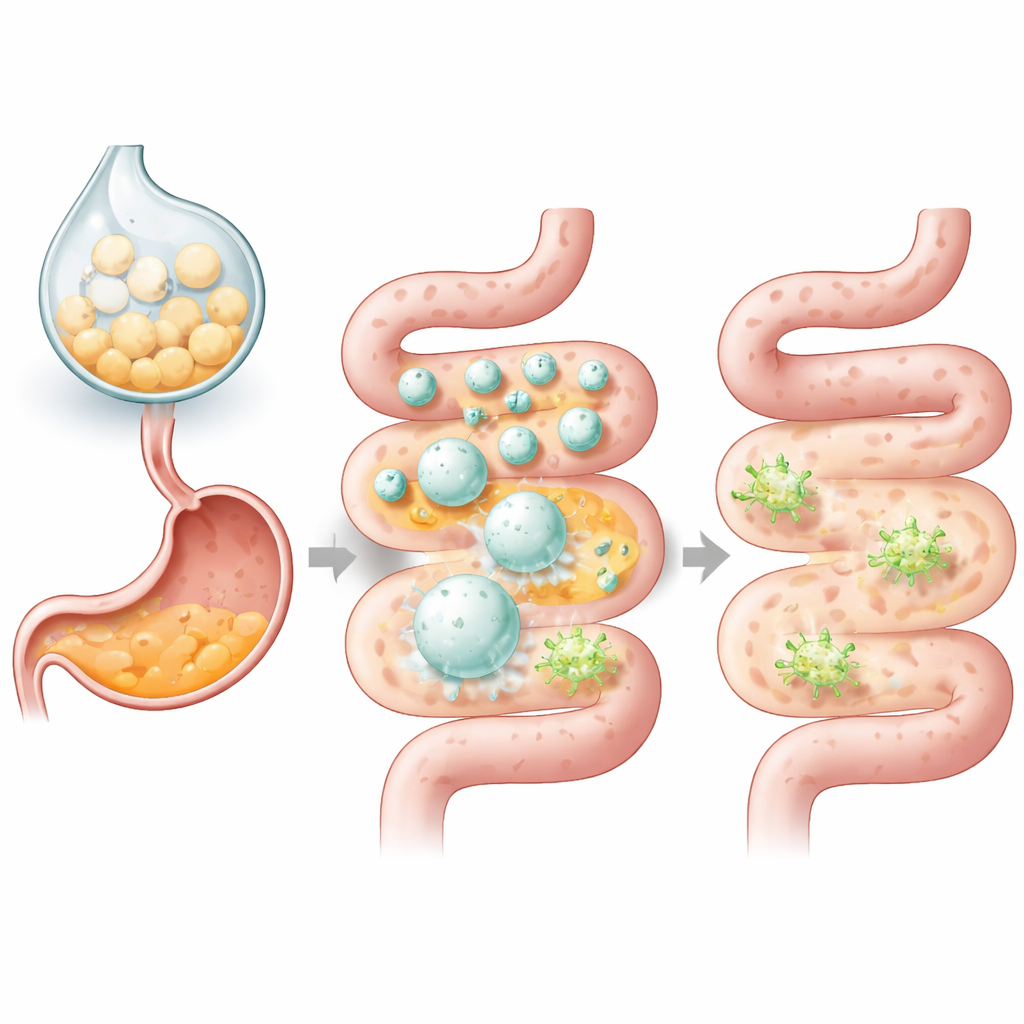
To test this, the team recreated the journey through the digestive tract in the lab, exposing the vesicles to simulated saliva, stomach fluid, and intestinal juices. Under the microscope, the vesicles kept their characteristic bubble-like shape and protective outer membrane, and measurements showed that their size remained in the nanoscale range. Key surface markers that identify these particles as genuine vesicles were also largely preserved. In practical terms, this suggests that when animals drink camel milk or a vesicle-rich supplement, many of these nano-packages are likely to remain intact long enough to act in the gut or even be absorbed into the body.
Fighting Germs and Reactive Molecules
The researchers then asked what these vesicles can actually do. In simple chemical tests, the vesicles proved able to neutralize unstable, cell-damaging molecules known as free radicals, and they did so more strongly as the dose increased. Their performance at higher concentrations was in the same league as well-known plant antioxidants like green tea compounds. In parallel, the team placed the vesicles onto plates seeded with two common livestock bacteria: Escherichia coli and Staphylococcus epidermidis. The vesicles carved out clear, growing zones where bacteria could not thrive, and at certain concentrations they not only stopped growth but killed the microbes outright. Against one of the test species, their effect even outperformed a standard antibiotic under the same conditions.
Helping Immune Cells Strike a Balance
Because gut health is tightly linked to immunity, the scientists also examined how camel milk vesicles interact with immune cells. Using a mouse macrophage cell line often used in laboratory studies, they found that the vesicles were not toxic; in fact, at higher doses they slightly boosted cell survival. When these immune cells were challenged with a bacterial component that normally triggers a strong inflammatory response, the vesicles selectively dialed down two key inflammatory signals while leaving a third one unchanged. This pattern hints that the vesicles can calm excessive inflammation without completely switching off the body’s defenses—an important distinction for animals that constantly face infectious threats.
Promise for Healthier Herds
Put together, these findings paint camel milk vesicles as sturdy, multi-talented helpers: they endure digestion, can mop up harmful reactive molecules, curb troublesome bacteria, and fine-tune immune reactions in the lab. For farmers and veterinarians, this raises the prospect of a natural feed ingredient that could support gut health and reduce the need for routine antibiotics, helping to slow the rise of drug-resistant microbes. While these results come from controlled laboratory experiments and still need to be confirmed in live animals, they lay the groundwork for using camel milk’s hidden nano-packages as part of a more sustainable approach to keeping livestock healthy.
Citation: Fu, J., Fu, L., Zhai, B. et al. Camel milk extracellular vesicles as a promising antibiotic alternative: gastrointestinal stability, antimicrobial, and immunoregulatory activities. Sci Rep 16, 8903 (2026). https://doi.org/10.1038/s41598-026-42021-0
Keywords: camel milk, extracellular vesicles, antibiotic alternatives, livestock gut health, antimicrobial resistance