Clear Sky Science · en
Objective assessment of familiarity in music using imagery and EEG-based machine learning
Why the songs in your head matter
Most people have had the experience of a favorite song continuing to play in their mind even after the music stops. This study asks a striking question: can we tell, just from brain activity during those silent moments, whether a person is imagining a song they know well or one they have never heard before? Using brainwave recordings and machine learning, the researchers show that our brains carry a distinct, measurable signature of musical familiarity, even when no sound is reaching the ears.
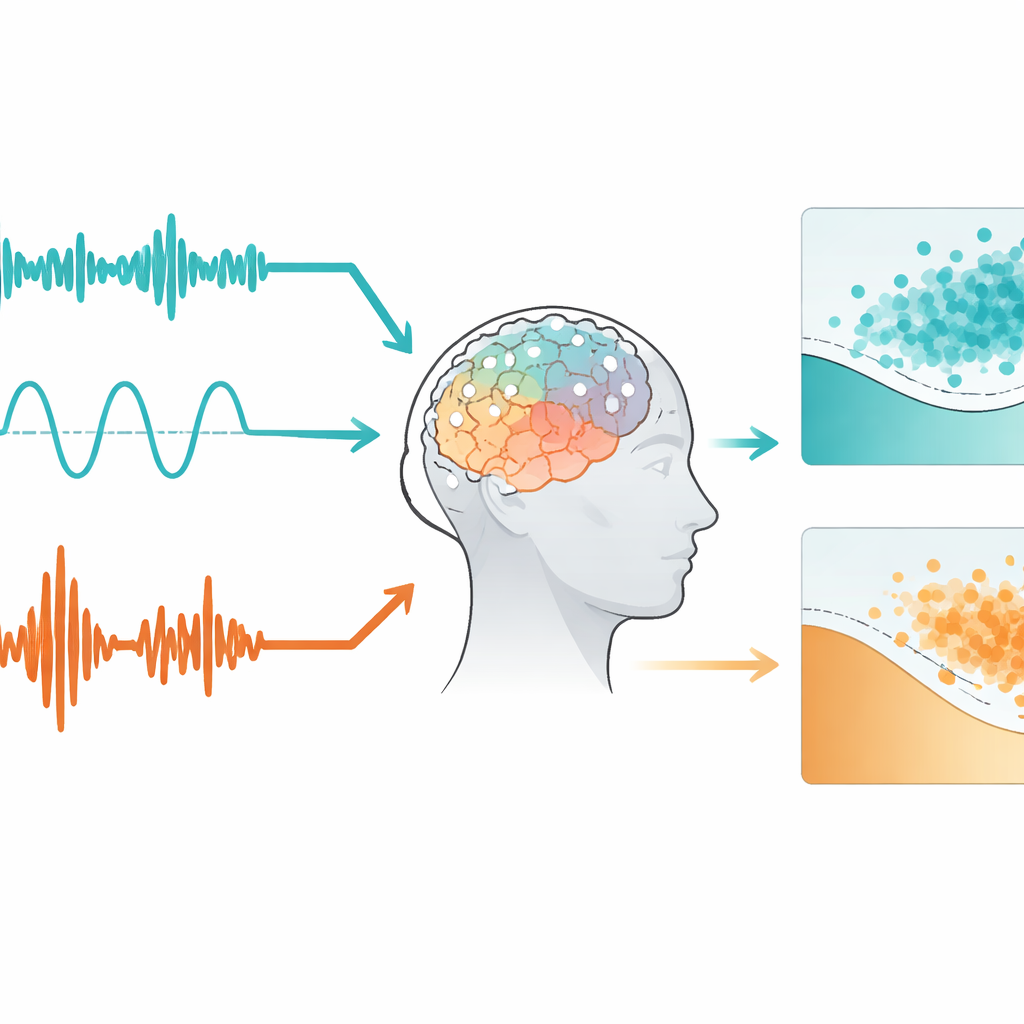
Listening to music that suddenly goes quiet
To probe this hidden mental soundtrack, the team recruited twenty adults with no formal musical training. Each participant chose five popular songs they knew very well in their native language. The scientists then matched each of these with a similar but unfamiliar song by lesser-known artists. During the experiment, people listened to two-minute excerpts of these ten songs while their brain activity was recorded with a high-density cap containing over 200 electrodes. Without warning, each song contained short, two-second silent gaps sprinkled throughout. Participants were simply asked to listen carefully; they were not instructed to imagine anything, but later rated how easily they mentally filled in the missing pieces.
Reading brainwaves in the quiet moments
The crucial measurements came from the brainwaves recorded only during those brief silences. Because no sound was present, any differences between familiar and unfamiliar songs had to come from internally generated activity, such as memory, prediction, or spontaneous musical imagery. The researchers processed the electrical signals to remove noise and carved them into short segments centered on each silent gap. They then translated these complex wave patterns into numerical features, capturing both simple rhythm-like properties and richer maps of how different brain regions fluctuated together over time.
Teaching machines to spot familiar tunes
Next, the team trained computer algorithms to learn the difference between silent intervals that followed familiar songs and those that followed unfamiliar ones. For each person, they built separate models, reflecting the fact that brains and musical histories differ from one listener to another. One set of models used classic measures of brainwave strength in various frequency bands, such as so-called theta and alpha rhythms linked to memory and internal attention. A second, more advanced approach treated the pattern of connections between electrodes as points on a curved mathematical space, then flattened this space in a way that preserves its structure before feeding it to the classifier. Across the board, this second strategy allowed the computer to distinguish familiarity more accurately.
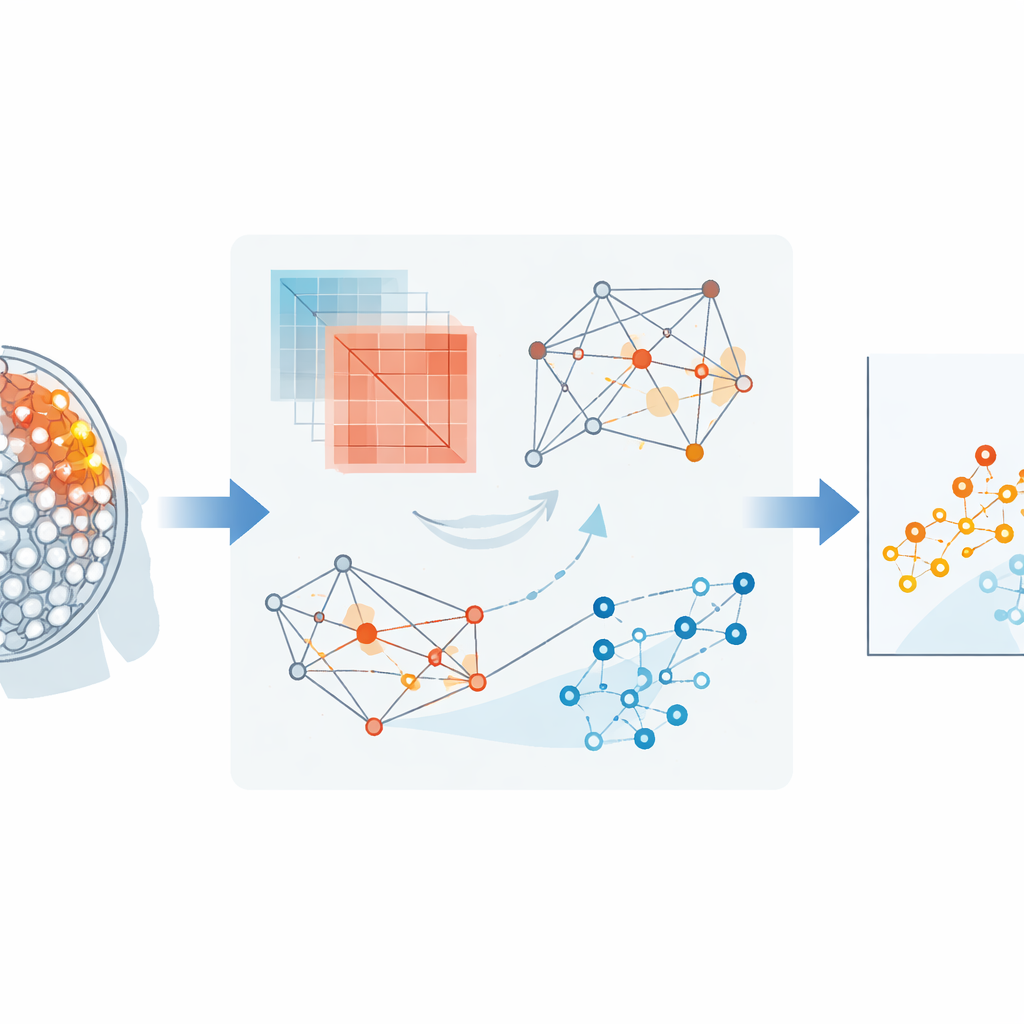
Where in the brain the silent music lives
When the researchers examined which electrodes mattered most to the computer’s decisions, a clear picture emerged. Signals over the brain’s auditory regions on the sides of the head, especially on the right, carried a large share of the useful information. Frontal regions toward the front of the head also played a key role, and the patterns of coupling between these areas were particularly informative. This layout fits with prior brain imaging work showing that familiar music links hearing regions with memory and control networks, helping the brain predict how melodies will unfold. Interestingly, people’s own ratings of how vividly they imagined the music or how familiar it felt did not strongly explain how well the models performed, suggesting that subtle, automatic processes were being captured beyond conscious reports.
What this means for memory and mind-reading
The study shows that, by listening to the brain during carefully placed silences, it is possible to tell with about three-quarters accuracy whether a person is hearing a well-known or unknown song in their mind. For now this is a proof of concept in a small group of healthy young adults, recorded with sophisticated laboratory equipment. But it hints at future tools that might assess musical memory—and perhaps other forms of memory—without asking patients to answer questions or perform tasks. If replicated in larger and more varied groups, and adapted to simpler brain-recording systems, this approach could one day help track memory changes in conditions such as dementia, using nothing more than favorite songs and moments of quiet.
Citation: Darçot, B., Nicolier, M., Giustiniani, J. et al. Objective assessment of familiarity in music using imagery and EEG-based machine learning. Sci Rep 16, 8689 (2026). https://doi.org/10.1038/s41598-026-41988-0
Keywords: musical memory, EEG, brainwaves, machine learning, music familiarity