Clear Sky Science · en
Low-temperature characteristics of asphalt mixtures with sewage sludge ash under varying pH moisture conditions
Turning Waste into Stronger Roads
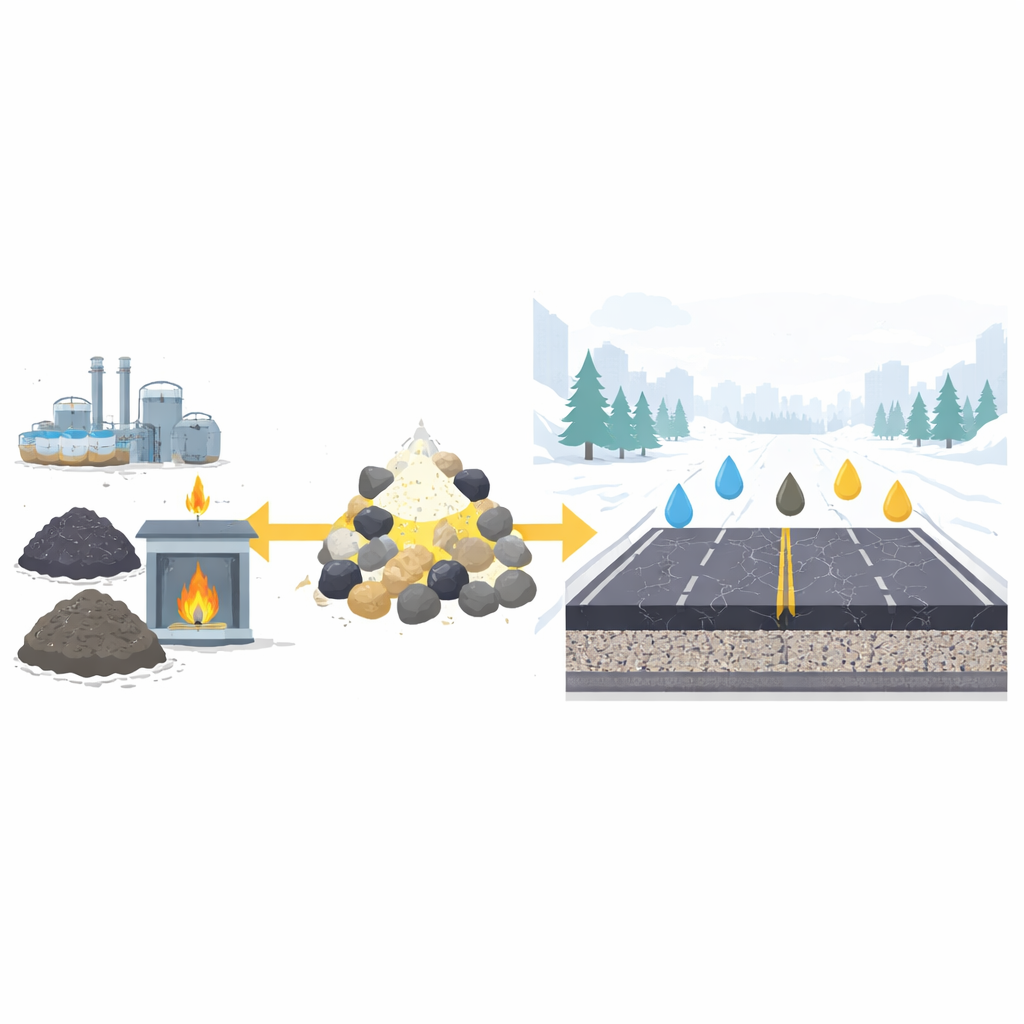
Every time it rains on a city street, water seeps into the pavement, slowly weakening the road until cracks and potholes appear. At the same time, cities struggle with what to do with the mountains of sludge left over from cleaning wastewater. This study brings these two problems together and asks a simple question: can the ash made from burned sewage sludge be used to build longer-lasting roads, especially in cold, wet, and polluted environments?
Why Cold, Wet Roads Crack
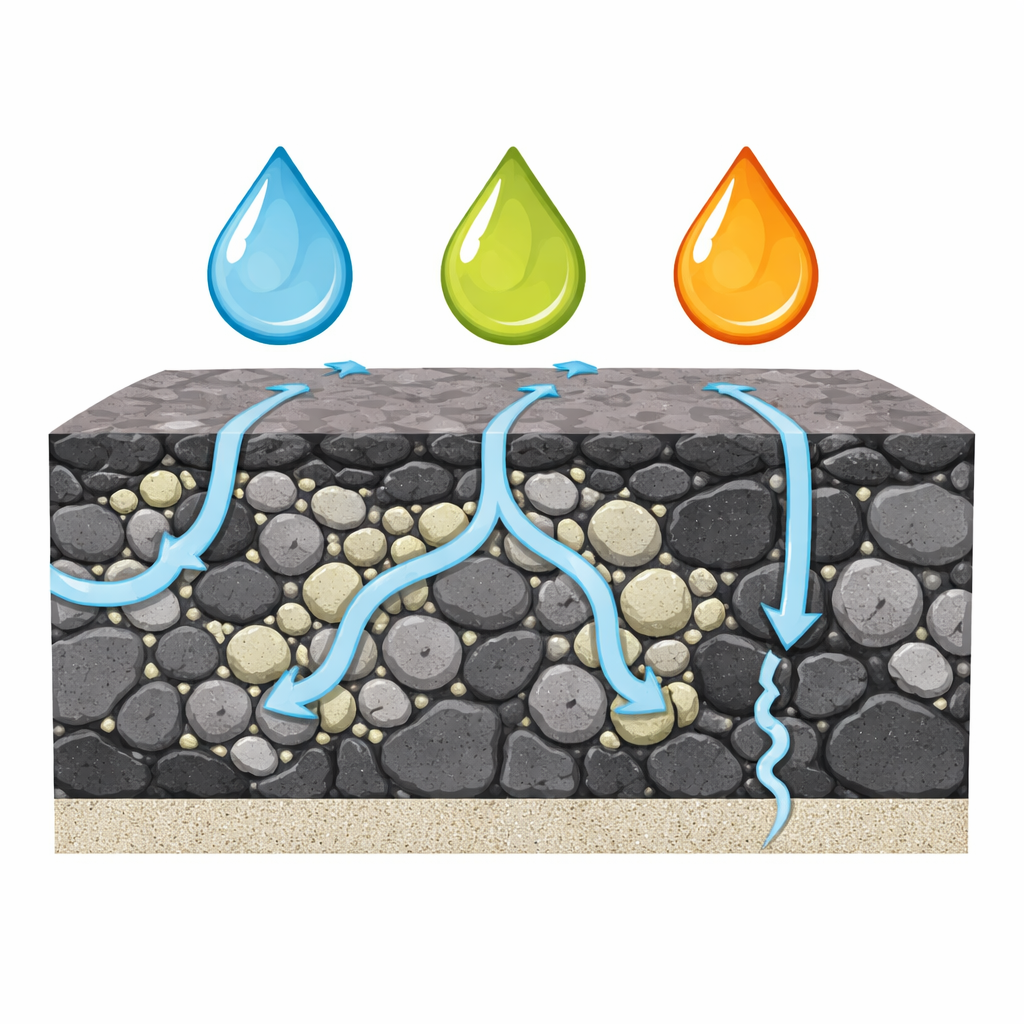
Modern asphalt roads are more fragile than they look, particularly in cold climates. When temperatures drop, the pavement shrinks and internal pulling forces build up. If the glue-like bitumen that holds the stone grains together is weak, tiny cracks can start and grow, especially after many freeze–thaw cycles. Rainwater makes things worse. As water carrying soot, dust, and other urban pollution runs across the surface, it can become acidic or alkaline instead of neutral. This chemically active water seeps into the pavement, breaking the bond between the bitumen and the stone and softening the bitumen itself. The result is a road that needs much less energy to crack and fails sooner during cold spells.
Giving Sludge a Second Life
The researchers focused on sewage sludge ash, the powdery material left after city sewage sludge is dried and burned at high temperature. Burning removes pathogens and organic matter, leaving a fine, largely mineral material rich in calcium compounds. Because most of the particles are very small, the ash naturally matches the size of the fine portion of road aggregates. In this study, the team replaced part or all of the fine granite component in hot-mix asphalt with this ash at four levels: one-quarter, half, three-quarters, and full replacement. They then designed standard asphalt mixtures for each case, ensuring the overall recipe matched accepted road-building rules.
Testing Roads in Harsh Water
To mimic what happens in the real world, the scientists exposed both bitumen–aggregate “mastics” and full asphalt mixtures to water with different acidity: from moderately acidic to moderately alkaline, as can be found in runoff from dusty rural roads or soot-covered city streets. They then cooled the samples to low temperatures and measured two key features. First, they tested how strongly the mastic stuck to the stone and how well it held together internally. Second, they used a bending test on half-disc samples to see how much energy the asphalt could absorb before cracking, and how resistant it was to the spread of a crack once it had started.
How Ash Changes the Inner Structure
Ordinary granite-based asphalt suffered badly in this harsh treatment. Acidic and alkaline water reduced both the stickiness between bitumen and stone and the strength of the bitumen film itself. Under the most aggressive acidic conditions, the control mixtures lost roughly 40% of their ability to absorb energy before cracking and about the same share of their resistance to crack growth. By contrast, mixtures containing sewage sludge ash behaved very differently. The ash particles have rough, porous surfaces and a larger surface area than granite, so the bitumen can grip them more tightly and create a denser internal skeleton that is harder for water to invade. Chemically, the ash is rich in lime-like compounds that tend to counteract acidity and form more stable bonds with the bitumen. Together, these features boost both the cohesion of the mastic and the adhesion between mastic and stone.
From Lab Numbers to Practical Gains
As the share of sewage sludge ash in the fine aggregate increased, all the key measures improved step by step. Even under damaging moisture conditions, asphalt with 100% ash in place of fine granite showed around 60% higher fracture energy and fracture toughness on average than the conventional mixture. In many cases, ash-rich samples tested in acidic water at low temperature performed as well as or better than the unmodified mixture in dry, “safe” conditions. Statistical analysis showed that once ash replaced at least three-quarters of the fine granite, the gains were not just noticeable but reliably significant.
What This Means for Future Roads
In plain terms, the study finds that carefully processed sewage sludge ash can turn a waste problem into a performance advantage. When used to replace most or all of the fine granite in asphalt, it helps roads hold together better in cold, wet, and chemically aggressive environments, making them harder to crack and slower to fail. While these results were obtained with one specific type of granite and more work is needed before large-scale use, the message is clear: with the right treatment, what flows into a city’s drains today could help keep its roads smoother and more durable tomorrow.
Citation: Asadi, A.H., Hamedi, G.H. & Azarhoosh, A. Low-temperature characteristics of asphalt mixtures with sewage sludge ash under varying pH moisture conditions. Sci Rep 16, 8634 (2026). https://doi.org/10.1038/s41598-026-41975-5
Keywords: sewage sludge ash, asphalt durability, pavement cracking, recycled materials, road sustainability