Clear Sky Science · en
GP perspectives on a computer-assisted strategy to support PPI deprescribing: a qualitative study
Why stomach pills and smart tools matter
Millions of people take strong “stomach pills” called proton pump inhibitors (PPIs) for heartburn, stomach pain, or to protect the stomach from other medicines. These drugs work well in the short term, but many people stay on them for years without really needing them. This can bring health risks that often go unnoticed. The study behind this article looks at a computer tool designed to help family doctors and patients talk about whether long-term PPI use still makes sense, and how to safely cut back when it doesn’t.
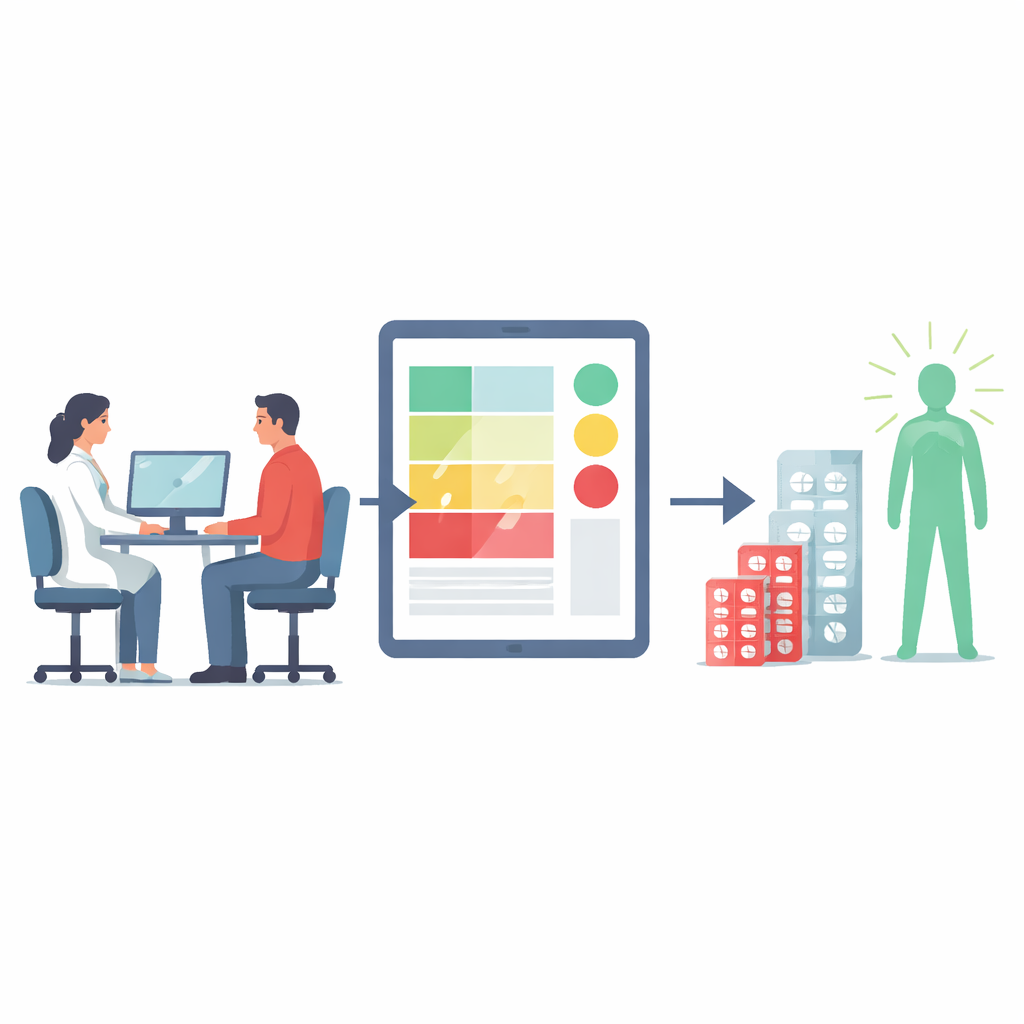
Everyday use of powerful stomach medicines
PPIs are a routine part of primary care. Doctors prescribe them for heartburn, reflux, stomach inflammation, and to guard against ulcers from painkillers. Because they are effective and usually well tolerated, they tend to be renewed again and again. Yet long-term use has been linked to problems such as weaker bones and fractures, infections, and possible heart and circulation issues. Medical guidelines therefore recommend checking regularly whether PPIs are still needed, using the lowest effective dose, and stopping them when conditions have settled. In reality, however, it is hard for both doctors and patients to let go of a familiar pill that seems to keep trouble away.
A digital helper for shared decisions
The arriba-PPI tool was created in Germany as part of a broader software family that supports shared decision-making in general practice. In a consultation, the doctor enters basic information about the patient and their reasons for taking PPIs. The program then gives a simple visual recommendation using a three-color “traffic light” to show whether stopping seems safe, uncertain, or not advised. It also displays a balance of pros and cons and can print a short handout with tapering suggestions and ways to handle returning symptoms. In an earlier trial, using this tool led to more than half of consultations ending in a plan to reduce or stop PPIs, and to a clear drop in overall PPI doses six months later compared with usual care.
Listening to doctors’ experiences
To understand what was really happening in the consulting room, the researchers interviewed 26 family doctors who had used the arriba-PPI tool in that earlier trial. The conversations, recorded and systematically analyzed, revealed six broad areas: how useful doctors found the tool, how it worked in practice, what kinds of patients it helped with, how it changed doctor–patient talks, how it influenced prescribing habits, and whether it fit into everyday routines over the long term. Some doctors praised the tool’s clear visual layout and structure, saying it helped them explain the risks of long-term PPIs and start deprescribing discussions, especially with patients who were nervous about change. Others felt it mostly confirmed what they already knew and offered little beyond their usual way of working.
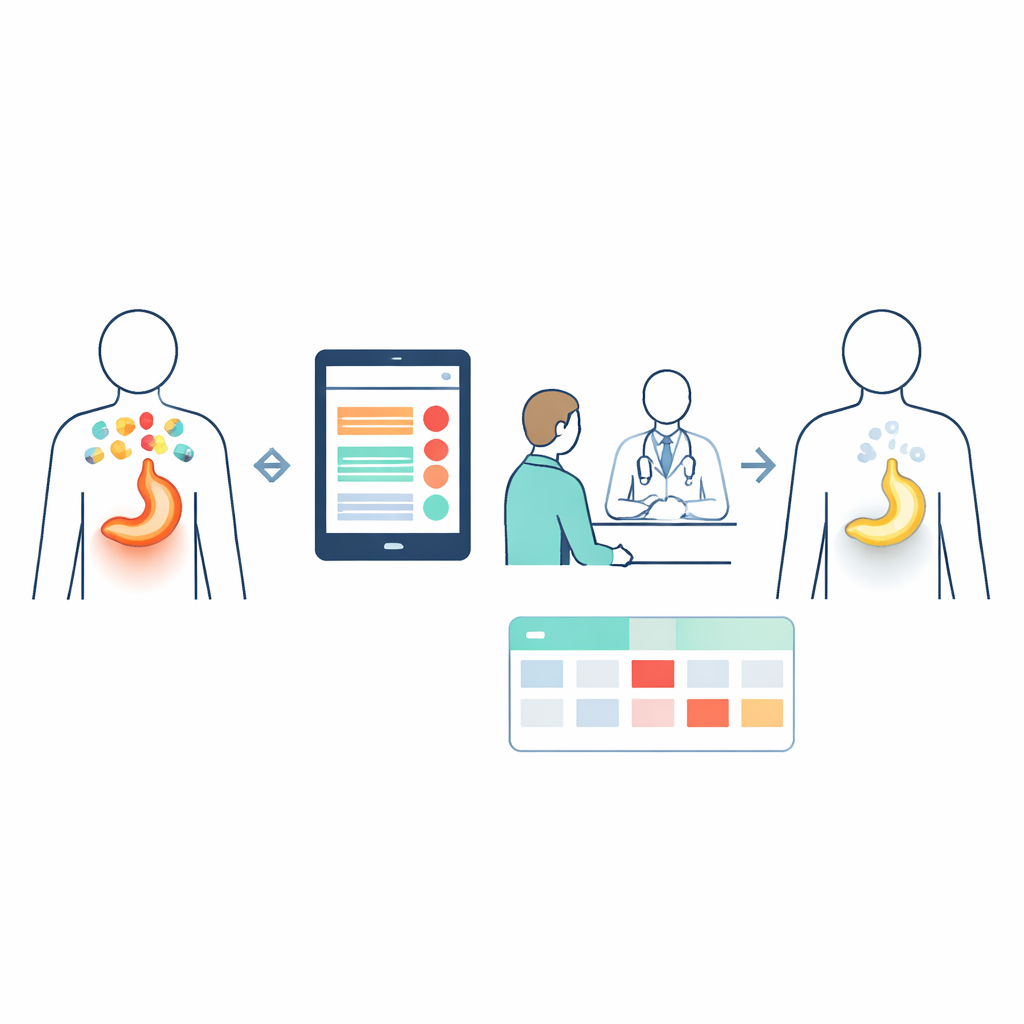
When trust and workflow beat technology
Doctors agreed that trust built up over years of care often mattered more than any computer display. Many felt they could convince patients to reconsider PPIs through conversation alone, particularly when the relationship was strong. The tool’s traffic-light display and graphics were seen as especially useful for younger or more digitally minded patients, or for those who were hard to persuade. But problems such as having to open a separate program, technical hiccups, and the extra time needed to enter data made regular use difficult. Importantly, the tool focused on reducing medication but offered little concrete advice on lifestyle changes like diet, exercise, or other non-drug strategies—exactly the things doctors wanted to recommend when asking patients to cut back on pills.
What this means for safer long-term care
The study concludes that well-designed digital aids can support thoughtful prescribing and help start conversations about stopping PPIs, particularly for less experienced doctors and tech-friendly patients. However, their impact depends on how smoothly they fit into daily routines, how reliable the technology is, and whether they are combined with broader, patient-centered care that includes non-drug options. In other words, a computer tool alone cannot replace ongoing relationships, clear explanations, and practical alternatives to medication. For future work, the authors argue for more comprehensive deprescribing platforms developed together with doctors and patients, tested not just for short-term effects but for how well they can be used and sustained in real-world practice.
Citation: Kornder, N., Bücker, B., Schmidt, A. et al. GP perspectives on a computer-assisted strategy to support PPI deprescribing: a qualitative study. Sci Rep 16, 8730 (2026). https://doi.org/10.1038/s41598-026-41970-w
Keywords: proton pump inhibitors, deprescribing, decision support tools, primary care, shared decision-making